
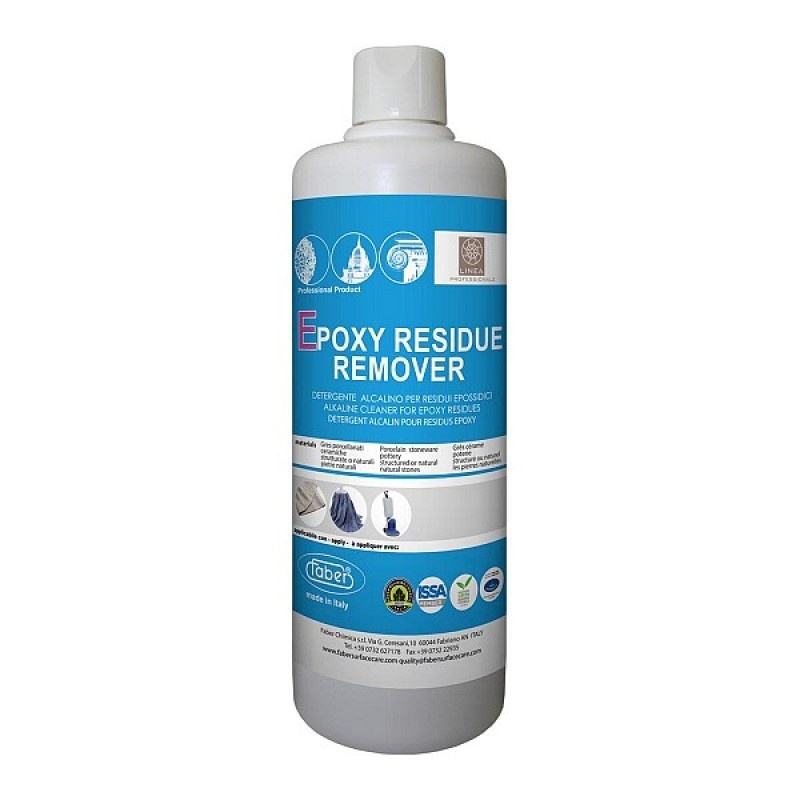
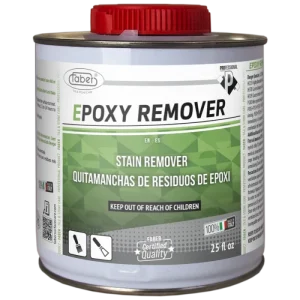
Faber Epoxy Residue Remover
A Look At The Faber Epoxy Residue Remover
Epoxy is a glue resin that forms a high-strength bond through chemical reaction. When used for the grout, it forms a durable substance that can resist stains, and prevent water from penetrating into the structure. The resin is also commonly used when sealing ceramic tiles and closing up cracks. All this is fine and dandy- up until when there is residue that is to be removed, where the strength of the product works against you. Getting rid the epoxy residue that has been left behind- especially after it cures, can take a toll on you. The sheer amount of elbow grease needed, plus the hours spent on the task, is not something anyone looks forward to. Fortunately, this doesn’t have to be your fate. Simply turn to the Faber Epoxy Residue Remover, which has been specially formulated for the task.
Fast cleaning action
The alkaline-based Faber Epoxy Residue Remover comes with the power needed to break down the stubborn epoxy patinas and films left behind after the sealing process during construction and renovation jobs. It acts quickly, in fact doing the bulk of the work for you, since one just needs to apply and wait for a few minutes. You can use it to remove the epoxy residues that have been on the surface for a while, all through to synthetic residue that is frustrating to get rid of, such as paint overspray and enamels. You can even use it when getting rid of the graffiti left behind by “enthusiastic artists” on the walls of your business premises, in order to restore that professional look. The Faber Epoxy Residue Remover is also particularly effective when dealing with surfaces that have a micro-textured finish, plus those where the structure is composed of low-thickness materials, which are usually tricky to handle. It will get the task done in moments, reducing your workload during the cleaning.
This is a mild product, applicable on surfaces that are sensitive to acids. Whether you’re using the Faber Epoxy Residue Remover on agglomerates like marble-cement, marble-resin, and marble-quartz, basaltina – lava stone, cementina, concrete, glazed ceramics, slate, clinker, sandstone, cotto, molten basalt, or even granite, it will be up to the task, getting rid of the residue without causing corrosion of the structure being treated. It’s also effective on porcelain stoneware, be it lapped, textured, natural or polished. From the likes of limestone, travertine, reconstituted stone (eco stone), and porphyry, to terracotta, tuff, and quartzite, the Faber Epoxy Residue Remover will be tough on the grime but gentle of the surface being worked on. It comes in 1L bottles, which have been affordably priced. Each box contains 12 bottles, allowing you to purchase the amount of product that meets your particular cleaning needs.
How To Use The Faber Epoxy Residue Remover
You can work with different sets of tools, based on the size of the area that you’re dealing with, and what you find to be more convenient for you. Popular options for the application include cloths for the small surfaces and also on the vertical installations, plus mops and single disc machines when you’re dealing with residue on the floors. Follow these steps:
- Start by cleaning away the dust, coarse soiling, and loose debris. These are the particles that can be simply swept away with a broom, or vacuumed off. You want the Faber Epoxy Residue Remover to focus on the actual residue and films form the grouting and sealing operations.
- Proceed to apply the product onto the surface. It has been developed to be used undiluted. Cover the target area, vigorously working it onto the surface and ensuring that you obtain an even application. Using a large brush or single disc machine makes the process more effective.
- Allow it to dwell on the surface for about 15 minutes. In case you’re dealing with stubborn residue, or those films that had stayed on the surface for long, you can leave the product on the surface for about half an hour. Here, you can also pass over the surface with the brush or single disc machine where the mechanical action adds impetus to dissolve the residue. This should not be continuous, however. Pass over the section at regular time intervals.
The abrasion level of the disc or brush used will depend on the type of surface material, plus the kind of residue being dealt with. For instance, when washing glazed ceramics and other compact surfaces, or those which are less dirty, you can use a white pad. On the other hand, for the rough and unpolished surfaces, the green or light blue pad will come in handy. These are the likes of cotto and terracotta.
- Pour clean water onto the surface. An emulsion will be formed as the product, residue and water get mixed. Use the brush or single disc machine to distribute this emulsion. Thereafter, with absorbent paper towels or a liquid vacuum cleaner, remove any excess content.
- Use clean water to rinse the surface.
In case there is residue left behind, the steps can be repeated.
Once the floor is dry after the rinsing, you can allow traffic back onto it. The equipment used can be washed with water.
Tips For Working With The Epoxy Residue Remover
- Carry out a spot test on an inconspicuous area before proceeding with the application, to test the compatibility of the formulation with the particular surface you’re working on.
- It’s recommended that you work on small sections at a time. Here, the main factor to consider is the absorption rate of the particular material being worked on. For instance, cotto and terracotta surfaces are highly absorbent. For these, you’ll need to work on an area that is 4 to 5m², that way the Faber Epoxy Residue Remover doesn’t end up completely penetrating into the surface, which would beat its purpose. Speaking of which, you may be required to add some more product onto the surface, compensating for that which will be absorbed within the structure. Always ensure that the surface is covered with a fine layer of the Faber Epoxy Residue Remover during the treatment. For stoneware, ceramic tiles and other surfaces where the rate of absorption is slower, you can work on larger sections at a time.
- Allow the grout or adhesive used on the surfaces that have been recently grouted or laid to first cure.
- Never mix the Epoxy Residue Remover with other chemicals.
Recommended products
Discover more alternatives and similar items.
-300x300.jpeg)
0 Comments
Questions or feedback? Join the discussion below.
No comments yet. Be the first to comment.
Replying to