
Care And Safety With Quality Nitrile Gloves
Care And Safety With Quality Nitrile Gloves
Nitrile has quickly become the go-to choice for disposable gloves. There are multiple reasons for this. We’ll take a look at them, and also take you through what you should look for when making your purchases.
A Walk Through History
Just like every other industry, worker safety in the medical field has evolved over the years. When it comes to gloves, the changes may not have been dramatic and sudden like break-through cures and vaccines that stop global plagues in their tracks, but they have still come a long way over the years. Design improvements plus the safety of the patients and health care providers have taken centre stage, leading to the development of products that deliver high levels of protection and efficiency.
Risks of contamination and need for protection of health care workers and patients have been a major concern, so it comes as no surprise that the early disposable gloves were seen in the medical industry. Dr. William Stewart Halstead, who had a long string of accomplishments, including new operations for gallstone removal and hernia repair, was also keen on cleanliness and precision. When his nurse, Caroline Hampton, raised concerns about the rashes she got from the chemicals she handled during surgery, Halstead got in touch with Goodyear Rubber Co. to manufacture rubber gloves for her to use. Hamptom (who later became his wife), loved the gloves. More pairs were ordered. Soon, Halstead’s team was using the gloves during surgical operations. Understandably, the main advantages were the dexterity and worker safety they brought at the time. This was in the late 1800s.
In 1894, there was a growing concern about patient deaths after operations. In fact, about 50% of surgical patients passed away, with most of the fatalities being attributed to surgeons not washing their hands between examinations and surgeries. This led to the transmission of pathogens. It was during this time that surgical gloves were made sterile, a feat that is attributed to Joseph Lister. Speaking of which, Lister was actually the first surgeon known for sterilising the surgical instruments, and also dressings, where he used carbolic acid.
Fast forward to 1941: More research was going into glove technology, as seen by companies such as Ansell Rubber Co. Pty. Ltd pumping resources into the field. By 1965, the first disposable medical gloves are already in development, where Ansell sterilised them using gamma radiation. Awareness on blood borne pathogens kept growing, and this was accelerated with frantic scenes that came with the surge in HIV infections in the 1990s. Regulatory bodies began putting forth strict regulations, such as the Bloodborne Pathogens Standard that was published by the Occupational Health and Safety Administration (OHSA) in 1992. OHSA directed that workers getting into contact with bodily fluids should have personal protective equipment, which includes the disposable gloves.
Nitrile gloves made their first appearance in the mid-1990s, being manufactured from acrylonitrile and butadiene monomers. Their prominence was attributed to factors such as the increased chemical resistance compared to latex gloves. What’s more, allergic reactions to latex products were avoided, since there had been widespread complaints from medical workers and patients alike who had latex allergies. With more manufacturers realising the usefulness of nitrile for the medical industry, production was ramped up, and a wider range of nitrile gloves was released into the market.
Today, nitrile has spread across numerous industries, with its chemical resistance giving it a wide range of applications. From the automotive industry, janitorial sanitisation, to food service and processing, the popularity of the units has grown tremendously.
Industrial demand for Nitrile Gloves
Troubles with the traditional type of gloves were also witnessed in other industries. Take a food application for instance. Polyethylene or vinyl gloves are avoided because of phthalates. These can get into the human body through ingestion, inhalation or dermal absorption. Up to half of the raw materials used to manufacture the disposable vinyl gloves are sourced from plasticisers, in order to make the PVC flexible and soft for wearing. These plasticizers contain DiNP, DEHP, plus BPA due to their low costs. These phthalates are not chemically bonded to the material, which makes it easy for them to evaporate and leach into the food, especially oils, butter, meat and other fatty foods- and they will be soluble in them. Studies in Japan showed that usage of disposable PVC gloves when preparing and packaging meals was one of the leading sources of DEHP getting into the body through people’s diets. The study also showed a reduction in DEHP levels after the ban of its usage in gloves in the country.
In fact, looking deeper into vinyl gloves and their effect on food integrity, there are more factors that affect their performance, and raise problems. For instance, without cross-linking in the PVC polymer, plus the plasticisers that weaken the glove structure, micro-punctures quickly result- even with just flexing the hands a couple of times. There have been cases of disposable vinyl gloves leaking immediately when they are worn in food preparation environments. What’s more, over half of the punctures with the gloves are not noticed by the person wearing them, leading to increased contamination of the meals being prepared. Due to the reduced functionality that results, and increased elongation, a thicker glove tends to be required. However, wearing thick vinyl gloves when preparing food causes increased cases of fatigue, with higher risks of trauma to one’s thumbs and fingers. Globally, there has been a radical shift from the gloves for these applications, to PVC-free alternatives. This started way back in 2001, when Japan outrightly banned the usage of PVC gloves when handling food, all through to 2008, when the European Union banned DEHP usage in food service gloves due to the concern about it leaching into the food and being ingested.
Despite the high concern levels, plus the growing evidence against the application of the gloves for food operations, why are there cases of them being used in different regions? Well, this is mainly because of the cost. The gloves have low price tags. However- as they say: cheap is expensive, and making purchase decisions based on this alone ends up exposing more people to greater risks. Lack of sufficient information is also an issue, with the glove suppliers being cagey on the effects that the disposable vinyl gloves pose to food safety, affecting the workers, consumers and ultimately ricocheting to the food handling companies themselves.
Food-safe safety gloves
Alternatives like nitrile gloves come in here. They are a safe and economical choice for use in food preparation activities. The manufacturing process results in ensuring that the synthetic rubber is flexible for use, yet stronger than the vinyl options. They are also form fitting- simply ensure that you obtain gloves that are suitable for your size. As such, you get gloves that have reduced cases of failure, and you won’t have to keep worrying about holes being formed as you go about your activities, or the gloves getting tipped. This greatly cuts down the risks of the food getting contaminated.
Buyers’ Guide To Selecting The Right Nitrile Gloves For Your Particular Needs
The gloves are utilised in a diverse range of applications, with the specifications of the particular units determining where the gloves will be suitable. You want to ensure that you meet the risk management needs of your establishment, protect the different parties involved, meet regulatory requirements and also get value for your money. How do you select between the different nitrile gloves available? Here is a breakdown of what sets them apart, and how you can make the optimal nitrile gloves for your particular needs.
-
Industrial and Examination Usage
These are the first major distinctions to be made. Do you want medical grade or industrial grade nitrile gloves?
For the industrial grade, this looks at those applications where you will be handling harsh solvents and other chemicals. These are the likes of janitorial applications, automotive and similar industries where your focus is on chemical safety. There will be aspects of the food industry that also feature here. The main emphasis is on acquiring nitrile gloves that score high in chemical resistance, and also puncture resistance to product yourself from injury.
When it comes to the medical grade nitrile gloves, the main risks here are coming into contact with environmental contaminants, and pathogens that are spread through contact with bodily fluids. The nitrile gloves in this range are a common feature in hospitals, nursing homes, all through to laboratories and dental offices. Medical gloves undergo more rigorous testing, to ascertain that they meet strict standards stipulated by regulatory bodies, to provide the durability, strength and barrier protection needed for these applications. Speaking of which, the nitrile gloves are particularly preferred for medical applications since they eliminate the allergy risks that are associated with the conventional latex gloves, thus protecting the health care provider and the patients that are being attended to.
The different applications have their diverse standards. While there are situations where they get confused or used interchangeably, there could be consequences. It’s not just about comfort. For instance, what would happen to compensation from the insurance coverage, when a laboratory technician has a hand injury while using gloves that were meant for medical use? What will be the legal resource when you get skin problems due to prolonged exposure to chemicals in an automotive facility, due to using gloves that were intended for application in dental offices? To protect the wearer from injury, and the company from lawsuits, it is prudent to ensure that the gloves being used meet the standards needed for your environment. Examples of these classifications include:
-
Council Directive 89/656/EEC: Disposable gloves for lab and industrial gloves
Here, the gloves are basically broken down into 3 categories: Category 1 (simple design) which is used for the tasks that have minimal risks; Category 3 (complex design) which are used for those tasks with the highest risk levels- including mortal danger and where injury may be irreversible; while Category 2 focuses on those intermediate tasks that don’t quite fit into the former two.
There are different tests that use used to determine the category that a particular batch of gloves will fall into, such as the EN374-2 that looks at protection against microorganisms and penetration of liquids into the material, and EN374-3 that assess the chemical permeation through the unit; while the EN388 looks against the performance of the gloves against cuts and abrasions.
How will this affect your purchase choice? For instance, laboratory workers will be particularly interested in EN374-2 standard for the gloves, since it focuses on the penetration resistance of the material, as it will show the performance of the unit as a barrier against the reagents that they will come into contact with as they go about their tasks. Designations like 1.5, 0.65 or 4 will be on the product box. This is the result of the water tightness test, which determines the holes on the unit. It looks at the holes that may allow chemicals or microorganisms into the glove. The lower the number, the better the protection. For example, in a laboratory setting, the minimum AQL standard (Acceptable Quality Limit) should be 1.5, while the 0.65 will still assure the user of more protection.
More about the AQL: This is a statistical figure. It indicates the results for a particular batch size, from whom a sample was taken and underwent testing for defects.
Here the gloves meet standards such as the EN455. For instance, the EN455-1 looks at the water tightness of a batch, ensuring that it meets AQL 1.5- which is key in determining how protected the patient being attended to will be; while the EN455-2 looks at the strength and physical measurements of the glove.
-
The size and colour of the gloves
A form fitting glove is needed to enable you to work normally. You don’t want to be handing dangerous chemicals with gloves that keep slipping off and becoming an inconvenience due to them being too large for you; or having to spend hours in gloves that are too small that moving your fingers is a problem. Ensuring that you get the right size for your hands will enable you to work comfortably, and that your tactile sensitivity in the different applications is not hampered.
For the colours, they are more than just a fashion statement. Sure, the gloves come in a wide assortment of colours that make them aesthetically pleasing when they are adorned, but that is not their main purpose. This is where colour coding comes in. Basically, specific colours are suited to particular applications, to prevent mix-ups and reduce cases of cross contamination. For instance, blue nitrile gloves are the standard used in medical applications, and it will be easy to distinguish them from the latex gloves. On the other hand, black nitrile gloves are a common feature in case where there are loads of oil and grime being handled, such as in automotive applications. Black is also touted for the professional look that it portrays- which is why it is a common feature in areas like tattoo parlours. This is also handy for those engineering and mechanics’ facilities, where- despite dealing with oils and grease, the staff get to portray a professional image to the customers coming over, instead of appearing all soiled up by the contents they are handling. Green, orange, pick- colours vary, and their usage aids in safety compliance. These brightly coloured gloves are easy to identify, distinguishing different employees and the work they are carrying out. For instance, during emergency situations, the first responders- such as the first aid providers will have different coloured gloves with the investigative teams that are sent over by the police departments. There are also cases where the wearer wants extra protection and thus wears two layers of nitrile gloves- with the one that has a bright colour underneath. That way, in case there has been a puncture or cut, the brighter colour of the glove underneath will be immediately seen, bringing your attention to the problem much faster.
-
Thickness of the gloves
The nitrile gloves are available in different gauges- categories of thickness, usually ranging between 4 – 8 mils. 1 mil is 0.001 inch. Most of the heavy-duty nitrile gloves, typically used in industrial applications, range between 6 and 8 mils. The harsh working conditions here demand for these kinds of gloves in order to provide greater levels of protection, from the increased permeation time when working with the harsh chemicals to the higher tear and puncture resistance of the nitrile gloves. On the other hand, medical grade nitrile gloves are thinner, with the chemicals in these applications being the higher flexibility and dexterity levels than are seen in the thinner gloves.
-
Texture
How much grip do you want from the nitrile gloves? Those that have a textured finish- such as on the palms or fingers, give you more grip. For instance, there are gloves that come with a diamond pattern to enhance the grip in both wet and dry conditions.
-
Powdered or Powder-free gloves
Initially, powder coatings were used as they aided in donning and doffing the gloves. They also absorbed extra moisture- such as with sweaty hands, allowing one to wear the gloves for longer. However, powder in gloves came with a wide range of negative effects. For instance, during the wearing or removal of the gloves, the cornstarch powder may be aerosolized. With the particles airborne for up to 12 hours, it increases the respiratory exposure. When powdered gloves are used for surgical and examination processes, it affects the recovery process. Complications like inflammation and wound infections, to peritoneal adhesions or even granulomas may occur. Powder is also one of the factors that accelerated the rate of reactions with the latex gloves. The cornstarch powder that is in the gloves is an allergen carrier, increasing the risks of latex-induced hypersensitivity. This means extra measures like screening of patients to be carried out before examination and surgical processes to determine if there is a possible case of undiagnosed latex allergy. Such effects are what have led to the crackdown on powdered examination and surgical gloves by medical regulatory bodies, such as the Food and Drug Administration (FDA) which issued a ban against them in 2016.
The chlorinated coating or polymer that is used for finishing a majority of the gloves aids in reducing stickiness, which comes in handy to make the gloves easier to wear and remove. Chlorination is the most common. During the manufacture of the gloves- at the finishing stage, the gloves are washed in a hypochlorite and hydrochloric acid solution. They are then rinsed, preventing any further interaction between the chemical and the glove. The solution leads to a reduction in the surface tackiness of the gloves, giving them a softer texture. For the polymer coating route, polymers like hydrogels, silicones and acrylics are used. The polymer coating comes with less surface friction compared to the nitrile gloves, making it easier to slip on the hands.
Hand Safety With ASAP Nitrile Gloves
In case you’re coming into contact with chemicals or pathogens, you need to protect yourself. This goes without saying for doctors, densities, surgeons, nurses and other health care professionals, caregivers in nursing homes, all through to lab technicians in hospitals and R&D facilities. The patients too need to be protected from cross contamination, hence the need to ensure you have a sufficient supply of gloves when frequent changing is needed. The ease of donning and doffing is also a factor. Even in the service and repair industry, such as in automotive and manufacturing plants where one deals with harp tools and comes into contact with hazardous chemicals, extra care is required, hence the need for working with gloves that will offer the desired levels of chemical and puncture resistance. Aspects like the grip when handling tools, plus your comfort when using the gloves, affect your choice in the gloves selected.
For the medical industry, ASAP has a wide range of gloves to choose from. These include:
-
ASAP Nitrile Powder Free Gloves
When donning gloves, your main priority is your protection, and the ASAP Nitrile Powder Free Gloves deliver on their mandate. They keep your skin safe from the chemicals and biological contaminants that you encounter as you go about your tasks. From health care workers to laboratory applications, the ASAP Nitrile Powder Free Gloves are utilisable across the scope. What’s more, the textured fingertips come in handy when dealing with delicate instruments, where you want to ensure that you have a firm grip on the tools that you’re using.
Your comfort is also a priority. After all, you don’t want to end up with hand fatigue after using the gloves. The design of the ASAP Nitrile Powder Free Gloves gives you a comfortable fit, while ensuring that you have the required tactile sensitivity to proceed with your tasks.
-
ASAP Premium Nitrile Gloves
These are designed to offer premium protection- just like the name says. This range of gloves is ideal for situations where you need more tensile strength and tear resistance, since it comes with an extra 25% boost in these attributes.
While it amps up the protection, the design of the ASAP Premium Nitrile Gloves doesn’t claw back on your comfort. In fact, the ultra-soft formulation makes it comfortable to wear, giving you the latex-like comfort, without the health risks that are associated with latex. This also makes it easy to wear and remove.
The ASAP Premium Nitrile Gloves will enhance your performance as you carry out your tasks. From the tactile sensitivity, to puncture resistance to keep you safe as you handle the tools, plus the textured fingertips that provide superior grip, you will be able to carry out your duties unabated. Just like the other units under review here, these gloves are also powder-free.
-
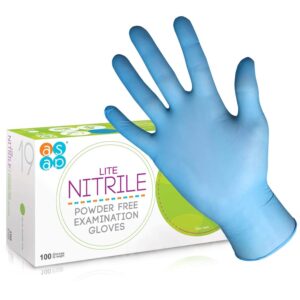
ASAP Lite Nitrile Gloves
These particular units are designed to ensure that you remain comfortable as you carry out light work tasks. The structure provides an effective barrier against the oil and grease that you come into contact with during the tasks being handled. It is applicable in a wide range of settings, from physician offices and clinics to nursing homes. From the latex-like comfort, tactile sensitivity to the textured fingertips that enhance your grip, the ASAP Lite Nitrile Gloves make your work easy while ensuring that you remain safe.
-
ASAP Nitrile (Vitamin E) Gloves
Are you concerned about dry skin? Then this is the product for you. This range of gloves comes with a Vitamin E coating, which will soothe your hands, and aid in preventing skin irritation. This is while offering the required levels of protection against contaminants and pathogens, and providing tactile sensitivity. What’s more, the microtextured surface of the ASAP Nitrile (Vitamin E) Gloves gives you consistent grip in both wet and dry working conditions.
-
ASAP Black Nitrile Gloves
These powder free gloves are also designed to provide premium protection, featuring 25% more tensile strength and tear resistance. These units are suitable for a wide range of applications in hospitals and clinics, EMT units and emergency responders. The textured fingertips mean that you will have a secure grip on the tools that you will be handling, while the proprietary dipping during the production process ensures that the ASAP Black Nitrile Gloves give you enhanced tactile sensitivity and puncture resistance. Ease of donning and doffing is also key, and here these units perform superbly, as a result of the ultra-soft nitrile structure.
-
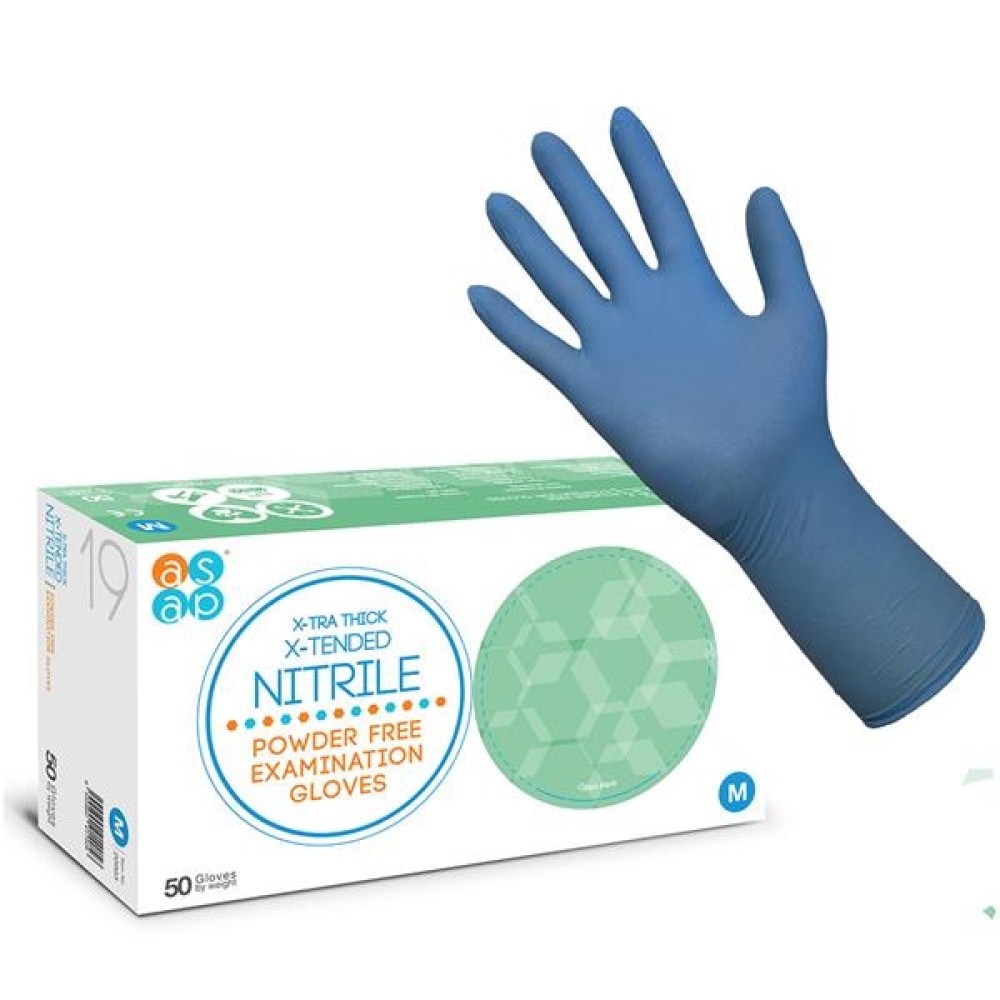
ASAP X-Tended Nitrile Gloves
Need more skin coverage? These gloves come in here, with the extended length providing more protection for the arm. These form fitting units will provide natural movement of your hands, with the flexibility allowing you to carry out your mandate comfortably.
The ease of wearing also gets a boost, with the beaded cuff of the ASAP X-Tended Nitrile Gloves. From reliability to durability, the gloves deliver on their mandate, offering enhanced barrier protection without compromising on your effectiveness as you perform the task.
-
ASAP X-Tended Black Nitrile Gloves
These units will see your wrists and forearm safe as you continue with your duties. They also come with the expected nitrile attributes, enhanced chemical and puncture resistance, and you also won’t have to worry about the reactions that are associated with latex proteins. These are powder-free units, hence the mess that is associated with the conventional powdered gloves is avoided. With a beaded cuff, weakening and removing the gloves is also a breeze.
-
ASAP Pro X-Tended Nitrile Gloves
Here, you get an extra 16-inch (400mm) length to work with. Thus, more of the arm is protected. The form fitting nature of the gloves ensures that you will not have to worry about fatigue and arm injury. A textured grip, tactile sensitivity, and durable structure that delivers on the desired chemical and puncture resistance, the ASAP Pro X-Tended Nitrile Gloves give you a value return for your money’s worth. These units also feature the beaded cuff, making donning and doffing easier.
Flexible Movements With the ASAP Nitrile Examination Gloves
The inherent stretchable capacity of these gloves is key behind the contoured fit that they provide. They adapt to the hand contours of the wearers the moment they are slipped n. This is also as a result of the heat activated nature of the structure. Basically, the natural body heat of the user activates the monomers that are in these gloves, allowing them to smoothly contour to the shape of the hands, forming a secure fit. That way, one is able to handle tools easily, even without the need for powder to be used. This also results in improved precision, a welcome benefit for the medical applications. What’s more, nitrile examination gloves naturally resist electric charges. This means that you won’t have to worry about them statically attracting pathogens of the surfaces being handled. This is particularly beneficial for risk management, preventing the spread of infection, and enhancing personal safety.
The material of the gloves is soft and supple, yet tough and strong enough to handle the different applications in healthcare facilities. From defying rips and tears, to providing protection from punctures- which is vital when handling sharp objects, incorporating the ASAP Nitrile Examination Gloves into your inventory will protect your staff and give you more bang for your buck.
Care And Safety With Quality Nitrile Gloves
0 Comments
Questions or feedback? Join the discussion below.
No comments yet. Be the first to comment.
Replying to