
Protect Your Tiles With The Faber Gres Protector
Protect Your Tiles With The Faber Gres Protector
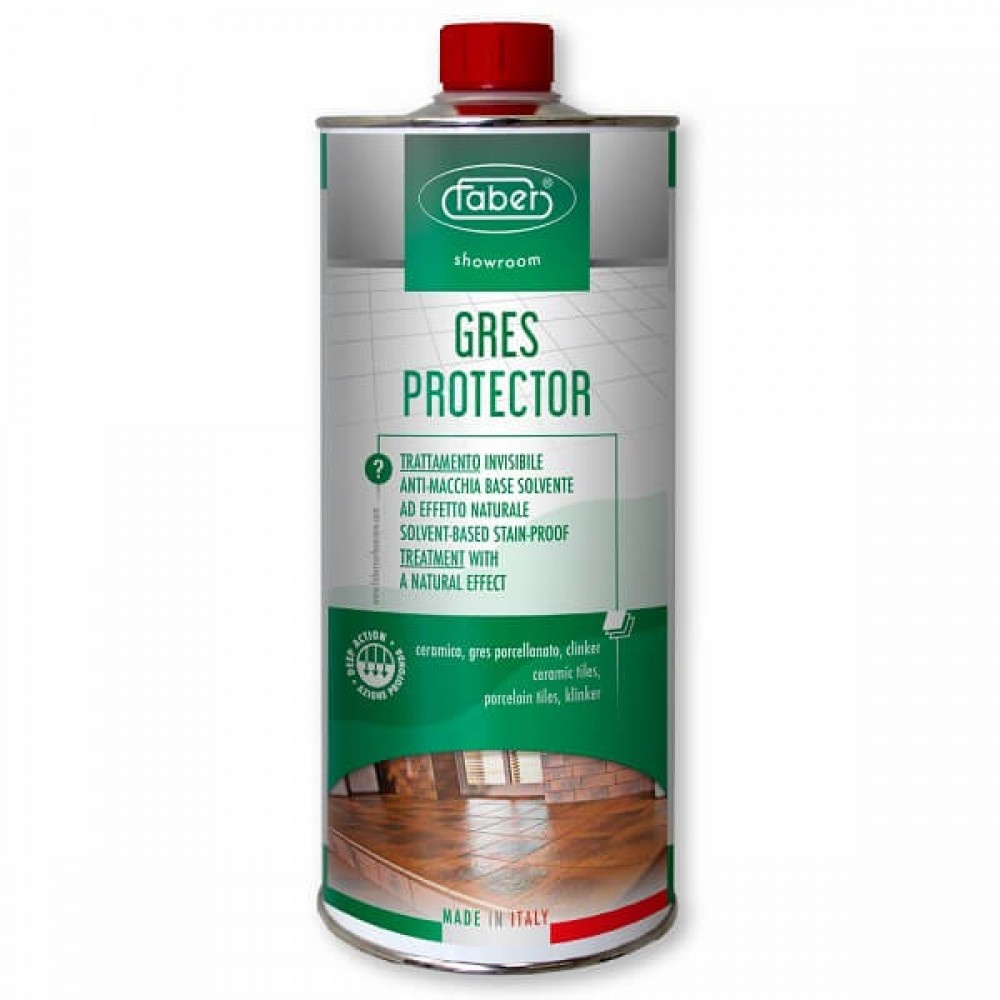
What steps have you put in place to take care of your porcelain or ceramic tile installations? These elegant tiles are made of naturally occurring materials, and undergo different industrial processes to give them distinct advantages over other flooring types. They are clay-based materials, and are fired up in kilns – but the clays used for porcelain are denser, and they are fired longer and at higher temperatures. This basically makes porcelain a specialised type of ceramic, and usually people can’t tell them apart by simply glancing at the installations. The different clays and production processes used to develop these tiles are responsible for the unique characteristics of the surfaces. However, both of them are still susceptible to stains. Spills that wind up on them – from beverages like coffee and tea, to milk, yoghurt and other drinks, cases of ink blot sand nail polish accidents, engine oil and the like – they will all form messes on the structure. Depending on the chemical composition of the liquids that wind up on the tiles, they may be at risk of further deterioration, in addition to the already ruined aesthetics. Stain-proofing agents come in to ward off these effects, and for these particular types of tiles, the Faber Gres Protector has proved that it offers superior protection.
Enhanced stain-proofing impregnator
Here you have a formulation whose oil- and water-repellent properties enable you to prevent stains from forming on the installation. It penetrates into the pores and texture of the treated installation, including liquids like beverages and wine, or fat substances like cooking oil from bonding with the material. That way stains won’t readily set onto the surface, allowing you to respond in time and clear the contents from the surface. Liquids that spill onto the installation can be quickly wiped off the area with a damp cloth or similar tools.
In addition to the stain-resistance, the Faber Gres Protector also limits the ability of the surface to absorb and trap dirt. Keeping particulate matter from being embedded in the installation will ease the routine maintenance. Fewer resources end up being required to carry out the day-to-day cleaning of the surfaces. This kind of broad reliability is what contributes to the popularity of surface care solutions from Faber, which actually has over 250 different solutions in its production line, catering to diverse situations.
This kind of treatment, where instead of simply forming a layer on the surface, it actually impregnates the material, is key in preserving the original appearance of the installation. As such, the treated surfaces retain their colour and tone, while still benefiting from the protective attributes of the formulation. For light-coloured surfaces in particular, the aesthetics will be unchanged, while for the dark-coloured surfaces, they are slightly enhanced, making features like the hue or veining more prominent.
The Faber Gres Protector has been specifically developed for ceramics and different kinds of porcelain stoneware – like polished, lapped or natural installations. This is for both indoor and outdoor applications. Speaking of which, being a low-odour solvent, it minimises the impact on the indoor air quality.
How To Use The Faber Gres Protector
As a best-practice when applying stain-proofing treatments to surfaces, it is recommended that you do a small test on an unexposed area of the tiles before proceeding to work on the rest of the surface. Follow these steps to treat your installations with the Faber Gres Protector:
-
Thoroughly clean the surface, then allow it to dry completely. Dirt or dust that are on the area being worked on will ruin the performance of the treatment, which needs to bond directly with the surface. Also note that the formulation should not be applied on wet surfaces, so after cleaning the area give it time to dry.
-
Using equipment like a brush, roller or lambswool applicator, apply a thick layer of the stain-proof impregnator onto the surface. Ensure that you set a thick and even layer, covering the entire area.
Wait for around 10 minutes, then assess the area to ensure that the coat applied is uniform. Here, if there are sections with excess product or residue, redistribute them carefully. Keep doing this until the surface dries completely, which will have occurred in just 1 hour.
You can thereafter wash the equipment used with white spirit.
-
There are cases where a second coat of the Faber Gres Protector will need to be applied, such as when you’re dealing with highly absorbent surfaces. Allow the 1-hour drying time after the first layer has been applied before setting the second layer.
Note:
-
While the treatment will have dried within an hour, do not allow foot traffic back onto the floor for at least 4-6 hours.
-
For the recently installed and grouted tile installations, let the adhesives and grout used to completely cure before using the Faber Gres Protector on the surface.
-
Subsequent cleaning and maintenance should be carried out with formulations that have been developed for the particular types of surface. You can also get these from Faber, where products like the Neutral Cleaner and Floor Cleaner will enable you to work on the target surfaces without risking the performance of the Faber Gres Protector, or the structural integrity of the installation.
-
Pre-Grouting Treatment
The water-repellent attributes of the Faber Gres Protector make it an asset in operations like grouting and washing. Here, plenty of water is used, thus the need to protect the material from soaking it all up and getting damaged. There is also the risk of grout staining. Pre-treating the installation with the Faber Gres Protector will greatly cut down the amount of absorption that takes place, which also makes the washing process easier.
-
Food contact surfaces
This is a food-safe product. One of its popular applications is treating ceramic or stoneware countertops in kitchens. That way, you get to ensure that these busy worktops are protected, without putting the integrity of the foods prepared on them at risk.
Recommended products
Discover more alternatives and similar items.
_5nd-300x300.jpeg)
_2nd-300x300.jpeg)
-300x300.jpeg)
-300x300.jpeg)
0 Comments
Questions or feedback? Join the discussion below.
No comments yet. Be the first to comment.
Replying to