
Hand Safety And The Power Of Nitrile Gloves
Hand Safety And The Power Of Nitrile Gloves
One of the major investments in the personal protective equipment (PPE) industry is disposable gloves. They are key for any enterprise or facility that is dealing with hazardous chemicals, toxins and pathogens- where the goal is to prevent contamination and protect the wearer of the gloves. Let’s take an in-depth look at what it entails, and how disposable nitrile gloves have taken centre stage in this global industry.
Legal responsibilities regarding hand safety
As an employer, what are your responsibilities to your staff? You are required to institute measures that will protect them from coming into contact with hazardous substances that will affect their health. If it is not reasonably practical for the exposure to be prevented, then the law requires you to do what you can to control the level of exposure. This ranges from informing staff about the hazard, to providing them with suitable personal protective equipment- these include respirators, ear defenders, gloves and other equipment, which should not be shared- they are intended for personal issuing. Training is also required to show them how to utilise the PPE provided. When selecting the products that will be used for your facility or business, you should keep records that will show the reasons why you chose that particular set of PPE, and specifications that indicate that the products will provide the desired levels of protection.
For gloves, they are basically used for 2 reasons:
-
Personal protection
This ranges from protecting the skin from hazardous chemicals, cuts, abrasions, all through to those cases where one needs to be protected in extreme temperature fluctuations.
Here, the consumables themselves were to be protected. These are the likes of meals within the food industry, drugs for those in the pharmaceutical industry, chips in the electronics industry, and even sheet metal during assembly where the goal is to preserve the visual appeal of the finished product.
Selection of the gloves to be used depends on the particular applications. Are you in charge of the safety program in your establishment? What criteria need to be assessed when choosing the appropriate gloves for your facility? First, one needs to identify the processes that are undertaken in the establishment, since they vary from one industry to the next. Next is establishing the solvents and other chemicals that are used within the premises.
After identifying the risk, the first measure should be assessing if you can reduce the risk, or eliminate it in its totality. However, oftentimes this is not the case- after all, safety is rarely 100% guaranteed in workplaces. This brings us to the next stage: assessing the level of risk. They are basically broken down into 3:
-
Minimal (Category I)
Here, there is very little risk posed to the worker. This is common for most of the janitorial tasks. Thin gloves will be effective here.
-
Intermediate (Category II)
The worker is prone to get injured, and in this case, you need gloves with a higher level of resistance against chemical and mechanical hazards.
-
Irreversible (Category III)
These are situations where there are chances of mortal injury- basically life-threatening situations. The worker may be handling very harsh and aggressive chemicals, dealing with high voltage power, or emergency response teams such as fire-fighters.
After determining the level of risk, stipulate the properties that you require from the gloves. Do you want protection against temperature extremities? Does the working environment include exposure to aggressive chemical mixtures? Do you want physical protection from metal products or exposure to shards of glass? Are you looking for a combination of properties?
Once you get the gloves that are suited to the needs in your establishment, then staff will require a detailed breakdown on the usage of the products- from when to use them, how they will be used, to how often they should be changed, all through to the disposal methods that will be used. Remember to keep records of the assessment, plus the reasons why you selected a particular kind of glove. The primary focus here will be nitrile gloves.
Increased Safety Through The Years: The Evolution Of The Gloves’ Industry
Just a few decades ago, surgeons used reusable gloves, with ground-up sphagnum moss to make wearing them easier to wear and remove. Glove technology has come a long way since then. There have been different events that accelerated the advancements which eventually led to the nitrile gloves used today.
Initially, examination gloves were exclusively made from natural rubber latex. The product is flexible and comfortable, and the manufacturing technology isn’t that complicated to follow through. However, there were drawbacks to this. They included:
-
Latex allergy
While gloves had been used for surgical operations, concern for worker safety and that of patients during most of the 20th century hadn’t peaked yet. However, after HIV/AIDs burst into the limelight, there was a sudden surge in demand for protection against blood borne pathogens. The increased demand for gloves brought new opportunity for companies to get into the market, and more of them got into the business of manufacturing gloves for healthcare workers.
The influx of producers, plus the fact that some were not aware, led to gloves being released into the market with excess protein in the material. It could also be that some companies didn’t want to invest as much in the extra processes that are needed to leach out the proteins from the gloves. Thus, gloves made their way into the market with high latex protein levels. Numerous cases were then reported of health care workers and laboratory technicians developing allergic reactions, with cases of anaphylactic shock also being prevalent. Sensitisation of individuals exposed to the latex protein increased, leading to adverse health reactions with continued latex contact.
-
Demand for increased chemical resistance
The physical barrier provided by the natural rubber latex gloves proved to have reduced effectiveness when it came to dealing with solvents. Laboratory workers and industrial clients dealing with a wide range of chemicals consequently required products that offer greater levels of protection.
-
Price fluctuations
Natural rubber latex is sourced from the Hevea brasiliensis, a rubber tree. As such, the price of the final product tied directly to availability of the raw material. Initially, labour costs during the harvesting process were low, meaning that the raw material was inexpensive. However, with the sudden increase in demand for gloves towards the end of the 20th century, plantations were put under more strain to deliver. This pushed up the prices, which affected the cost for the consumer. Moreover, the automobile market also was a direct competitor, given that natural latex rubber is one of the raw materials used in the manufacture of the tyres. This contributed to an increase in the costs.
Gradually, companies began looking into alternatives. The goal was to develop gloves that would provide the desired protection, while being comfortable to wear for long periods. Moreover, the prices of the material would preferably not be subjected to the wild price fluctuations. This pointed to manufactured products. Alternatives that were looked at included:
-
Vinyl
This is a PVC film, and the vinyl gloves had the benefit of being low cost. However, they lack cross linking at the molecular level. This means that the molecules easily separate whenever the film gets flexed or stretched. What’s more, the material has less resistance to solvents, making it ill-advised when handling chemicals. Plasticisers are also used in the structure, the common ones being phthalates, which don’t bind to the PVC and are also readily leachable. The effects of these- especially with regards to food safety- are looked at shortly below. Add the environmental impact of the PVC gloves. These add to the content in landfills, contributing to the greenhouse effect. When improperly disposed of, like when they make their way into water bodies, the leachate from the structure affects fish reproduction and poses additional risks to the rest of the aquatic animals. Incineration is an alternative method of disposing of the PVC material, and this, in turn, calls for really high temperatures in order to get rid of the noxious fumes that are generated.
-
Nitrile
This has increasingly become the preferred material by both manufacturers and consumers. Its traits- from the high chemical resistance, the ability of being processed in soft film, all through to its dissipative properties that enable it to be used within the electronics industry, have increased the demand for nitrile gloves.
What You Get From Nitrile Gloves
The nitrile rubber proves a stronger barrier of protection, offering greater chemical resistance compared to the alternative materials. For instance, it is more resistant than natural rubber to oils and acids. The nitrile disposable gloves are recommended for employees dealing with over two-thirds of chemicals, which is almost 30% times more compared to latex or vinyl.
Then there is the lower coefficient of friction of the gloves. This is to make them easier to don and doff. During the manufacturing process of the disposable nitrile gloves, finishes may also be applied. These are the likes of a polymer coating which makes it easier to slip on the gloves, to chlorination that results in a reduction of the tackiness of the material, thus making the nitrile softer. For industries such as food processing and healthcare, glove changes are frequent. As such, one would want to work with products that offer seamless glove changes, so as not to create a bottleneck.
The nitrile material comes with stretchable capacities. This actually contributes to some of its popular attributes. For instance, it enables the gloves to adapt well to the hand contours of the person wearing them from the moment that the gloves are slipped on. It fits snugly onto the skin, a feat that is attributed to the heat-activated nature of the material. Basically, the natural body temperature of the individual donning the gloves activates the monomers of the gloves, allowing it to smoothly contour, taking the shape of the hand- forming a secure fit. This makes it easy to handle the different tools that will be used.
The end result is a material that is both soft and supple, yet coming with the strength and toughness needed to protect the underlying skin. Nitrile is highly defiant against scratches, tears, and ripping- in fact, 3 to 5 times more compared to the conventional latex gloves. This does not mean that the gloves are invincible. Severe scratches, or usage of the gloves in inappropriate applications, can result in tears. This is why it is insisted that you work with gloves of the appropriate thickness and tensile strength for the industry that you are in. Let’s expound further on this:
Medical vs. Industrial Grade Nitrile Gloves
What sets them apart? These are the two main categories of the gloves, and when making the selection of the units that are suited to your establishment will be determined by the target application.
-
Industrial grade nitrile gloves
These are ideal for those situations where harsh chemicals and solvents will be handled. These are the likes of janitorial and automotive applications, and even food processing activities. A core feature of the industrial grade nitrile gloves is their higher level of puncture and chemical resistance. For food services, there will be more specifications required- but these are not as strict as for the medical grade units.
When looking at the chemical protection offered by a glove, there are 3 main factors to consider:
-
Permeation – This looks at the passage of chemicals through the glove material, diffusing from one side to the other. The preferred permeation breakthrough is 8 hours and above.
-
Penetration – This focuses on the passage of chemicals through pinholes, seams and other imperfections within the glove. Tests like the Acceptable Quality Level (AQL) limit are used to gauge the performance of a particular batch of gloves in this regard. Samples of the gloves are inspected for the imperfections, and when the emphasis is chemical resistance, they should have an AQL of 4.0 or below.
-
Degradation – How does the glove material change on continued contact with the chemicals? Does the material become brittle and stiffer, or softer and weaker? How long does it take for the changes to start occurring, and how will it impact the process being undertaken in your industry? Ideally, you want a glove that will not degrade when it comes into contact with the chemicals being used in your establishment.
According to the European Directive 89/686/EEC, situations that call for gloves that have the capability of providing limited protection against chemicals are categorised under “Complex” designs – Category III. These gloves should meet ISO9000 standards, and undergo annual testing by an independent body.
-
Medical grade nitrile gloves
Here, the main threats are pathogens and environmental contaminants. The goal is to prevent cross contamination especially when health care providers are coming into contact with bodily fluids, protecting the patients themselves, and also when reagents are being handled. These gloves are commonly referred to as examination gloves. Application areas range from hospitals and clinics, laboratories, consultancy and dental offices, to clean rooms. The risks involved here are high, hence the gloves in this category undergo more rigorous testing.
Protecting Your Food Business With Nitrile Gloves
The type of glove material that your food establishment uses is critical to the integrity of the meals that are served. Take vinyl gloves for instance. They have been directly linked to increased cases of food contamination compared to other types of gloves. Glove punctures are particularly problematic. These deliver loads of pathogens from the origin of soiling to the items being handled. The high puncture rate that is witnessed in vinyl gloves contributes to the spread of the pathogens, putting the consumers at risk. The uneven structure, coupled with the plasticiser elements within the gloves, results in them having higher permeability to the microbes. In fact, there have been numerous cases of the gloves leaching just after they have been worn. The phthalates that are in the gloves are also problematic- an aspect which has led to governing bodies actually making policies to phase out the usage of vinyl gloves in food processing activities.
Cut resistance is also key here. After all, sharp knives are part and parcel of the food industry. For cases like butcheries and those in the fish industry, the staff may be dicing up the meat products at high speeds, increasing the level of risk to the workers. As such, you want to work with gloves that provide enhanced production, while still allowing flexible movement. They should also be comfortable to use for the extended periods in which the workers will be going about with their tasks.
Enhanced Protection With ASAP Range Of Nitrile Gloves
Powder-free Examination Gloves
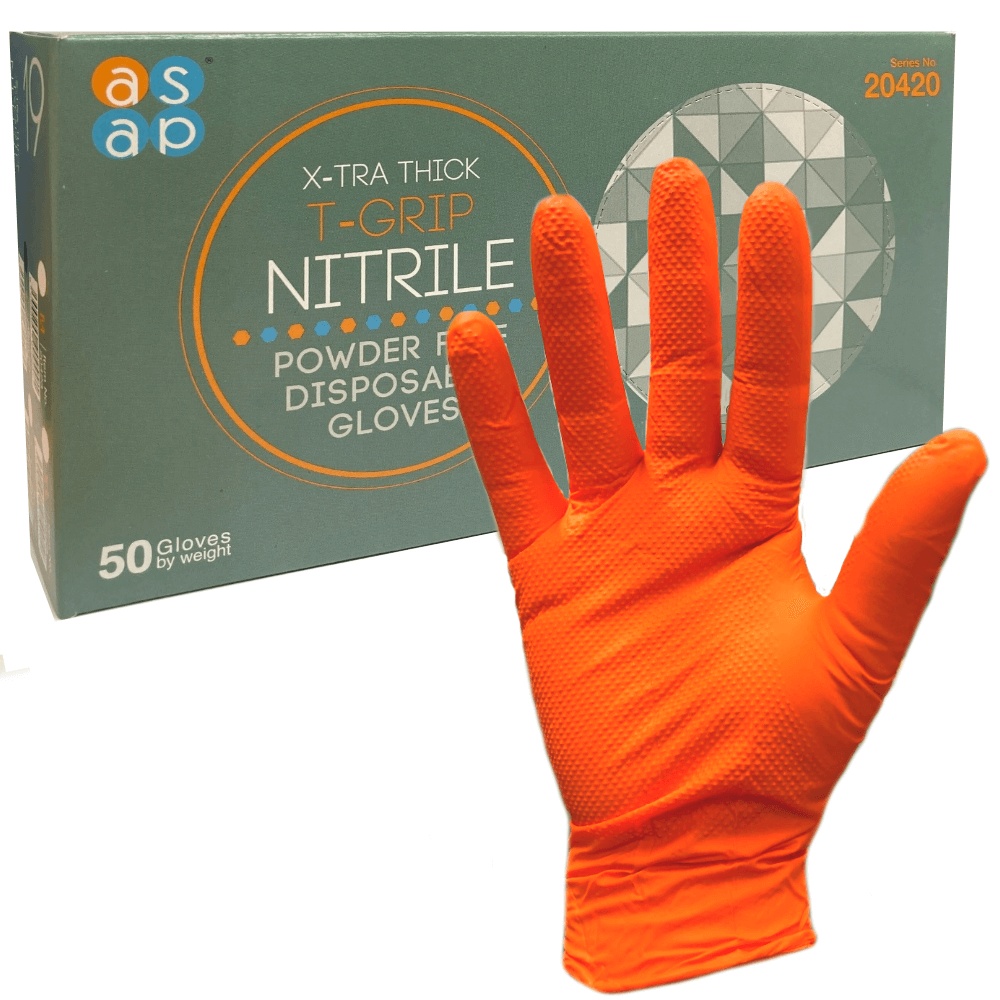
Worried about the risks of powdered gloves? From the messes created to issues like inflammation and wound infection, powder that is used in gloves can wreak havoc. However, this will not be a concern with the powder-free ASAP Nitrile Gloves. Functionality also features prominently in the design of these units. They come with textured fingertips that increase your grip- which is particularly handy when dealing with delicate instruments. After all, you don’t want your staff to risk dropping those expensive medical tools as they go about their tasks. With the ultra-soft nitrile structure of these gloves, you get the latex-like comfort without the risks that are associated with the conventional latex gloves. This also makes the gloves easy to wear.
Do you need extra protection? The ASAP Premium Nitrile Gloves come in with their increased tensile strength and tear resistance- up to 25% more. During the manufacturing process of these units, the proprietary dipping process that they undergo gives the gloves enhanced tactile sensitivity and superior puncture resistance.
Even aesthetics matter
Looking to exude professionalism? The Black Nitrile Gloves are widely popular for this. The aesthetically pleasing nature of the gloves has seen them become highly sought after in applications such as tattoo artistry, where the customers are keen on the professionalism of the business. Their positives go beyond looks though. For instance, their nature of hiding dirt and smudges makes them handy for situations where you’re dealing with oil and grease. This is key in helping workers even in medical facilities to maintain a clean and professional look. They also come in handy for emergency response teams, such as ambulance crews and cadets, who come into contact with a wide range of substances on a day-to-day basis.
Soothing Your Skin
There are plenty of situations where the staff have concerns about sensitive skin. This can be due to an underlying condition that causes the skin to dry up, or even aspects like soaps that are used reacting with the skin over time. With the ASAP Nitrile (Vitamin E) Gloves, your staff get to carry on with their tasks. The Vitamin E coating of these units soothes the skin, making them comfortable to wear. This is while still providing the necessary chemical and puncture resistance as they go about their duties. What’s more, the textile sensitivity and dexterity that comes with these units ensures that efficiency of operations is not hampered.
Covering More Skin
What of those high-risk applications where you want extra coverage that extends beyond your wrists? It may even be situations where you’ll be dipping your hands in chemical solutions. For such applications, working with gloves that have an extended cuff will come in handy. ASAP has got you covered with units such as the X-Tended Nitrile and X-Tended Black Nitrile gloves. The fingertip design of these units enhances your grip as you handle the different tools, and the structure of the nitrile allows for tactile sensitivity and dexterity. With the beaded cuff, wearing and removing the gloves is easy. These units are also powder-free, that way you get to avoid the troubles that come when dealing with the conventional powdered units. The ASAP Pro X-Tended Nitrile Gloves kick things up a notch, with extra length, where you get 16 inches (400mm) of protection. That way, you get to go about your task with the confidence that your skin is safe from the chemicals and contaminants being handled.
Best Practices For Wearing Gloves
Failing to properly don the gloves, will compromise their effectiveness in protecting your skin from contaminants, pathogens and hazardous material. Let’s break this down into three:
-
Getting the right size
When working with gloves of an inappropriate size, they will be more prone to getting tears, putting you at risk. This is for both cases of gloves that are too small or too large. When they are too small, the gloves will be tight, and become more susceptible to punctures, tears, and reduce the flexibility of your hands. On the other hand, when they are too large, they make a loose fit, creating wrinkles that affect your grip, and the gloves may even end up getting snagged in the machinery that you’re working with. You can easily check if the gloves you’re wearing are too small, by extending your fingers until they are straight. If the gloves appear to be stretching, then they are small, and you should get a larger size.
-
Donning the gloves
With the right fit, you can then proceed to wear them. Here, you’ll need to ensure that you do this is a clean work area. After all, you don’t want to soil the fresh pair of gloves by setting them on a dirty surface- as this will lead to further contamination. For instance, if you’re working in a lab, you should not place the gloves on surfaces that have come into contact with hazardous chemicals, as these will ultimately bring your skin into contact with those very same chemicals.
Any jewellery on your hands and wrists should be removed, and the hand given a thorough wash. Dirty hands will result in contamination of the inside surface of the glove. Harmful substances and pathogens can easily get transferred from soiled hands to the clean interior of the disposable nitrile gloves.
-
Taking off the gloves
Here, the main goal is to ensure that you don’t touch your skin with the outside of your glove, in order to prevent contamination. With your dominant hand, grab the outside of the glove of the other hand on the side of the palm, near the cuff. Pull off the glove from the hand, ball it up, and hold in in the gloved hand. Slip two of your fingers inside the cuff of the remaining glove, and peel it off, turning it inside out- and simultaneously encase the first glove that has been balled up. These are then disposed of following the waste segregation system that has been put in place in your establishment.
Taking Care Of Your Skin While Working With Gloves
Skincare is also a vital part of glove usage. While the gloves themselves protect you from chemicals and contaminants that are in the environment that you’re working in, what about what goes on underneath the glove?
After you wear the gloves, the skin of the hands is enclosed in a tight environment- unlike the rest of the skin on the body which gets to “breathe naturally”. In this enclosure, temperatures will be higher, as the hands warm up- which also increases based on the intensity of the activity being carried out. As the temperatures rise, more sweat is produced. The amount of perspiration varies based on the individual, the surrounding temperature, plus the glove itself, since it will be acting as a heat barrier. This is also why the thickness of the gloves being used is a key factor when making your selection, based on the industry you operate in and the working environment. Basically, the thinner gloves will allow for faster heat dissipation.
Back to the sweaty palms and skin: Trapped in the gloves, the sweat has nowhere to go. This means that your hands will be bathed in sweat throughout the duration in which you will have the gloves on- so if you’re working with thick gloves, more frequent changes will be required in this aspect. The longer that this enclosure lasts, the more super hydrated the skin cells become, causing the skin to become porous and friable. In this state, the hands will be at higher risk of damage, hence the need for more delicate care when washing and drying them.
How do you mitigate this? Gloves are necessary, and will have to be worn to protect yourself. However, how will you protect your skin in the process? For starters, working with a size that’s just slightly large will be beneficial. That way, there will be more room for air to circulate around your hands, thus keeping them dryer for longer. Note that the key is to wear a size that allows you to be comfortable and still carry out your tasks. You can also make more frequen
_2nd-300x300.jpeg)

0 Comments
Questions or feedback? Join the discussion below.
No comments yet. Be the first to comment.
Replying to