
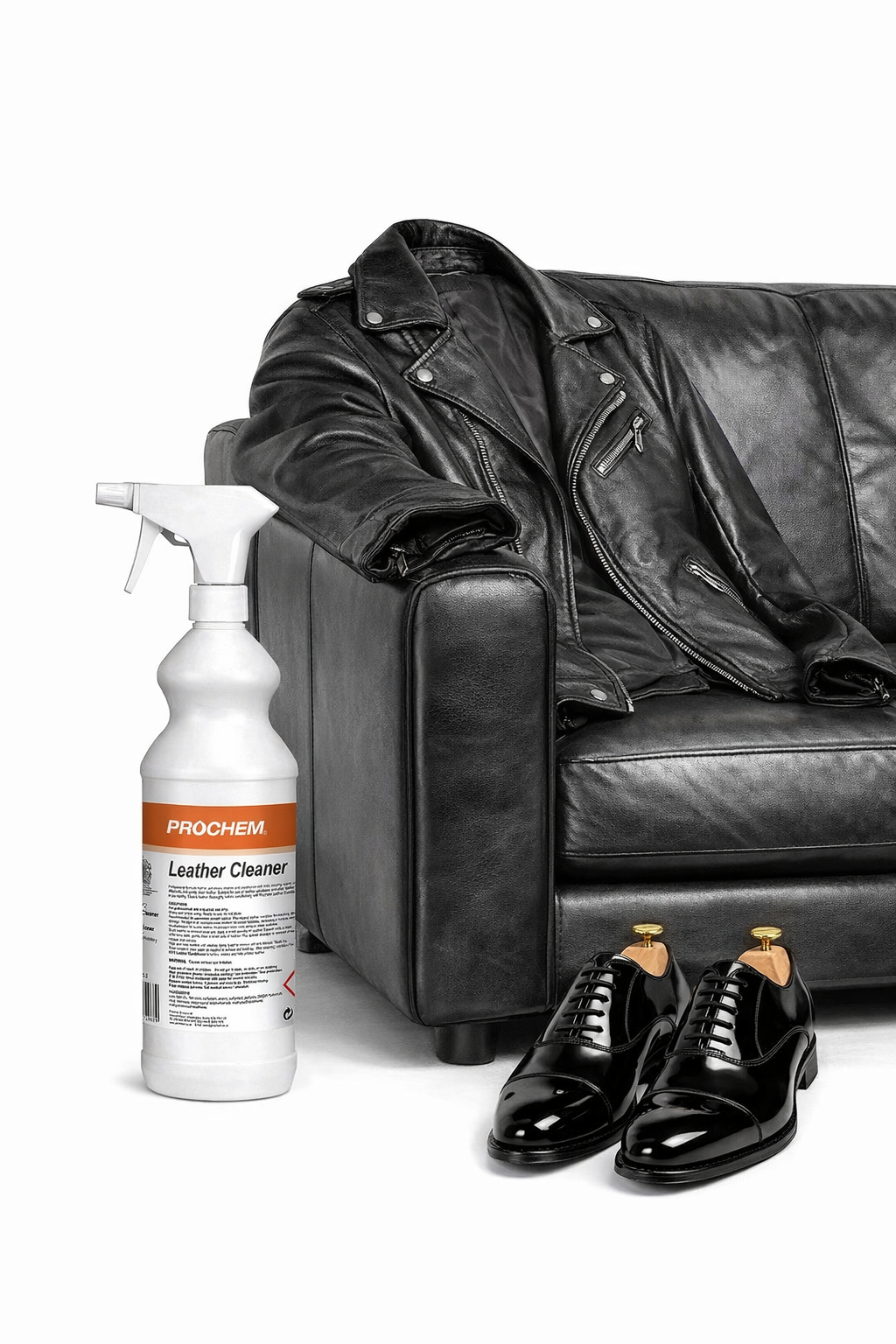
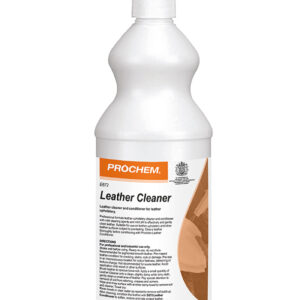
Prochem Leather Cleaner 1L Spray
Prochem Leather Cleaner 1L Spray Review and User Guide
Leather upholstery has a quiet way of showing wear. The change happens slowly. One day your sofa still feels fresh. A few weeks later, the arms look a little darker. The seat has a slight sheen where people sit most. The corners and stitching seem to be holding onto more grime than the rest of the surface. Even when the room is clean, the leather can start to look a little flat.
You want to clean it, though you also know leather can be easy to get wrong. A cleaner that works well on hard household surfaces can be too rough here. Too much moisture can leave the finish looking uneven. Scrubbing too hard can make worn areas stand out even more. Even a simple wipe-down feels like something you need to think through properly.
A Ready-to-Use Upholstery Cleaner
Leather responds best to the right cleaner, the right method, and the right amount of care. And that’s where the Prochem Leather Cleaner 1L Spray comes in.
You use it straight from the bottle (no need of mixing or diluting it first). The 1-litre spray bottle gives you a controlled amount of product, which suits cleaning where precision matters more than heavy saturation.
The formula also includes conditioning elements. These are speciality surfactants and neatsfoot oil meant to clean finished leather in a measured way rather than treat it like a sealed kitchen worktop or a plastic chair.
Prochem Leather Cleaner 1L Spray is best suited to routine upholstery soil rather than severe restoration work. Basically along the lines of body oils from regular seating, light grime on armrests, residue that gathers in seating creases, and everyday soil that builds up slowly through normal use.
Key Product Features
Mild pH
If there is one thing leather owners all relate to, it is the barrage of warnings about the things they should not use on their items. Sure, the material has a premium feel to it, and it is durable, but there is a whole range of products that can easily damage it.
Anything too harsh, too alkaline, too solvent-heavy, or too abrasive is an instant threat. We’re talking alcohol-based products, bleach, ammonia, strong solvents, high-pH soaps, glass cleaners, furniture polish, and even saddle soap. These can strip oils, disturb the finish, dry the leather out, darken it, discolour it, or leave it more likely to crack over time.
You don’t have to worry about any of that with the Prochem Leather Cleaner 1L Spray. At a pH of 6, it is purposely designed to be safe and gentle to the upholstery, while still delivering the required cleaning action.
Speciality Surfactants and Controlled Soil Removal
Surfactants help loosen the dirt that sits on the leather surface. You want that when you are cleaning a chair or sofa that picks up daily grime in small, stubborn ways. A little build-up on the arms. A faint line of dirt in the stitching. A dull patch where people sit most often. You want that soil lifted away with care, not pushed around with too much liquid or too much force.
That is why this kind of cleaner works best in a controlled way. You start by brushing away loose soil. Then you place a small amount on a clean, slightly damp white terry cloth. You work on a small section at a time. Gently. Steadily. After that, you wipe and rinse with another damp towel and dry the area with a clean towel.
That method suits leather far better than spraying heavily across the whole surface. It keeps the Prochem Leather Cleaner 1L Spray where you need it. It gives you better control over moisture. It also helps you focus on the places that usually need the most attention, like stitching, corners, and those troublesome creases.
The formula supports that careful approach too. It has the body of a viscous liquid, mixes with water, and suits hand application and wipe-off cleaning. So when you clean, the process feels measured, tidy, and easier to manage.
Neatsfoot Oil and Conditioning your Furniture
When you clean leather furniture, you usually want more than a surface wipe-down. You want the sofa or chair to feel fresher afterwards. Softer too. Less tired. Less dry. More settled.
That is where neatsfoot oil comes in. It has a long connection with leather care, so its place in the formula helps explain why this cleaner feels more considered than a basic surface product. As you clean away everyday soil, the leather also gets a little support during the process.
You notice that most on furniture that gets regular use. The favourite armchair. The family sofa. The dining chair that is pulled out every day. These pieces collect more than visible dirt. They also carry the effects of friction, warmth, and constant contact. A cleaner with some conditioning character helps the surface feel less strained while you work through that build-up.
Still, cleaning and full conditioning are two different steps. This cleaner supports the leather during the wash stage. After that, a separate Prochem Leather Conditioner helps bring back softness, restore suppleness, and give the surface more protection. So as you work through your leather care routine, the cleaner helps prepare the furniture well, while the conditioner takes the finish further.
Light Lemon Fragrance
Scent shapes the whole cleaning experience.
A strong smell can fill the room fast. A harsh chemical scent can make the job feel heavier and less pleasant. A lighter fragrance feels easier to work with. And easier to live with once you are done.
Prochem Leather Cleaner 1L Spray helps the process feel fresher as you clean. As you move across a sofa, chair, or other leather seat, the lemon scent stays light and clean rather than taking over the space. That feels especially welcome when you are working in a sitting room, bedroom, or office where strong smells can hang around.
Once the task is finished, the furniture carries that fresher, just-cleaned feel in a softer way.
Which Leather Surfaces It Can Be Used On
Upholstery in Homes
Prochem Leather Cleaner 1L Spray is designed first and foremost for upholstery. That makes it a suitable option for many of the leather items you live with every day, including sofas, armchairs, dining chairs, ottomans, and upholstered headboards, as long as the leather is the right type, the key one being pigmented smooth leather.
If your sofa has a finished surface, a coated feel, and a fairly even colour, this is the kind of item the cleaner is designed for. It also fits the way dirt tends to settle on household seating. Build-up in the stitching. Grime in the creases. A little dullness in the corners and along the edges where hands and clothing make regular contact. In other words, where body oils, dust, and day-to-day grime gather gradually.
Leather in Commercial or Hospitality Settings
Shared seating shows wear in a different way. The dirt is usually lighter, though it builds up faster. A reception chair may look fine in the morning and a little duller by the end of the week. Waiting-room seating can start to show grime on the arms, seat fronts, and stitched edges long before the whole piece looks obviously dirty. Hotel lounge chairs go through the same pattern. So do office visitor seats.
The Prochem Leather Cleaner 1L Spray suits that kind of steady upkeep. It works well for leather seating in places where different people use the furniture throughout the day and leave behind the small signs of contact that gradually change how the surface looks.
The ready-to-use format also helps in these settings. It keeps the job simple and consistent, which is useful when regular maintenance needs to fit into a working day. You can apply a small amount to a cloth, focus on the area that needs attention, and clean without turning the whole piece into a larger task.
That careful approach fits shared seating especially well. You are often dealing with touch points rather than heavy overall soiling. The front edge of a seat. The top of an arm. A stitched seam that has picked up a little grime. Cleaning through a cloth keeps the process controlled and makes it easier to maintain the furniture in a neat, even way.
Other Leather Surfaces Subject to Pre-Testing
Leather can vary in finish, colour stability, absorbency, and wear level. If you have another smooth finished leather item and you are thinking about using this cleaner, first test it out in a hidden area.
Check for cracking, stains, cuts or damage and to test for colour fastness, darkening or texture change before wider use. That way you can judge the suitability before the cleaner touches the whole surface.
Surfaces It Should NOT Be Used On
Some surfaces need a different approach from the start. Suede is one of them. This cleaner is made for pigmented smooth leather, and suede behaves very differently in everyday care. It has a softer, more absorbent texture. It marks more easily. It also reacts differently to moisture and wiping. If you use the wrong kind of cleaner on suede, the surface can quickly lose its even look and feel.
You also need to think about what sits around the leather. Many chairs and sofas include wooden arms, trim, legs, or nearby materials that are not meant to come into contact with the cleaner. That is where a careful cloth-based method becomes especially useful. When you apply a small amount to the cloth instead of spreading product freely, you keep the cleaning focused on the leather and reduce the chance of reaching surrounding surfaces.
How To Use Prochem Leather Cleaner 1L Spray
Step 1: Inspect and Test
Start by slowing down for a minute and really looking at the leather in front of you.
Look for cracking, cuts, worn patches, stains, and any places where the finish already looks dry, thin, or tired. Pay close attention to the areas that carry the most daily use. Seat edges. Arm fronts. Cushion tops. Corners. These are often the first places to show stress.
A close look helps you separate dirt from wear. Sometimes a surface looks dull because it is dirty. Sometimes it looks dull because the finish has already been rubbed down through everyday use. Those are two very different situations. When you inspect first, you get a better sense of how gently you need to work and which sections may need extra care.
Once you have looked over the piece, test the cleaner in a hidden area before moving further. A spot behind a cushion works well. So does the lower outer side of a chair. The back edge under a sofa cushion is another good place. Apply a small amount using the same method you plan to use on the visible sections. Then assess the leather carefully.
Focus on three things. Colour fastness. Darkening. Texture change. You want the surface to keep its colour, its finish, and its feel. If it does, you can move ahead with more confidence. If the spot reacts poorly, stop there and reassess before touching the rest of the upholstery.
Step 2: Remove Loose Soil
Get rid of the dust, grit, crumbs, and loose debris in seams, folds, and stitched areas, and the product will focus on the actual residue clinging to the leather. When those particles stay in place you will start wiping over them. They can drag across the finish and make the cleaning rougher than it needs to be.
Use a soft brush or a clean dry cloth and work gently. Go over the obvious contact points first, then move into the details. Stitched edges often hold more dust. Creases can trap dry debris. The gap between the back and seat cushion usually carries a little build-up too.
Step 3: Apply to a Cloth, Not Distribute Liberally Across the Surface
This cleaner is ready to use, so there is no mixing or diluting before you begin. Even so, leather responds best to restraint. You want control. You want a light hand. You want the moisture level to stay manageable from start to finish.
Apply a small quantity of cleaner onto a clean, slightly damp white terry cloth. This keeps the product where you want it and helps you manage both coverage and moisture as you work. A white cloth is especially helpful because it shows you the soil lifting away in real time. You can see when an area is getting cleaner. You can also see when the cloth needs rinsing or changing.
Working from the cloth also gives you better control over the surface itself. Instead of spreading cleaner broadly across a whole panel, you guide it with your hand and keep the application precise. That feels much easier on leather upholstery, especially when you are working around seams, edges, and small worn areas that need a careful touch.
Step 4: Clean Small Sections Gently
Work in small sections rather than trying to tackle the whole item at once. Leather cleaning usually goes better when you keep the pace steady and the sections manageable. A sofa arm. One seat panel. One side of a back cushion. Small areas are easier to judge, easier to wipe down properly, and easier to keep even.
Use light, steady movements and let the cleaner do the work. Leather rarely responds well to force. Hard scrubbing can draw attention to already worn patches and make the surface feel more stressed. A calmer pass gives you a better result. It also helps you notice where the dirt is actually sitting instead of reacting to every mark as if it needs extra pressure.
Give more attention to the areas where grime naturally gathers. Stitching. Creases. Corners. The join between the seat and back cushion. Piping lines. The tops of the arms where hands rest every day. These are the places that often need an extra pass. Working section by section also helps you keep track of what has already been cleaned and where the cloth needs rinsing before you continue.
Step 5: Wipe Away Cleaner and Loosened Soil
Use another damp towel for this. Keep an eye on your towels as you go. Once they start picking up visible soil, rinse them in clear water before moving on. A dirty towel will only carry grime from one section to the next.
Step 6: Dry the Surface Properly
A dry towel lifts away the last traces of dampness and helps even out the finish as the leather dries down.
It also gives you another chance to look closely at the cleaned section. Does the area look even? Is there any soil still sitting in the stitching? Decide whether that section is finished or needs one more gentle pass before you move on.
Step 7: Follow With Conditioner Where Needed
Once the leather is clean and dry, finish with Prochem Leather Conditioner where the surface would benefit from extra care. This step is especially helpful on upholstery that feels a little dry, looks slightly tired, or gets heavy use day after day. Think of the family sofa. The chair everyone chooses first. The dining seats that are pulled out and pushed back every evening. These pieces often need more than surface cleaning alone.
The cleaner already takes a measured approach to leather care. It contains mild cleaning and conditioning agents and is designed to prepare the surface before conditioning. A separate conditioner takes that care further. It helps soften the leather, restore suppleness, and support the finish after the soil has been removed.
What to Expect from Prochem Leather Cleaner 1L Spray
Definitely, you expect a cleaner, fresher-looking surface. The leather feels cleaner to the touch after use, especially in areas where daily contact leaves a light film of body oils and general soil. Seating creases, stitched sections, corners, and arm areas show the biggest visible lift because those are the places where residue tends to collect.
Another benefit is better preparation for follow-up care. The cleaner is typically used before Prochem Leather Conditioner, so part of its value is that it clears away surface dirt before conditioning begins. A properly cleaned surface gives you a better base for any later softening and protection treatment.
Limits of What the Cleaner Can Correct
If the leather has deep cracking, cuts, severe wear, finish loss, or long-standing structural damage, cleaning alone will only take you so far.
The same goes for neglected leather that has been left dry, heavily marked, or physically worn for a long time. In those cases, the cleaner will remove surface soil and improve presentation, though it will not restore lost finish or rebuild damaged material. Fair expectations matter here. This is a measured leather cleaner with some conditioning support built in, rather than a restoration treatment. It is also intended for pigmented smooth leather and is not recommended for suede leather, so suitability plays a major role in the outcome you see.
Technique Affects the Outcome
Use too much product, or rush through the wipe-down stage, then you will end up with a finish that looks less even. And yes, you’ll be forced to repeat the task. That’s not how you want things playing out.
The standard approach is working with a small quantity on a clean and slightly damp white terry clot. Then you wipe with another damp towel and dry the area.That sequence keeps the process controlled and helps remove loosened soil instead of spreading it around. You get more value from the product too since there is minimal wastage.
Common Mistakes People Make With Leather Cleaners
Using the Wrong Cleaner on the Wrong Leather
Leather care begins with identifying the surface correctly. We’ve said that Prochem Leather Cleaner 1L Spray is intended for pigmented smooth leather, and specifically warned against using it on suede leather. Before cleaning, you also need to inspect the surface for cracking, stains, cuts, or damage. When the cleaner matches the leather, the surface is far more likely to respond evenly. When the surface type is wrong, the finish can react unpredictably, the texture can shift, and the final appearance can become patchy.
Applying Too Much Product
This mistake usually starts with good intentions. You want the leather to look properly clean. So a little extra product feels like a smart idea. Fair enough. Leather rarely agrees though.
The surface gets wetter than it needs to. The dirt starts moving around instead of lifting away neatly. Then the panel dries unevenly and the finish can end up looking patchy.
A lighter application works much better. It keeps the moisture level in check. It helps you stay precise. And it lets you focus on the parts that actually need attention instead of soaking the whole area for no reason.
Plus with a measured amount you’ll find it much easier to move section by section. That way you’ll keep an eye on how the leather is responding, and maintain a more consistent finish from one area to the next.
Scrubbing Too Aggressively
A darker line inside a crease or around a stitched edge? Yes, that can tempt you to press harder. Move your cloth faster. Use more force with the cleaning. Not a good idea though.
A steady hand keeps the process controlled. Hard scrubbing can leave the surface looking more tired rather than cleaner.
A gentle pass over a small area at a time helps lift surface residue while respecting the finish. Aggressive rubbing puts extra stress on the very parts of the upholstery that already take the most contact during daily use.
Forgetting the Follow-Up Care
The final mistake comes when the visible dirt disappears and the job feels complete. The chair looks fresher, the cloth shows lifted soil, and it is tempting to stop there. Leather care works better as a sequence.
After cleaning, the surface should be followed with leather conditioner to help soften, restore, and protect the upholstery. That helps maintain a more settled, cared-for finish, especially on furniture that sees regular use.
Cleaning lifts the everyday soil. Conditioning supports the surface afterwards.
Safety Handling and Storage
Good handling starts with a few sensible habits. Wear protective gloves and eye protection while you work. If splashes get into your eyes, rinse cautiously with water for several minutes, remove contact lenses if that is easy to do, continue rinsing, and seek medical advice if irritation continues.
Side shield safety glasses and says nitrile rubber gloves are suitable for handling this product. Adequate ventilation is advised as well, even though the cleaner is considered a low inhalation hazard at normal workplace temperatures.
You also want to keep the cleaner off your skin and clothing, wash your hands after use, and keep cloths and towels under control while you work through the upholstery. A calm, tidy setup makes the whole cleaning job safer. Since the product is designed to be applied in a small quantity to a clean, slightly damp white terry cloth, careful handling fits naturally into the method itself.
Storage matters too. Prochem Leather Cleaner 1L Spray should be kept in its closed original container and stored between 5°C and 30°C. That range helps keep the product stable and ready for use. Protect it from freezing and direct sunlight, both of which can affect how a liquid product performs over time. Certainly, you should also keep it out of reach of children.
FAQs About Prochem Leather Cleaner 1L Spray
Does it also condition the leather?
Yes, to a degree. It is a leather cleaner and conditioner for leather upholstery, though it still sits at the cleaning stage of the routine rather than replacing follow-up care altogether. After cleaning, it’s recommended that you use a Leather Conditioner to help soften, restore, and protect the leather. If your upholstery is in regular use, that second step can help the leather feel more settled and supple.
Can it remove old stains from leather?
Sometimes, though it depends on what you mean by “old stains.”
This cleaner handles routine soil, light grime, and everyday build-up well. So if your leather has picked up the usual signs of life on a busy chair or sofa, you will see noticeable improvement. If you are dealing with long-set stains, worn finish, cracking, cuts, or deeper discolouration, the result may be more “looks better overall” than “good as new”.
That’s also why we emphasize pre-inspection. Check for stains and damage first. It helps you work out whether you are dealing with removable surface dirt or a deeper condition issue that calls for a different kind of care.
How often should you use it on a leather sofa?
As often as the sofa’s use and condition call for. There is no single fixed schedule because leather seating wears differently depending on:
- traffic,
- body contact,
- room conditions, and;
- how quickly soil builds up.
A sofa used every evening will usually need attention sooner than one in a formal sitting room that sees occasional use. Start by watching the surface. If the arms, seat fronts, stitching, or creases look duller, feel less fresh, or show visible build-up, it is usually time for a maintenance clean. Since the product is made for leather upholstery, has a mild pH of 6, and uses a gentle cloth-applied method, it fits regular upkeep better than occasional harsh treatment.
Can you use it on car leather seats?
Yes, as long as the leather is the right type and you test first.
Car seats go through a lot. Heat, friction, body oils, denim transfer, quick exits, messy passengers. If the leather is pigmented smooth leather and responds well in a hidden test area, you are good to go.
Start by checking for cracks, stains, worn patches, or any areas where the finish already looks tired. Then test a discreet spot for colour change, darkening, or texture shift. If all looks good, the cloth-based method works well on seat panels, bolsters, and stitched sections that pick up the usual daily grime.
Recommended products
Discover more alternatives and similar items.

0 Comments
Questions or feedback? Join the discussion below.
No comments yet. Be the first to comment.
Replying to