
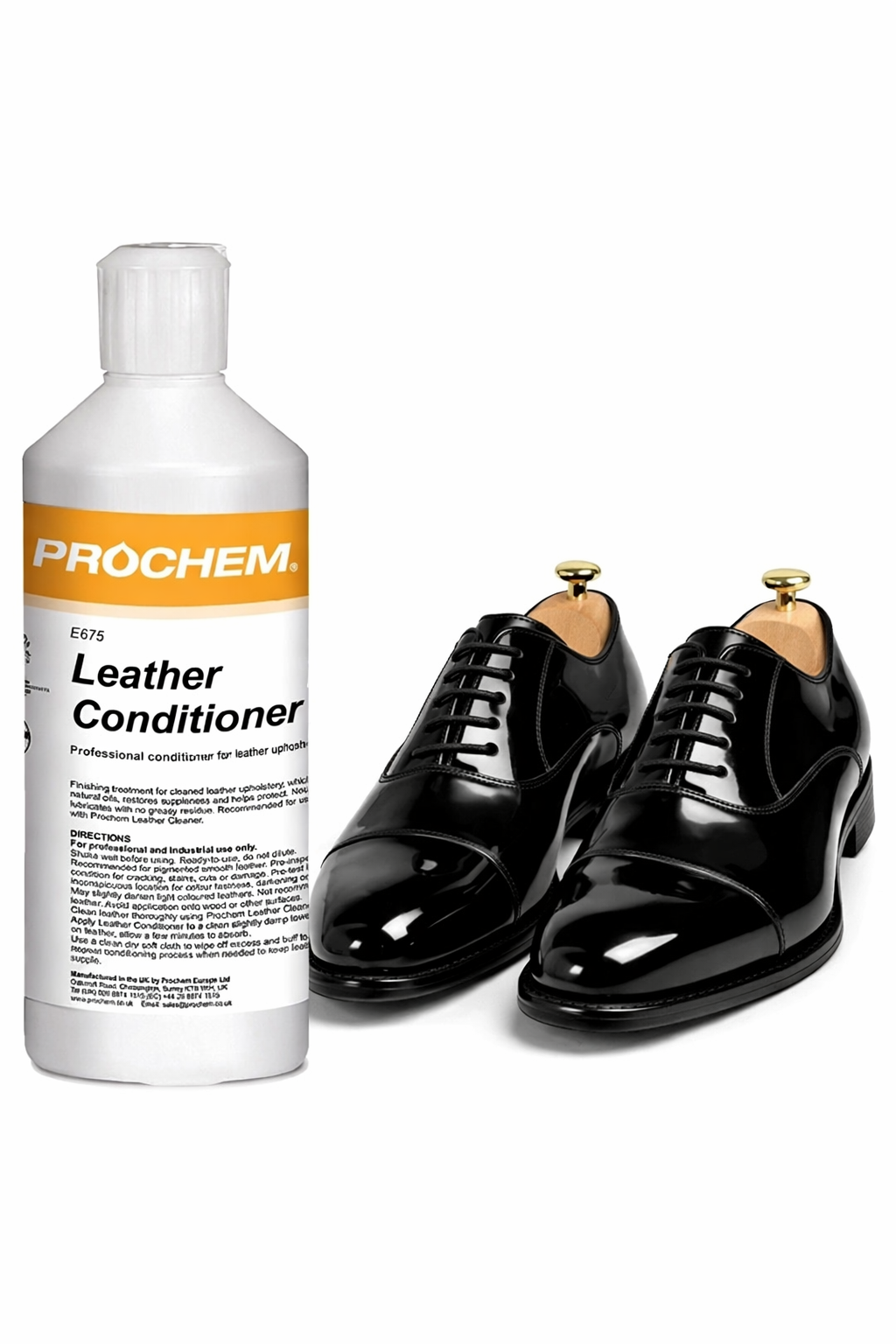
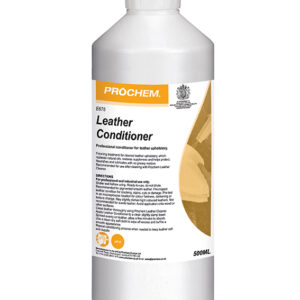
Prochem Leather Conditioner 500ml
Care for your Upholstery with the Prochem Leather Conditioner 500ml
It’s a daily cycle. People drop into your upholstery, slide across it, lean on it and get sprawled on it. What does all that contact do to the surface? Add body oils, friction, room heat, and the slow wear of everyday use, and even good leather can start to feel a little tired.
Gradually, the seat loses some of its softness. The arms start to feel drier. The front edge stops feeling as smooth as it once did. Nothing ‘glaringly wrong’ at first. It just feels a bit less rich, a bit less comfortable, a bit less like the leather you fell for in the first place.
You can turn things around with Prochem Leather Conditioner 500ml.
Prolong the Life of your Upholstery
Supple leather feels flexible, comfortable, and smooth to the touch. It bends and responds naturally when you sit on it, not feeling all dry, papery, or slightly rigid. Comfort depends as much on surface feel as it does on appearance. And yes, it must be aesthetically pleasing. Your furniture is the focal point of the room. Its state should accentuate the ambience.
Prochem Leather Conditioner 500ml is built to support that kind of everyday softness. The formulation includes neatsfoot oil among its key components. The goal is to support leather that has lost some of its smooth, comfortable feel through use, exposure, or the cleaning process itself.
Note that this does not place the product in the repair category. You need to inspect for cracking, cuts, stains, and other damage before use. Damaged leather needs separate attention. Here, the focus stays on maintaining good-condition upholstery and improving the feel of leather that needs conditioning after cleaning.
A Non-Greasy Finish
This is one key consideration when using products on surfaces you touch, lean on, and sit on every day.
Nobody wants that greasy feel. It makes the furniture uncomfortable. The surface may feel slippery, tacky, or heavy. You end up with a sofa or chair that’s less refined than it should. Excess residue can also affect how evenly the finish presents across the leather. On frequently used seating, a cleaner final feel is usually what you want because it allows the upholstery to stay comfortable and natural in use.
That is why the application method matters as much as the formula. The recommended process is to apply the conditioner to a clean slightly damp towel, spread it evenly, allow a few minutes for absorption, then wipe away any excess with a dry soft cloth and buff the surface smooth. More on that shortly.
Formulated for Pigmented Smooth Leather
Pigmented leather is widely used on sofas, dining chairs, office seating, reception furniture, and many vehicle interiors. It usually has a finished surface with colour applied and a smoother, more sealed feel than delicate specialty leathers. So it needs routine cleaning and conditioning.
This kind of leather is generally more even and refined, as opposed to fibrous or absorbent. That’s why it’s all over busy homes, hospitality spaces, and commercial environments. Prochem Leather Conditioner 500ml works well here with items designed for regular use.
Why Suede and Similar Finishes Need Different Care
This conditioner is specifically not recommended for suede leather.
Suede behaves very differently from smooth pigmented leather. Instead of having a more finished outer surface, it has an open, textured nap that is much more absorbent and much more sensitive to moisture, product loading, and rubbing.
Conditioners designed for smooth leather can flatten or disturb the texture of suede. That changes the way the surface looks, or creates uneven patches that are hard to correct. You also want this in mind when dealing with similar specialty finishes that have a more delicate or open character (the likes of Nubuck, unfinished leather, and other soft-touch materials). These respond to products very differently from coated upholstery leather and need their own dedicated care.
So not all leather is equal. A finished sofa cushion and a brushed suede panel may both be leather, yet they ask for completely different treatment. Is the material absorbent, velvety, or textured rather than smooth and sealed? Slow down and identify it properly before you reach for this conditioner.
How About Light Coloured Leather?
Even a well-suited conditioner can slightly alter the appearance of pale shades.
When using the Prochem Leather Conditioner 500ml on such units, pre-test for colour fastness, darkening, or texture change. It may slightly darken light coloured leathers. That does not mean pale leather is off limits. It means you need a more careful approach before full application.
So test in an inconspicuous area first, such as the back of a cushion, the rear skirt of a sofa, or a section that sits out of normal view. Apply a small amount in the same way you would during full use, allow it to absorb, then check the result once the surface settles.
You are looking for three things:
- shift in colour depth,
- change in surface feel,
- unevenness in the finish.
That quick check gives you a clearer idea of how the leather responds before you move across the visible areas.
Pale beige, cream, stone, and similar shades often show change more readily than darker tones, so testing matters more with these colours. If the test area looks even and feels right, you can proceed with the rest of the application.
Performance of the Prochem Leather Conditioner 500ml
pH 6
When dealing with leather, acidity or alkalinity is a sensitive factor. The finished surfaces have dyes, binders, pigments, and protective coatings on top of the leather itself. When a product is too far off what that surface can comfortably handle, it can dry the finish, weaken it, disturb the colour, or leave the leather feeling rougher and less even over time. That’s why there are all those warnings against splashing alcohol, abrasives, and strong solvents on leather furniture. Or using saddle soap, furniture polish, and glass cleaner.
High-pH products like strong household degreasers, bleach-based sprays, harsh soaps, or some all-purpose cleaners are too aggressive. They may clean quickly, but they can also strip away the surface balance that keeps upholstery looking and feeling comfortable. The result can show up as dryness, dullness, stiffness, fading, patchiness, or a finish that starts looking more tired than the dirt ever made it look.
A leather sofa arm that already carries skin oils and daily friction is more likely to react badly to a harsh alkaline cleaner than a formal chair that barely gets used. A pale dining chair that picks up denim transfer or food residue may look like it needs something strong, though using a strong cleaner can leave the finish looking uneven once it dries. A car seat with body oils, heat, and regular friction can also suffer if you reach for a harsh multi-surface cleaner instead of something made for leather. That is why leather maintenance products are usually designed to be milder and more controlled.
Prochem Leather Conditioner 500ML has a pH of 6. This places the formula in a mildly acidic to near-neutral range, which suits a finishing treatment whose job is to support the leather after cleaning. You are looking at a conditioner intended to refresh surface feel and help maintain suppleness, so a balanced pH profile is right on the mark.
Ready-to-Use Conditioner
For you as the user, that changes the whole experience:
- First, you do not have to calculate mixing ratios, find a spare container, or wonder whether too much water will weaken the performance.
That is especially useful in leather care, where overworking the surface can create avoidable problems.
- Second, it improves consistency.
Every application starts from the same strength, so you have a better chance of getting an even result from one section of upholstery to the next. On a sofa, armchair, or car seat, this reduces chances of uneven application which would have led to patchy finish differences that catch the light.
- Third, it lowers the risk of dilution error.
With some cleaning products, using too little concentrate can make the result disappointing, while using too much can make a surface harder to manage. Ready-to-use leather conditioner keeps that variable out of the process. You simply shake the bottle, apply it to a clean slightly damp towel, spread it evenly, allow a few minutes for absorption, and buff off the excess.
Oils, Conditioning Agents and Surface Feel
The formulation contains neatsfoot oil and conditioning agents.These nourish the leather and support that softness, flexibility, and a smoother hand feel on finished upholstery. It achieves this by replacing lost natural oils.
With its emulsion, you can easily spread it across the leather. You end up with a settled, refined finish that feels conditioned rather than overloaded.
The leather and lemon scent adds to the final effect, enhancing the ambience of the premises. Altogether, the Prochem Leather Conditioner 500ml is built for feel, finish, and ease of application on cleaned leather upholstery.
A Reputable Brand
Prochem Europe Limited has been part of the cleaning industry since 5 December 1974. That’s a long foothold in a trade where product performance, consistency, and technical know-how matter every day. The company began under the longer name Professional Chemical and Equipment Company Limited before adopting the Prochem Europe Limited name in 2000. It remains an active private limited company in the UK, so you are dealing with an established operating business rather than a short-lived label.
Its core identity is on specialisation. Prochem focuses on cleaning and maintenance products for carpet, fabric, floor, and hard surface care, alongside carpet and upholstery cleaning machines and accessories. You are looking at a manufacturer built around professional maintenance tasks, with systems and tools designed for technicians, cleaning businesses, and serious users who want method as much as product.
That specialist position has also been recognised publicly. Prochem appears in the Royal Warrant Holders Association directory as a supplier of carpet cleaning products to HM The King. It basically places the company among established UK suppliers trusted at a very high level.
The brand supports its product range with structured training and technical resources. Prochem’s National Training Academy in Chessington, Surrey offers courses on the correct operation and use of both machines and chemical products. After all, good results come from process, product choice, and technique working together.
Alongside products, Prochem provides access to Safety Data Sheets, catalogues, cleaning technical help guides, videos, service and parts manuals, and a distributor network. Those resources are part of a working ecosystem for professionals who need more than a label and a vague promise. They need instructions, support, and repeatable methods they can rely on in real jobs.
When a formulation comes from a brand with this kind of background, it is part of an established care system. That is how Prochem Leather Conditioner is positioned. A specialist brand is more likely to build products around recognised material behaviour, realistic workflows, and the practical needs of cleaners who work on upholstery every day. That is why this conditioner has become a staple of the professional maintenance routine.
How to Use the Prochem Leather Conditioner 500ml
Step 1: Check the Leather Before You Start
Your first job is making sure the surface matches that. If the leather looks smooth, finished, and fairly even across the surface, you are in the right territory. If it looks absorbent, velvety, or textured like suede, stop there and reassess.
Next, inspect the general condition. Look for cracks, cuts, stains, worn patches, dry-looking areas, and any damage around seams, edges, or high-contact sections such as arms and seat fronts. The conditioner works best on leather that is fundamentally sound. A well-kept leather chair may only need a light, even treatment. An older sofa with visible dryness may need more patience and a more measured hand.
Step 2: Pre-Test for Colour and Finish Response
This is one of the most useful steps in the whole process because leather can vary in colour response even within the same broad category. You want to assess its compatibility. Note that the conditioner may slightly darken light coloured leathers.
A hidden spot (back edge of a cushion, rear corner of a sofa) will do, or even that low section that sits out of normal view. Apply a small amount in the same way you plan to use across the rest of the piece. Give it a few minutes to settle, then look closely.
- Has the colour deepened more than you are comfortable with?
- Does the finish still look even?
- Does the surface still feel right for the upholstery?
This is especially important with pale shades such as cream, beige, stone, or light grey, where even a small shift can show more clearly. If the test area looks balanced and the finish stays smooth, you can carry on.
Step 3: Clean the Surface
Start with clean leather. Always.
If you apply conditioner over a dirty area, you end up sealing that grime into the surface instead of properly caring for it. The leather may then look patchy. It may also feel less smooth than you expected. And that polished, well-finished result becomes much harder to achieve.
Cleaning first gives you a fresh surface to work with. It allows the conditioner to sit more evenly and absorb more naturally across the leather. You get a cleaner finish. You also get better consistency from one section to the next.
Give it a little time to settle before proceeding. It should be fresh and ready, not damp or unsettled. When the surface is clean and calm, the conditioner can do what it is meant to do.
Step 4: Apply Sparingly and Evenly
Give the bottle a good shake first. Then apply a small amount of conditioner to a clean, slightly damp towel. From there, work it over the leather in a thin, even layer. Take your time. A steady hand will give you a far better finish.
Putting the product onto the cloth first gives you more control right away. You can guide it where you want it to go instead of dealing with excess product sitting on the upholstery. That makes it easier to cover the surface lightly and evenly without giving one area too much and another too little.
Work in sections as you go. This keeps the process tidy and helps you see exactly where you have already treated the leather. It is especially useful on larger sofas, wide seat cushions, and chairs with several panels.
Slow down around seams, piping, edges, and joins. Those spots can hold onto extra product very quickly. If too much gathers there, the finish can start to look uneven. You want smooth coverage across the surface, not damp patches or overloaded corners.
Less usually works better here. The formula is already ready to use, so there is no need to overdo it. A light, measured application gives the leather a cleaner, more balanced finish and helps the whole piece look well cared for.
Step 5: Let It Absorb Then Buff the Surface
Once you have spread the conditioner, allow it a few minutes to absorb into the leather. That gives the product a chance to settle before you refine the finish. Use a clean dry soft cloth to wipe off any excess and buff the surface to a smooth appearance.
Buffing is what brings the treatment together. It helps even out the finish, lifts away surplus product, and leaves the leather feeling polished in the best sense of the word.
Take your time with this final pass. Use a soft cloth, move evenly across the section, and pay attention to any spots where the conditioner appears heavier. A careful buff will sort those out and help the upholstery look more uniform.
After that, step back and assess the result. Repeat the conditioning process when needed to keep it soft and supple.
Expected Results
Improvements in Feel and Appearance
When you use Prochem Leather Conditioner 500ml properly, the first thing to note is the change in feel. The leather becomes softer under your hand. It should be less dry, especially in the areas that get the most contact, like seats, arms, and backrests.
The upholstery will be more comfortable once you have finished buffing. Had it begun to look tired? It will have a fresher, more maintained character without being ‘heavy’.
Visually, the finish should look more even too. That usually happens when you apply the product in a light layer, give it a little time to absorb, and then buff it.
So it boils down to a better hand feel, better flexibility, and a neater finish across the surface.
What It Will NOT Fix
Clear expectations are important here. A leather conditioner does not turn into a repair treatment once it touches the upholstery. Pre-existing defects (cracking, stains, cuts, or damage) need to be assessed on their own terms.
You should not expect this product to reverse close tears or rebuild worn-through areas> It is not a miracle cure for leather that has been severely neglected for a long time. It also will not remove heavy soiling by itself (it is meant to follow cleaning, not substitute it).
The same applies to severe fading. Yes, the conditioner can help the finish look better cared for. However, it will not rebuild lost colour depth or repair advanced physical damage. What it does very well is support leather that is still serviceable and worth maintaining.
For upholstery that has deep cracks, cuts, torn panels, or ingrained contamination, you are looking at a different kind of intervention.
Common Mistakes That Can Undermine the Finish
Over-Applying the Product
Too much product can leave the leather feeling heavier than it should and make the final buff harder to control. It can also collect around seams, stitching, and panel edges, where residue tends to show up first. Apply conditioner sparingly and remove excess with a clean cloth.
If you want the leather to feel soft and settled rather than coated, treat the surface in thin, even passes. You can always repeat the process later when the upholstery genuinely needs it. A heavy first application rarely improves the outcome.
Treating the Wrong Type of Leather
It is easy to focus so much on the leather that you forget what is sitting right next to it.
A lot of furniture and car interiors mix leather with other finishes. You might be working around wood arms, painted trim, plastic panels, metal details, or glossy edging. That is where things can get messy if you move too quickly. The product is meant for the leather area, so once it spreads onto nearby surfaces, you may end up with streaks, a light film, or extra wiping that you did not plan for.
And yes, even a small slip can take attention away from the finish you were trying to improve. Instead of the leather looking clean and well cared for, your eye gets pulled to the marks around it.
The best approach is a slower one. Put the conditioner onto your cloth first, then work carefully around edges, seams, trim lines, and joins. That gives you better control straight away. It also helps you keep the treatment exactly where it should be, which is on the leather and nowhere else.
Skipping Preparation
This is one of the easiest ways to spoil the finish.
Dirt and leftover residue can stop the conditioner from spreading evenly. Dry patches or existing damage can stand out more once the surface has been treated. And on lighter leather, an untested area can respond in a way that catches you off guard.
A few minutes of preparation changes things. You start with a cleaner surface. You get a better sense of the leather’s condition. And you give yourself a much better chance of ending up with a smooth, even finish.
So, prep first. Conditioner second. Always.
Ignoring Surrounding Materials
Many chairs, sofas, benches, and car interiors combine leather with wood, plastic, painted trim, or metal detailing. Avoid application onto wood or other surfaces.
This is one of the easiest mistakes to make when you are moving quickly, especially around timber arms, decorative frames, or glossy side panels. Conditioners that land outside the leather area can leave an unwanted film, create extra wiping work, or affect how nearby materials look after drying. It can also distract from the finish you are trying to achieve on the upholstery itself.
The easiest way to avoid this is to slow down around boundaries. Apply the product to your cloth, not directly to the furniture, and work carefully near edges, trim lines, and joins. That gives you more control and helps keep the treatment exactly where it belongs.
Everyday Handling Precautions
Treat the product with care while you work.
It can cause temporary irritation if it gets into your eyes or stays on your skin for too long. Wear protective gloves while you use it. Nitrile rubber gloves are a good choice.
If you get any on your skin, wash it off. On your clothes? Change them and wash them before wearing them again.
Has it splashed into someone’s eyes? Rinse with plenty of water. If they wear contact lenses which come out easily, remove them. Then keep rinsing.
While you work, try to keep the area clean. So no snacking in the middle of application. If someone breathes in fumes and starts to feel uncomfortable, move them into fresh air and get help if that feeling carries on.
A bit of airflow helps too. Open the space up while you work. Nothing dramatic. Just enough ventilation to keep the area comfortable.
Storage
Storage is easy enough. Keep Prochem Leather Conditioner 500ml in its original container. Keep the lid closed. Store it between 5°C and 30°C. Keep it away from freezing conditions and strong direct sunlight.
You want the product to stay stable from one use to the next. That is much easier when the bottle stays sealed properly and lives in a sensible place. A closed container also helps prevent spills, contamination, and those annoying moments where one bottle gets mistaken for another.
So if you are keeping it in a van, a cleaning cupboard, or a workshop shelf, store it upright. Keep it out of harsh sun. Keep it away from very cold spots too. A cool, dry, well-managed storage area will help the product stay in good condition until the next time you need it.
How Often Will Conditioning Be Needed?
That depends on your particular situation.
A family sofa used every evening will usually need more regular care than a chair in a spare room. Climate matters too. Dry indoor heating, strong sunlight, and warm rooms can all make leather lose moisture and surface comfort more quickly. Older upholstery may also need closer attention because years of daily flexing and contact gradually change how the surface feels.
There’s no single timetable for every sofa, chair, or car interior. Repeat the conditioning process as regularly as needed.
A low-use chair may need only occasional conditioning (around four times a year). A busy household sofa or daily driven car seat may need it more often.
Signs Your Leather Is Ready for Conditioning Again
The clearest sign is usually touch. When leather starts to feel drier, less supple, or slightly flat, that is often the moment to bring conditioning back into the routine. You may notice that the seat or arm areas feel less smooth than they did after the last treatment. The finish can also start to look a little tired, especially across high-contact sections.
Visual cues help too. Frequently used panels may lose some of their soft, settled look and begin to appear duller than surrounding areas. That does not automatically mean damage. It often points to everyday wear and the need for another measured conditioning step.
Does your leather feel comfortable, look balanced, and still has a healthy surface finish? Leave it alone. When it starts to feel dry or tired, it’s time to whip out the Prochem Leather Conditioner 500ml.
Recommended products
Discover more alternatives and similar items.
0 Comments
Questions or feedback? Join the discussion below.
No comments yet. Be the first to comment.
Replying to