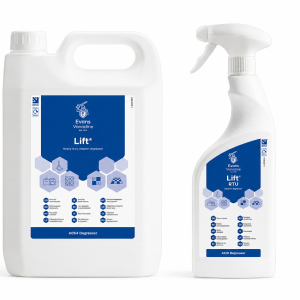

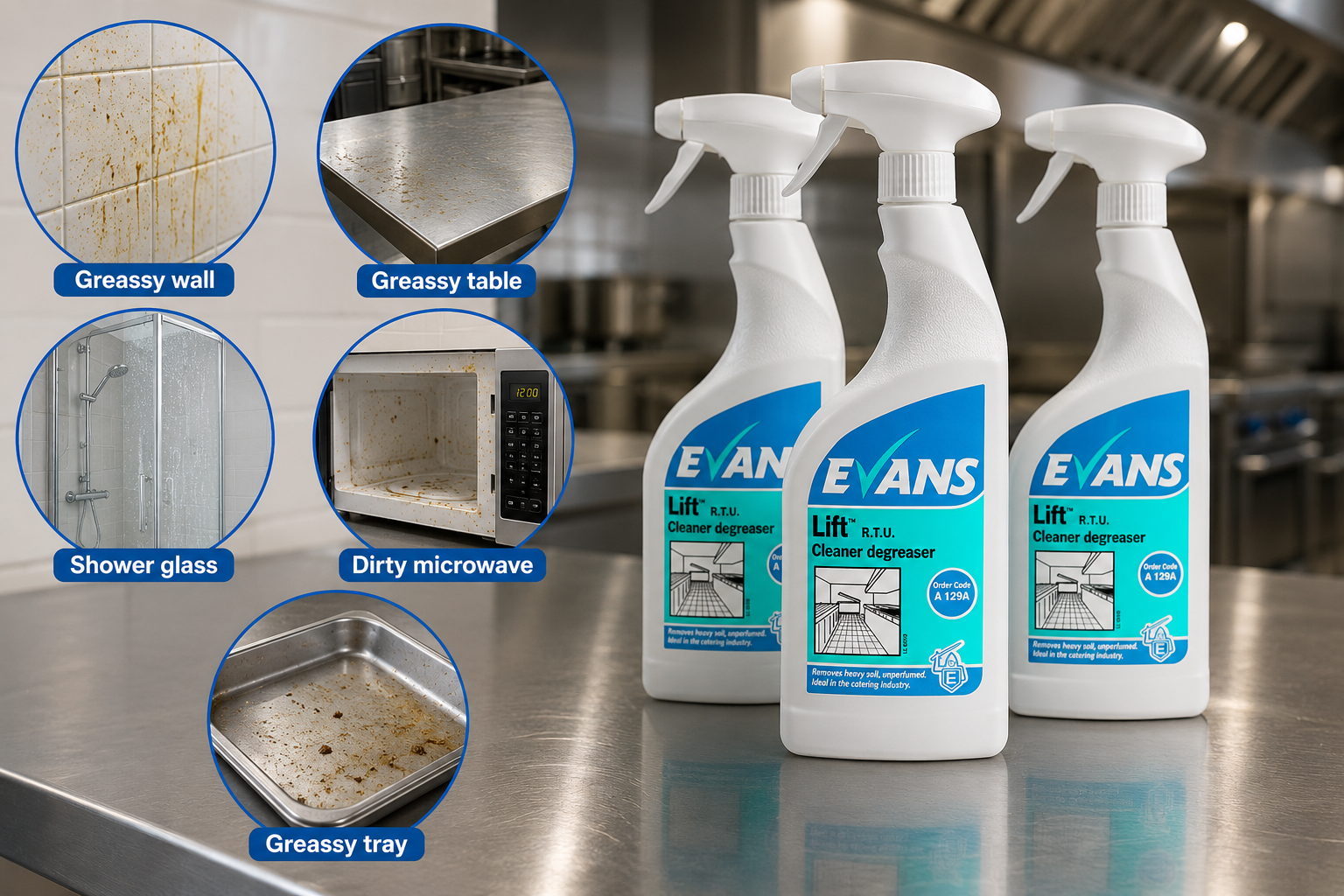
The Impressive Evans Lift Degreaser
The Impressive Evans Lift Degreaser Heavy Duty Cleaner
Grease tends to get all over. In a busy kitchen, food prep area or maintenance zone, it rarely stays just around the cooker, fryer or workbench. It moves onto nearby walls, floors, utensils, handles and those awkward corners.
Evans Lift Degreaser is made for the kind of grease that builds up in working kitchens, food preparation areas and back-of-house spaces. Like the film around cooker hoods, oil marks near fryers, greasy residue on walls and that dull layer that can sit on floors after repeated service.
In other words, it is for the jobs where a light daily cleaner has done its best, but the grease is still very much persistent.
Let’s look at how to use Lift® properly, where it fits in your maintenance routine and how it can make day-to-day cleaning more controlled, consistent and easier to manage.
Using Evans Lift Degreaser In Routine Maintenance
You can use it across the areas that usually carry the heaviest cleaning load.
Daily Kitchen Care
At the end of a busy service, the kitchen can look fine from the doorway.
Then you touch a wall near the cooker. Or walk across the floor by the fryer. How much grime is there?
That light grease film can settle on floors, washable walls, splash areas and the surfaces close to where the real action happens. It may not look dramatic, but it adds up quickly.
Use diluted Evans Lift Degreaser as part of your final clean, once food scraps, loose debris and obvious spills are out of the way. On floors, it helps shift the greasy layer left by foot traffic, cooking vapours and small splashes. On washable walls and nearby surfaces, it helps remove that dull film that can make an area feel tired even after a quick wipe.
This is not about turning every evening into a deep clean. It is about staying ahead of the mess.
Remove the light grease daily, and your weekly clean has a much easier life. Leave it to build, and soon you are dealing with the sticky, stubborn stage. Nobody wants that stage. Not you. Not your mop.
Weekly Deep Cleaning
Some areas need deeper attention because grease collects there quietly. Cooker hoods, splashback zones, equipment legs, floor edges and corners around fryers often hold more residue than the open areas you clean every day.
A weekly deep clean gives you time to focus on these tougher spots. Around cooker hoods, Lift helps deal with the grease that settles from cooking vapours. Around equipment legs and floor edges, it helps loosen soil that has been pushed into corners by mops, shoes and kitchen movement. On splashback areas, it supports a more thorough clean after repeated exposure to oil, sauces and food particles.
Periodic Deep Fat Fryer Cleaning
Deep fat fryers need their own approach because oil, heat and food deposits create a heavy cleaning load. Lift has a specific role here, for use after the appliance is switched off, drained and cleared of deposits. You can also soak baskets and utensils in the solution before rinsing and air drying.
A Longstanding Professional Hygiene Manufacturer
When you are choosing a professional cleaning chemical, the brand behind the product matters. You are trusting that product around busy kitchens, food preparation areas, staff, customers, equipment and surfaces that need to stay dependable every day.
Evans Vanodine has been part of the cleaning and hygiene industry for more than a century. The business was established in 1919 by William Charles Evans as W.C. Evans in Salford, Manchester, beginning with spraying essences for cinemas before moving into disinfectants, liquid soaps and powders. Today, the company remains family-owned and has developed into a manufacturer serving industrial, food process and animal health sectors.
That background matters when you are using a product like Lift® because heavy-duty cleaning in kitchens and food areas calls for purpose-built chemistry. You are dealing with grease, oil, food soil and washable surfaces that need regular attention.
Evans Vanodine also has an international footprint, exporting to more than 85 countries and working with overseas licensed manufacturing units and distributors. Sustainability is also part of the brand’s manufacturing story. Evans Vanodine has monitored its carbon footprint since 2019, works with Planet Mark, and reports a 35% reduction in its carbon footprint.
Professional cleaning products need dependable quality from batch to batch. Lift® is manufactured in the UK under an ISO 9001 quality management system and an ISO 14001 environmental management system registered by the British Standards Institution, according to the product information sheet supplied for Lift®.
The brand itself also comes with wider accreditations and memberships, including UKAS laboratory accreditation, BSI ISO 9001, BSI ISO 14001, BICSc corporate membership, CHSA membership, ISSA membership and Made in Britain membership. This gives you the peace of mind that the brand operates within recognised professional and quality frameworks.
Value Of An Unperfumed Degreaser
In food-handling areas, smell matters more than many people realise. A kitchen can look spotless, but if the room smells like a heavily scented cleaning spray, something feels off. You want your bakery to smell like fresh bread. Your deli to smell like good food. Your canteen to smell like lunch is ready. You do not want customers or staff catching “mountain breeze” before they notice what is actually being prepared.
So an unperfumed degreaser makes sense.
Evans Lift Degreaser is designed for areas where food is handled, served or prepared. It gives you the cleaning strength you need for grease, fat, oil and ingrained soiling without adding a strong fragrance to the room. That is especially useful in busy kitchens and food-processing spaces, where cleaning often happens close to service, prep or production.
Avoiding Unwanted Fragrance Around Food
Strong fragrances can take over fast in a food space.
If you bake, cook, portion, pack or serve food, scent becomes part of the experience. A heavily perfumed cleaner can hang around prep benches, storage shelves, display counters and serving zones for longer than you would like. Around delicate foods such as bread, dairy, salads, cooked meats or fresh pastries, that smell can feel even louder.
Clean should smell clean. It should not compete with the food.
An unperfumed cleaner degreaser keeps the space more neutral.
You get the grease-cutting power you need. Without making the kitchen smell like the cleaning cupboard has entered the chat. And you want that when bread, dairy, cooked meals, salads or deli foods are being handled close together. Each food should hold its own space.
It also helps when your team cleans between busy periods. You can clear the grease, rinse the surface and get back to work without a strong scent hanging around. Your staff work more comfortably too. In a hot kitchen, scent can feel stronger than expected. Add steam, heat, extractor movement and a busy service, and a perfumed cleaner can become irritating very quickly. An unperfumed product keeps the focus where it belongs: on removing grease, rinsing properly and getting the surface ready for use again.
For food businesses, that’s of real value. You are not cleaning to make the room smell fragranced. You are cleaning so the surface is genuinely fit for the next task.
Better Fit For Food Hygiene Routines
A surface is clean because grease, food soil and residue have been removed properly, not because the room now smells like “spring meadow” with a side of fryer oil.
That is why your cleaning routine needs a clear process. The Food Safety Authority of Ireland highlights the importance of proper cleaning schedules and sets out six effective cleaning stages: precleaning, detergent cleaning, rinsing, disinfecting where needed, rinsing again and allowing surfaces and equipment to air dry.
That order matters. Grease and food soil need to be physically removed before the next hygiene step can do its job properly. If fatty residue is still sitting on a surface, you are asking the disinfectant to work through a layer of grime. That is a big ask.
Lift® fits into the detergent-cleaning stage. It helps you loosen and remove grease from washable surfaces before rinsing and any follow-up disinfection your site requires.
Used this way, it becomes part of a proper food hygiene routine. Measured. Repeatable. Easy to explain to staff. Easy to record. And much more reliable than cleaning by nose.
How Lift Works As An Alkaline Degreaser
Grease is stubborn because it clings. Once oil, fat and food soil settle onto a surface, they can form a film that water alone will simply move around. That is why a proper alkaline degreaser is useful in commercial kitchens and food-handling areas. It gives you the cleaning strength needed to loosen greasy residue so it can be wiped, mopped or rinsed away from washable surfaces.
Evans Lift Degreaser Heavy Duty Cleaner Degreaser is a high-pH product. Its undiluted pH is at 13.4. This is what makes it suitable for difficult grease and soil removal tasks when used at the right dilution.
Why Grease Needs Alkalinity
Fatty and oily soils behave differently from dust or light dirt. They spread, smear and bond to surfaces, especially when heat is involved. A heavy-duty degreaser helps break that greasy layer down so it can release from the surface.
Alkalinity helps attack the oily film rather than simply wetting it. Once the grease has been loosened, your mop, cloth, spray application or cleaning tool can remove it more effectively. This is why Lift® fits areas where ordinary detergent would struggle with fat, grease, oil and ingrained soiling.
High Active Agent
“High active” is easiest to understand through dilution. You are working with a concentrated cleaner, so a measured amount is mixed with water according to the job. A lighter dilution suits general cleaning, while stronger dilution is used for heavier grease. This helps you avoid treating every surface as if it has the same cleaning need.
That flexibility of the Evans Lift Degreaser Heavy Duty Cleaner Degreaser comes in handy . A floor after a normal service, a wall near a cooking line and a fryer clean-down do not carry the same soil load. Lift® gives you one concentrated product that can be adjusted for different levels of grease, provided you follow the correct use instructions.
Dilution Guide For Different Cleaning Jobs
You are working with a concentrated product, so the strength of your cleaning solution should match the job in front of you. A lightly greasy floor after service needs a different mix from a fryer clean-down or a wall beside a busy cooking line. Getting the dilution right helps you clean properly, rinse more easily and keep product use under control. ]
General Cleaning
For everyday cleaning, mix Lift® at 1:250 in hot water. That works out as 20 ml per 5 litres of water.
This is your “normal shift” dilution. Use it for light grease film, routine floor cleaning, washable walls and general hard surfaces that need a proper clean without calling in the heavy artillery.
We’re talking end-of-day floors. Splash areas after prep. Walls that have picked up a little oil mist. Surfaces that feel slightly dull after a busy service.
Apply it by mopping, wiping or spraying the surface. Then rinse with clean water.
Hot water helps here. It gives the solution a better chance to loosen that light greasy layer instead of just sliding over it. Once the surface is clean, the rinse step clears away the loosened soil and any leftover cleaner.
Heavy Soiling And Grease
For heavier grease, mix Lift® at 1:50 in hot water. That means 100 ml per 5 litres of water.
This is the stronger mix. Reach for it around cooker lines, greasy floor edges, prep-area walls, equipment surrounds and surfaces that have collected residue over several shifts.
Give the solution a little time to work before wiping or mopping it away. Grease that has settled into corners, textured flooring or equipment edges needs both contact time and physical action.
Use this dilution for planned deep cleaning, especially after heavy service, busy production runs or long periods of cooking activity. It helps you reset the area properly, rather than chasing the same greasy patch again tomorrow.
Deep Fat Fryer Cleaning
For deep fat fryer cleaning, mix Lift® at 1:25. That means 400 ml per 10 litres of cold water in the fryer.
This is a job where order matters. Start by switching off the appliance. Let it become safe to handle. Then drain the oil and remove loose deposits.
Once that is done, add the diluted solution to the fryer. Place the basket and utensils into the solution and leave them to soak for 2 hours.
This gives the cleaner time to get to work. Fryer grime is its own special creature. Oil, crumbs, batter and heat join forces to create sticky buildup that will not politely leave after a quick wipe.
After soaking, rinse everything with clean water. Then allow the basket and utensils to air dry before returning them to normal use.
Always allow the appliance to be safe to handle before starting. Keep the task controlled, use the correct dilution and rinse thoroughly before returning equipment to normal use.
Refilling A Lift RTU Trigger Bottle
For a Lift RTU trigger spray bottle, dilute 30 ml per 750 ml of cold water. This is useful when you want a ready-to-use spray format for smaller cleaning tasks, targeted application or quick access during routine maintenance.
A trigger bottle can help with control, especially on vertical washable surfaces, splash areas and smaller zones where a bucket solution would be less convenient. Label the bottle clearly, use the correct measuring method and avoid guessing the amount of concentrate.
Avoiding Overuse
More product does not always mean more cleaning power.
Sometimes it just means more rinsing. More residue. More waste. And a surface that still feels a bit “why are you sticky?” after it dries.
The best dilution is the one that matches the job. Light grease needs a lighter mix. Heavy buildup needs a stronger one. Fryer cleaning has its own ratio.
When you measure properly, you get the right balance: enough cleaning action to lift the soil, enough control to rinse well, and no unnecessary product going down the drain. So resist the temptation to freestyle it.
Using Evans Lift Degreaser Heavy Duty Cleaner Degreaser
For Floors
Start by removing loose debris. Sweep or collect food scraps, dust, packaging pieces and any grit before applying the cleaning solution. Your mop should lift grease and soil, rather than push loose waste around the floor.
Next, dilute Lift® correctly for the level of soil. For general cleaning, use the lighter dilution. For heavier grease, use the stronger dilution. Both methods require mopping, wiping or spraying, followed by rinsing with clean water.
Mop the floor evenly and pay attention to the areas that carry the most grease. These are usually around fryers, cooking lines, wash-up points, equipment legs and doorways between kitchen zones. Where grease is heavier, agitate the surface with a suitable brush, deck scrubber or floor tool. This helps the detergent reach the film sitting on the surface.
After cleaning, rinse the floor with clean water. This removes loosened soil and cleaning residue. Allow the floor to dry before reopening the area to staff movement, trolleys or service. A dry floor also helps you see whether any greasy patches need another pass.
For Walls And Washable Surfaces
Walls, splash zones and washable panels need a more controlled approach because liquid can run down the surface. Choose the application method based on the area. You can spray smaller sections, wipe reachable panels, or use a mop system for larger washable walls.
Work from cleaner areas towards heavier grease zones. This keeps the cleaning process organised and stops you from dragging oily residue across a surface that already needs only light cleaning. Around food prep spaces, focus on splash marks, hand-contact points and areas close to cooking equipment.
Use controlled application. Avoid uncontrolled overspray, especially near food, open containers, electrical fittings, switches, vents or sensitive materials. A cloth or low-pressure spray is often easier to manage on vertical surfaces than a heavy application.
Once the surface has been cleaned, rinse carefully with clean water. This step is important in food-handling areas because cleaning should leave the surface ready for the next part of your hygiene routine. Take extra care around seams, corners and wall-floor junctions where residue can collect.
For Cooker Hoods And Greasy Equipment Exteriors
Cooker hoods and equipment exteriors often carry a heavier grease load because heat and vapour move oil into surrounding areas. Before cleaning, make sure equipment is switched off where needed and surfaces are safe to touch. Warm residue can be easier to clean, but hot equipment can create handling risks.
Apply the suitable dilution for the level of grease. Light film may only need the general cleaning dilution, while thick grease around hoods, panels, oven doors and equipment sides may need the heavy-soiling dilution. Give the detergent contact time so it can soften the greasy layer before you wipe.
Use a cloth, pad or brush suited to the surface. Wipe the area thoroughly, then rinse with clean water to remove soil and detergent residue. Build this task into your routine according to the grease load. Some kitchens need daily attention around cooking lines. Others can manage certain hood surrounds and equipment exteriors as part of a weekly deep clean.
Safety Guidance For Lift
Lift® is a strong alkaline cleaner degreaser, so treat it with care. It does a tough job, but it needs the right handling. No casual splashing. Or keeping mystery bottles under the sink.
Keep the concentrate in its original container. Only mix the amount you need for the task. If you decant a diluted solution into another container, label it clearly. In a busy kitchen or cleaning store, one unlabelled bottle can cause a lot of confusion very quickly.
Use the correct dilution every time. Measure carefully. Add the product slowly to avoid splashes. Keep your spray controlled, especially near food, open containers, electrical fittings, switches and busy walkways. A controlled clean is always better than a dramatic one.
Wear the right protection before you start. Chemical splash goggles or a face shield are important, especially when you are diluting the concentrate or applying the solution above waist height. Your eyes do not need to be part of the cleaning experiment.
Wear protective gloves too. Use appropriate clothing that helps prevent skin contact. For everyday cleaning, gloves and eye protection may be enough. For heavier jobs, such as cleaning around cooker hoods, fryers or splash-prone areas, protect your arms and body as well.
Choose sensible footwear. Wet floors and degreasing tasks are not the time for slipping about like you are auditioning for a kitchen-based ice show. You need stable footing, especially when working around buckets, mops and greasy floor areas.
Store Lift® properly after use. Keep the container tightly closed, in a cool and well-ventilated area. Keep it away from acids and oxidising materials. This helps prevent accidental mixing and makes the product easy to identify when your team needs it next.
You should also keep Lift® away from aluminium, tin, zinc and their alloys. That means checking storage shelves, dispensing areas, containers and cleaning tools. Use it only on suitable washable hard surfaces.
If Lift® gets into the eyes, rinse carefully with water for several minutes. Remove contact lenses if they are present and easy to remove, then continue rinsing. Get medical attention immediately.
If it gets onto skin or hair, remove contaminated clothing straight away and rinse the skin with water or shower. If swallowed, rinse the mouth and avoid inducing vomiting. If spray or mist is inhaled, move the person to fresh air and keep them comfortable.
Environmental And Disposal Considerations
A strong cleaning product still needs responsible handling after use.
Lift® contains surfactants that comply with biodegradability criteria under EU Detergents Regulation No 648/2004 and the UK Detergents Amendment Regulations. The sequestrant is readily degraded during biological effluent treatment processes.
Used solutions may be discharged to drain. Small amounts of unwanted product, meaning less than 5 litres, may be flushed with water to sewer. Larger volumes must be sent for disposal as special waste. Empty containers should be rinsed with water before being consigned to normal waste.
Halal Certified
When you clean in a food environment, suitability is about more than whether a product can remove grease. You may also need documentation that supports your site’s food standards, customer commitments and procurement checks. Lift® has halal certification, with the certificate issued by the HCA Halal Certified Association United Kingdom. This confirms compliance with halal requirements according to Islamic Law.
A halal certificate gives you useful assurance when your site needs documented product suitability. For food processors, it can support supplier approval records and help teams show that cleaning chemicals have been checked for use within halal-sensitive operations.
For commercial kitchens, it helps when you serve mixed customer groups and need a cleaning product that fits your food environment without adding fragrance to the space. For facilities serving Muslim customers, such as restaurants, caterers, schools, hotels, care homes or community kitchens, the certificate can make product selection clearer and easier to explain.
Who Evans Lift Degreaser Is Best Suited For
Lift® suits workplaces where grease is a routine maintenance issue rather than an occasional spill.
Commercial Kitchens
Restaurants, hotels, cafés, canteens, schools and care settings can all benefit from a degreaser that fits daily and weekly cleaning. These spaces deal with cooking vapours, fryer residue, splashes, greasy floors and washable walls. Lift® is especially useful when you need one product for several kitchen areas, while still adjusting the dilution to match the job.
Food Processing Areas
Production rooms and prep areas often deal with repeated soil loads. Oil, fat, food particles and ingrained residue can collect on washable surfaces, especially after long runs or busy prep periods. Lift® is formulated for kitchens and food-processing areas, with use on a variety of washable surfaces.
Facility Maintenance Teams
Maintenance teams need cleaning products that fit back-of-house routines without creating confusion. Lift® can support floors, walls, cooker hoods, ovens and other washable areas, which makes it useful for planned cleaning across different zones. The concentrate format also helps teams match general cleaning, heavier grease and fryer cleaning with the right dilution.
Contract Cleaners
For contract cleaners, Lift® is useful when each site has a different grease load. One kitchen may need routine floor degreasing. Another may need deeper attention around fryers and extraction areas. Because Lift® can be diluted for different cleaning tasks, it gives teams a practical way to standardise the product while adapting the method to the site.
Common Mistakes To Avoid
Lift® is straightforward to use when the process is clear. Most problems come from treating every job the same way, skipping key steps or handling the product too casually.
Using The Same Dilution For Every Job
General cleaning and heavy grease need different strengths. For general cleaning, use 1:250 in hot water, which is 20 ml per 5 litres. For heavy soiling and grease, use 1:50 in hot water, which is 100 ml per 5 litres.
Using the same mix everywhere can waste product, leave residue, or make tough grease harder to shift. Match the dilution to the task. A lightly greasy wall after service needs a different approach from a floor edge beside a fryer.
Skipping The Rinse
Rinsing is part of the clean, especially in food areas. Lift® directions include rinsing with clean water after general cleaning, heavy grease cleaning and fryer cleaning.
That rinse removes loosened grease, food soil and cleaning solution. Without it, the surface may dry with residue left behind, which can make the next clean harder and leave the area feeling less fresh.
Treating It Like A Light Household Cleaner
Lift® is a professional alkaline cleaner with an undiluted pH of 13.4. Use PPE, measure carefully and train staff properly. Eye/face protection, protective clothing and protective gloves are necessary.
Mixing With Other Chemicals
Keep Lift® away from acids and oxidising materials during storage and use. Reactions with strong acids may generate heat.
Mixing cleaning chemicals creates avoidable risk. Keep containers labelled, store products separately and use Lift® only within its own instructions.
Using It On Unsuitable Metals
Lift® is for appropriate washable hard surfaces. Aluminium, tin, zinc and their alloys are incompatible materials.mBefore cleaning, check the surface and equipment material, including kitchen fittings, older equipment, metal trims and storage areas. Good cleaning should protect the surface as well as remove the grease.
Recommended products
Discover more alternatives and similar items.