
Faber Limestone Densifier Review
Read The New Faber Limestone Densifier Review
Moisture, whether it’s the water that is used during the mechanical polishing process (to cool the equipment and floor surface due to the amount of heat generated by the friction between them), or the rising damp that affects already installed natural stone floors, is a nuisance. Products like the Faber Limestone Densifier have been developed to cater to such situations. Here is what it offer:
Benefits Of The Faber Limestone Densifier
-
Optimise the mechanical sanding and polishing process
This is an impregnating sealer that gets deep into the structure, drastically cutting down the amount of water that is absorbed. When it comes to the polishing process, this is particularly beneficial in that it reduces the drying time that is taken up before the additional treatments and floor finishes can be applied. What’s more, you end up spending less water for the polishing process, saving on resources. Even aspects such as tool-longevity get a boost, since the Faber Limestone Densifier reduces the wear and tear that is witnessed during the polishing process.
This formulation also enhances the results that are obtained with the polishing grain. Without treating the limestone floors, one usually ends up going all the way up to finer grits levels of 1500 and 3000. However, with the Faber Limestone Densifier, the finishing treatments can be applied after the 800-grain size is reached, meaning that you spend less time on the task, allowing you to work on larger floor expenses within a shorter duration.
-
Protective properties
The water repellent nature of the Faber Limestone Densifier comes in handy in protecting against moisture issues that are typical of the natural stone installations, such as rising damp. This causes issues such as saline efflorescence and flaking on the surface, and not to mention those damp marks that ruin the appeal of the installation.
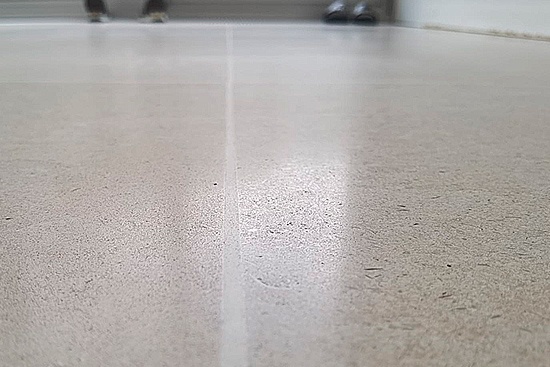
Treating your installation with the Faber Limestone Densifier prevents these issues from occurring. It delivers this protection without affecting the breathability of the stone. It doesn’t form a film on the floor, or change attributes such as the colour of the stone. This hardening sealer also enhances the dirt resistance of the surface, and gives it enhanced durability to withstand the foot traffic in your residential or commercial establishment. Its strength is also seen in its ability to withstand dewaxing formulations that are used on the floor.
-
Specifically developed for lime-based materials
Limestone and other lime-based materials are particularly troublesome to polish because of their highly porous nature which causes them to absorb lots of water. This is for indoor and outdoor surfaces. With a 10 to 15m2 per litre coverage rate, each unit that you purchase gets to be used on a wide surface area, giving you more value.
The Faber Limestone Densifier can also be used as a pre-installation treatment, where the product attributes are provided even before the slabs or tiles have been laid. This avoids problems that would have been witnessed with the laying bed with the adhesive used, or issues arising from the processes undertaken on the installation, including bonding, grouting, plus the mechanical polishing that is to follow.
The Faber Limestone Densifier does not compromise the adherence of the material to the bonding agent, whether the natural stone is being installed with everyday cement mortar, or it’s being carried out through mechanical securing. Here, the entire surface (the 6 sides) of the slabs are treated. When the stone is to be installed using top-quality mortar, or for the mechanical fastening, only the top side and the edges are treated.
-
Eco-friendly formulation
With the Faber Limestone Densifier, you get to treat the stone tiles and slabs without worrying about volatile organic compounds. This 100% water-based formulation is safe for application, and doesn’t pose risks to the user or the environment as a whole. The Faber Limestone Densifier has also been certified safe for use on food contact surfaces, meaning that you can use it on areas such as kitchen countertops.
The Application Process
This varies based on your particular situation. For instance, when using the Faber Limestone Densifier to enhance the mechanical polishing process, it is applied on the surfaces that have been sanded with the 200-400 grain sizes. One simply spreads the product out on the stone, in an even coat.
It is applied abundantly, and tools like brushes and lambswool applicators can be used. After at least 4 hours, the polishing process can continue, going to the 800-grain size. Waiting for the following day before proceeding with the polishing will allow the treatment to completely cure. In case the surface is really absorbent, 2 coats of the Faber Limestone Densifier can be applied.
For the initial sanding, it is recommended that it is carried out dry. That way you won’t have to wait before treating the floor. If wet sanding is done, a 24-48-hour wait time will have to be allowed. There is a workaround though: you can treat the floor with the Faber Limestone Densifier before starting the mechanical polishing process. Here, it will reduce the amount of water absorbed by the floor, thereby cutting down the subsequent drying time.
When it comes to the pre-treatment before the slabs or tiles have been installed, this can be carried out in the industry production lines, or right on-site. For the latter, simply dipping the slabs into a container holding the Faber Limestone Densifier and airing them out to dry will suffice. That way you get to ensure that the stone is protected right from the onset.
DOs And DON’Ts Of The Faber Limestone Densifier
- DO clean the natural stone material before treating it with the product. From the slabs and tiles that have not been laid, to those cases where you’re treating the floor during the mechanical sanding and polishing process, any dirt and grime that is on the surface should first be got rid of.
- DON’T treat the surface when it is wet. Allow the stone to dry before using the product on it. The surface should also not be overly heated, with the ideal temperature range being between 5 and 40°C.
- DO allow adhesives and grout that are on the recently lauded surfaces to completely cure before treating the stone with the Faber Limestone Densifier.
- DON’T dilute the product, as it comes ready to use.
Faber Limestone Densifier Review
Recommended products
Discover more alternatives and similar items.
_2nd-300x300.jpeg)
0 Comments
Questions or feedback? Join the discussion below.
No comments yet. Be the first to comment.
Replying to