
Diamond Polishing Pads For Natural Stones
Incredible Results With Our New Diamond Polishing Pads For Natural Stones
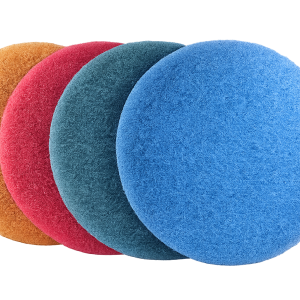
There are hundreds of types of floor cleaning, floor polishing, floor stripping and floor maintenance pads. Different shapes, different sizes, different colours and different levels of roughness. While some floor pads are designed to maintain pre-existing finishes, others are designed to remove pre-existing finishes. Some brands are manufacturing polishing pads in white, others in tan colour, others in pink, some light blue & so on. The world of floor polishing pads is huge and could be very confusing.
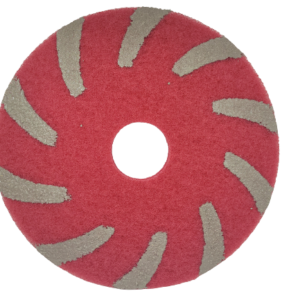
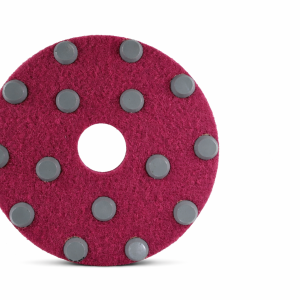
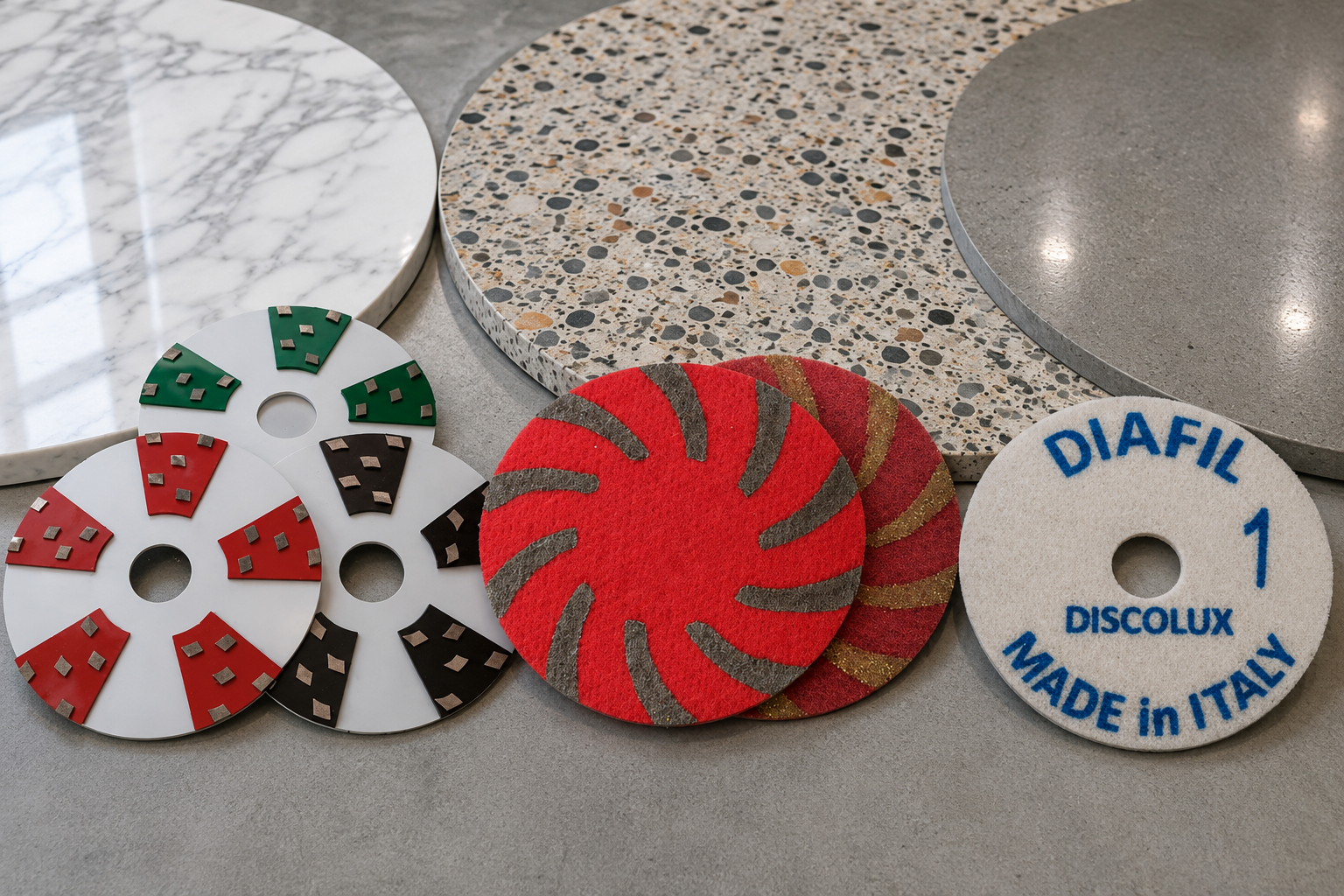
Then there is the diamond polishing pads industry. These pads are manufactured from pretty much the same base materials as the normal pads but they are impregnated with fine diamond grinding or polishing particles. The larger and more aggressive the diamonds in the pads, the more aggressive the pad is and the finer and less aggressive the diamond particles are, the glossier the floor gets. That is the basic explanation of those pads.
The diamond polishing pads are basically sanding pads. The natural stones are much more sensitive than varnished hardwood floors where it can really scratch if it gets sanded with the same sanding discs. To prevent such damage, the floor cleaning and the floor polishing trade has invented the diamond polishing pad. The pads are impregnated with aggressive or fine grit diamond pads and the natural stone floors are getting grinded, maintained or polished with it.
Diamond Polishing Pads For Natural Stones I Grits
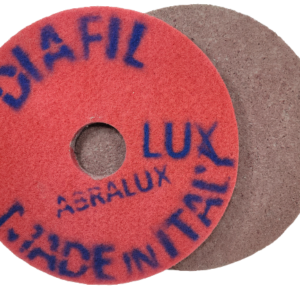
As we have just mentioned above, the diamond pads can be very aggressive or very very sensitive. The grits can vary from between 30 and up to 12k. Cleanfast Dublin is the official distributor for Diafil Diamond Pads Italy. Our most popular types of diamond polishing pads are Diafil Abralux and Diafil Discolux. These two ranges cover all grits and all types of polishing.
Diamond Polishing Pads For Natural Stones | Grit 30
The most aggressive type of grinding pad. This level of aggressivity is usually only suitable for grinding really uneven floors, concrete surfaces, to remove very tough sealers or to just flatten up surfaces that for whatever reason have become very rough. The 30 grit diamond grinding pad has to be used wet with a heavy duty floor buffer.
The buffer has to release water regularly and the waste has to be extracted as it is generated. Heavier the buffer, faster the results. This type of diamond scrubbing pad should only be used by floor polishing contractors or people that have used diamond polishing pads before.
Diamond Polishing Pads For Natural Stones | Grit 60
Another super aggressive diamond grinding pad that can be used to remove lippage or to level up rough patches on concrete floors, terrazzo floors and natural stone floors. The 60 grit pad can also be used to level up imperfections and deep scratches generated by the 30 grit pad. It can be used in conjunction with a heavy floor scrubber that is fitted with a water tank and has a constant flow of clean water on the floor.
The buffer needed for such projects has to have a maximum RPM of 200 or less. This pad is really aggressive and it will remove a good amount of the floor while leveling it up and getting rid of all kinds of pre-existing finishes. If you have started grinding the floor with a 30 grit pad, you need to follow with a 60 grit pad.
Diamond Polishing Pads For Natural Stones | Grit 120
From this point on, the pads are getting safer. The 120 grit diamond grinding pad is not soft by any means, but is definitely not as aggressive as the 30 and 60 grit pads. The incredible Diamond Polishing Pads For Natural Stones | Grit 120 can be a starting pad when dealing with travertine or uneven marble floors. Same as the other ones, it has to be used on a wet surface only with a low speed floor buffer.
This pad will also remove a good bit of the floor if the user is inexperienced or the tools used are not designed for such use. The incredible Diamond Polishing Pads For Natural Stones | Grit 120 can be successfully used on terrazzo floors as well and on floors with some level of lippage.
Diamond Polishing Pads For Natural Stones | Grit 220
This grit is also very aggressive but it can be used on a wider range of stones without damaging it. While the 220 grit pad can be safely used to grind concrete and microcements, marble floors, terrazzo and travertines, it can also be used on limestone and sandstone. It will quickly remove stains, dull patches, sealants, waxes and other types of imperfections that can develop over the top of the stone.
This pad can only be used with a low speed floor buffer and while the floor is getting soaked in water. Some people use the 220 grit pad as their first pad in the process of grinding natural stones, while others find it too aggressive.
Diamond Polishing Pads For Natural Stones | Grit 400
This is the starting point for pretty much all marble floor restoration contractors. The 400 grit pad is aggressive enough to remove deep scratches, dull patches, old sealants and other imperfections. After a grinding session, the surface will be left smooth and prepared for the next steps. It can be used on all types of marble floors, all types of travertine floors, all terrazzo floors, all limestone floors, granite floors and concrete floors.
A low speed floor buffer with a connection to the water tank is essential while using this incredible diamond grinding pad. The Diafil range of grinding pads are incredibly durable and very easy to use.
Diamond Polishing Pads For Natural Stones | Grit 600
Some natural stone floors or some concrete floors that are in an average shape, can be started directly with the grit 600 pad. While this pad is well capable of grinding the surface, it will not remove a lot from the floors top layer and it will not require as many go`s over to achieve a flat but dull looking finish. It has to be used on a wet floor surface in conjunction with a low speed floor buffer.
Floor buffers that weigh over 80 kilos are likely to work much faster, much better and with less effort needed. After the surface is grinded with the new Diamond Polishing Pads For Natural Stones | Grit 600, the surface is not ready yet for polishing or treating with any polishing creams, powders or liquids.
Diamond Polishing Pads For Natural Stones | Grit 800
After a grinding operation with an 800 grit pad, the surface should start looking smooth, feeling smooth and getting better. This pad will not achieve any sheen yet, but the surface will look even and matt. Just like the other ones, this diamond grinding pad has to be used on a wet surface in conjunction with a heavy low speed floor buffer.
Each area has to be grinded evenly and the pad should be covering all areas pretty much the same amount of times. The waste should be extracted with a wet vac and the condition of the floor should be assessed regularly. Some highly skilled marble floor polishing contractors use marble polishing powders with a satin finish after this pad, while many others prefer to go one more step up before polishing.
Diamond Polishing Pads For Natural Stones | Grit 1800
While this pad is still a grinding pad, it will remove much less from the floor and is not able to get rid of lippage or serious rough patches. The new Diamond Polishing Pads For Natural Stones | Grit 1800 is mostly used on a wet surface in conjunction with a low speed floor buffer.
After the surface is grinded with the 1800 grit pad, it will have a beautiful satin finish that can be left the way it is or it can be polished further with marble polishing powders, marble polishing liquids, crystallization liquids or other types of polishing products. From this point on the contractor has to decide what level of sheen is required because the next pad will really increase the sheen.
Diamond Polishing Pads For Natural Stones | Grit 3000
This spectacular diamond polishing pad is ingrained with very soft and fine diamond particles that will create an impressive gloss when used in conjunction with a high or a low speed floor buffer. If used in conjunction with a low speed floor buffer, it should be used on a wet surface. If it is used in conjunction with a high speed floor buffer or burnisher, it can be used without any water.
The friction between the diamond pad and the floor will seal the top of the floor and it will create a super glossy finish. This finish can be sealed with a stain proof treatment or if the customer is looking for an even higher gloss, it can be polished with marble polishing powders, polishing creams or polishing paste. This is the final pad and after the sealing of the polished floor, the contractor is done.
Diamond Polishing Pads For Natural Stones | Grit 12 000
This particular diamond polishing pad is one of the finest polishing pads ever invented. The diamonds contained within this pad are incredibly fine and incredibly effective. This polishing pad is usually used for the regular maintenance of polished floors. By buffing the surface regularly with the new Diamond Polishing Pads For Natural Stones | Grit 12 000, the surface will stay glossy and it will not allow dirt penetration. Most other brands of diamond polishing pads don`t even have such a fine quality polishing pad.
***The pads listed above are part of the Diafil Abralux range and are mostly suitable for professional use. The same diamond pad that can restore your natural stone floor to near perfection, can also really damage your floors. Each contractor would have their own system and technique. Some will start from pad 200, while others from pad 800. The experience, the type of floor and the condition of the surface will dictate the pad selected to start the project. If the floor looks good, there is no need to start with pad 30 or 200 grit. But if the floor is in a state, uneven and full of lippage, pad 30 grit is the way to go. ***
Diafil Discolux 4 Steps Marble Polishing Pads
Diafil has invented a 4 step diamond polishing system that can be used by everyone, regardless of experience. The Discolux range is formed from 4 distinct pads, from 1 to 4, each pad designed to do a specific job. The Diafil Discolux range is suitable for heavy duty grinding, polish removal and polishing of all kinds of natural stone floors and terrazzo.
Discolux Pad 1
This pad is a heavy duty grinding pad. Its grit is somewhere between 400 to 600 grit. It has to be used on a wet surface with a low speed floor buffer. It will fully remove pre-existing sealers, scratches, stains, dull patches and ingrained residue. It will leave the surface matt looking, dull and smooth. The next step is buffing the surface with pad 2.
Discolux Pad 2
This pad will start creating some level of sheen but not a lot. Pad 2 has a grit of about 1800 grit. It still grinds but not a lot. It is mostly used for removing scratches and dull patches on projects where the surface does not require full grinding. It can also be used as a follow up polishing pad after pad 1.
Discolux Pad 3
This polishing pad will bring in the sheen and it will transform dull and matt looking floors into high glossy finishes. Pad 3 has a grit of about 3000 and it can be used on wet floors with a low speed floor buffer or for dry polishing with a high speed burnisher. It can be used to polish and burnish pre-existing finishes or to follow up on floors grinded with pad 2.
Discolux Pad 4
This incredible polishing and maintenance pad, has a grit of about 12 000 and is one of the finest diamond polishing pads ever invented. This diamond polishing pad is mostly used to maintain highly polished floors. It can also be used as a follow up pad after pad no 3. Best results achieved when used in conjunction with a floor burnisher.
These pads are the most popular diamond polishing pads from Diafil. The Abralux range is mostly recommended for the professional floor polishing trade while the discolux range can be used by anyone with a floor buffer. Both types of diamond polishing pads are as effective but the technique used is different.
FAQ
Q: Can I use any diamond polishing pad on any type of floor?
A: No you can`t. The diamond polishing pads can only be used on natural stone surfaces or concrete based floors like polished concrete and terrazzo. The pads will seriously damage polished porcelain floors or wood floors.
Q: What if I use a low grit diamond polishing pad in conjunction with a high speed floor buffer?
A: This is not recommended at all. You could easily create a hole in the floor and cause permanent damage.
Q: Can I start with grinding with a fine grit pad and then use an aggressive one?
A: No. You can`t. It is the other way around
Q: Can I use any floor pad to grind natural stone floors?
A: No. You can`t. Normal floor pads cannot grind floors because they have no diamond particles in them.
The diamond polishing system can be used as the main system or it can be used as a preparation system before using other types of gloss enhancers or protectors. We recommend the use of sealers and soaps after the right sheen is achieved. The sealers will create an invisible barrier that prevents staining and dirt absorption.
Recommended products
Discover more alternatives and similar items.