
Sofa Cleaning
Sofa Cleaning Technologies And Maintenance
We all own sofas and we are all likely to use the services of a professional sofa cleaning company at some stage. The market is packed with all possible types of sofas, available in all colours, all shapes, all sizes and made from all kinds of materials. There is not one single type of sofa cleaning system and not all sofas can or should be cleaned with the same type of cleaning products.
Also, not all of us have the same needs and the same requirements. A white sofa can be ideal for a modern look but not in a busy home with kids and/or pets. The point of this article is to show our customers how to clean their sofas, what to use, how to select a great protector and how to deal with spills.
Types Of Sofas
Basically, there are two types of sofas, fabric sofas and leather sofas. Each type can be divided into other subcategories. When you say fabric, you can say cotton, silk, polystyrene, velvet, etc. When you say leather, you can also say suede, polished leather, natural unfinished leather, etc. Some sofas are made from the most sensitive materials that require special care and special treatments, while other sofas are made from materials that can be washed with pretty much any type of shampoos or cleaning products.
Sofas are generally categorised as armchairs, two-seaters, three-seaters, four-seat L-shaped sofas, five-seat L-shaped sofas, and other larger or custom configurations. For cleaning purposes, the size of a sofa is determined by its actual seating capacity rather than simply by the number of cushions. For example, a sofa may have only two long seat cushions but be wide enough to comfortably accommodate four people.
In this case, it would be classified and priced as a four-seater sofa, not a two-seater. Similarly, if a sofa has two cushions but is large enough to comfortably seat three people, it will be classified as a three-seater. This ensures that the cleaning price accurately reflects the actual size of the sofa and the amount of cleaning required.
How To Clean A Sofa
Fabric sofas can be cleaned with a hot water extraction system (shampooing) or with a dry sofa cleaning system. Each sofa has a label with the manufacturers recommendations for cleaning. Even if you hire a professional sofa cleaning company, you should mention what type of sofa cleaning is more suitable for your particular type of sofa.The recommended sofa cleaning method is usually determined by the manufacturer based on the type of upholstery fabric and the materials used underneath the outer covering. Following the appropriate cleaning method helps achieve the best results while reducing the risk of damaging the fabric, padding or other internal materials.
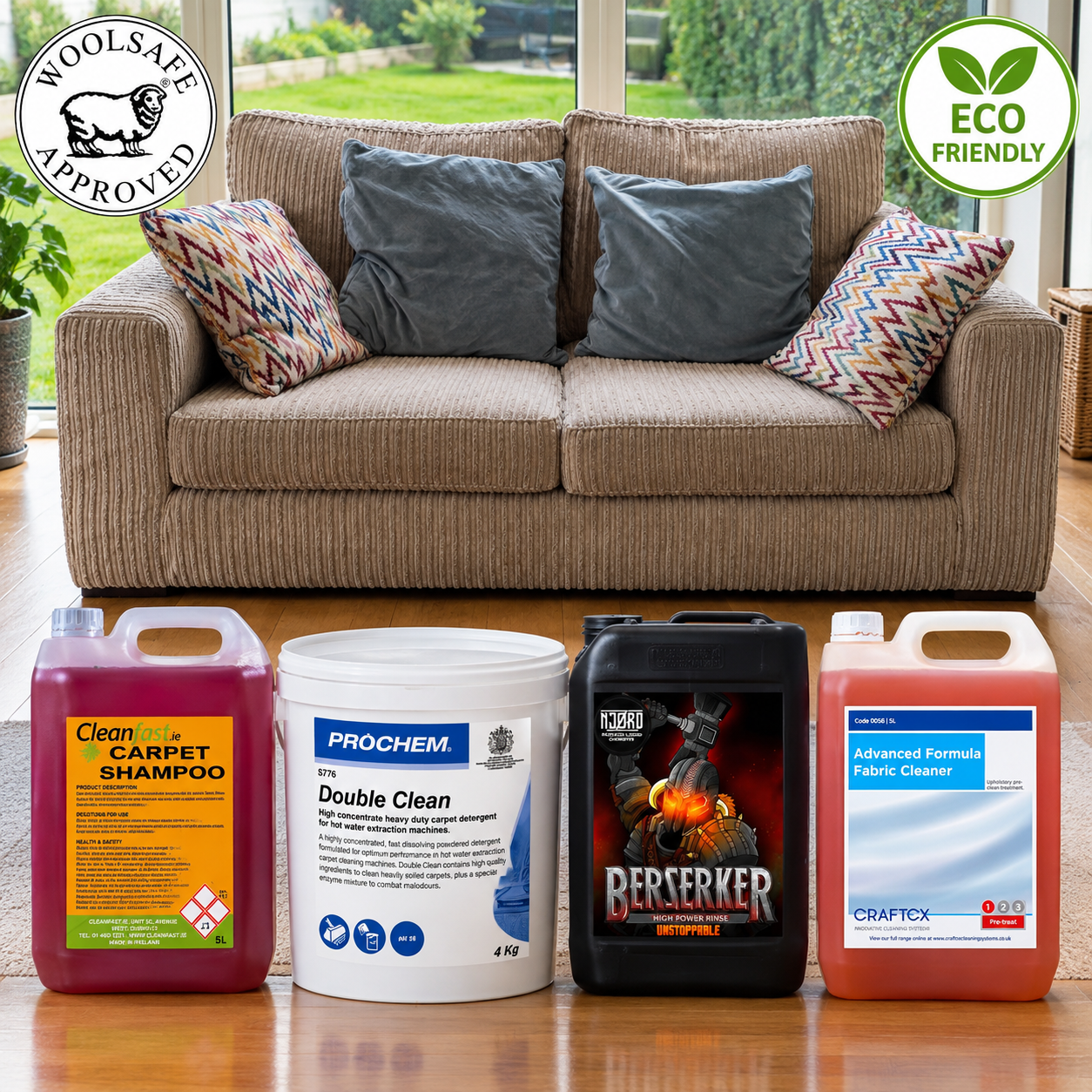
Wet Washing | This type of sofa cleaning will use a hot water extraction system and some kind of sofa cleaning shampoo. There are low ph sofa cleaning products, there are high ph sofa cleaning products, there are low foam sofa cleaning shampoos, there are high foam sofa cleaning detergents, there are sofa cleaning products that are deodorised, some contain disinfectant, some are odour neutralisers, some contain protectors. A hot water extraction sofa cleaning machine that is fitted with a solution tank is likely to be used.
The sofa cleaning detergent will be added to the solution tank and then sprayed all over the sofa. The surface will be scrubbed with soft brushes then a special extraction upholstery wand will be used to spray and extract the waste. This kind of sofa cleaning system is called hot water extraction sofa cleaning, wet sofa cleaning or sofa shampooing. Depending on the quality of the machine, the sofa will be left 60% dry, 70% or 90% dry.
Dry Cleaning | For this kind of cleaning the specialist will use a special foam or a quick drying detergent that will change its composition from a liquid to a dust and then it can be vacuumed with professional vacuums. The dry sofa cleaning process is not 100% dry, but uses way less water than the hot water extraction system and you are guaranteed to be able to use the sofa within a few hours. Most people in Ireland prefer the wet sofa cleaning systems but there are companies that do dry sofa cleaning as well. The dry sofa cleaning system is mostly more effective when used for maintenance than deep cleaning projects.
Leather Sofa Cleaning | A leather sofa cannot be cleaned with a lot of water or a mixture of sofa cleaning detergents. Instead it has to be lightly scrubbed and buffed with a mixture of specific leather cleaning soaps and enhancers.
***A quality sofa cleaning detergent should contain effective but fabric-safe ingredients that remove dirt without leaving sticky residue. The main ingredients are surfactants, which loosen grease, body oils, food residue and general soil from upholstery fibres. Good formulations also contain chelating agents for hard water, controlled alkalinity to help break down dirt, grease and oily residues, low-foam ingredients for extraction machines, and anti-redeposition agents to prevent loosened dirt settling back onto fabrics. Odour-neutralising ingredients can help remove unpleasant smells rather than simply masking them. A professional sofa cleaner should be concentrated, low foaming, fast acting, easily rinsed, low residue and suitable for colourfast wet-cleanable upholstery fabrics.***
The leather sofa can and should also be polished or sealed. Cleanfast.ie sells a wide range of unique leather polishing products that restore lost sheen and waterproof the leather surface. A polished leather surface is easier to clean, stains less, looks better and it enriches the colour of the sofa.
***A quality leather conditioner helps maintain the softness, flexibility and appearance of leather while protecting it from premature ageing. Conditioning ingredients replenish lubricating components and help prevent leather from becoming excessively dry, stiff or brittle. Regular conditioning can reduce the likelihood of cracking and improve the smooth, supple feel of leather furniture, car seats and other finished leather surfaces. Many conditioners also enhance the colour and natural appearance of the leather while leaving a light protective layer against everyday wear. A good leather conditioner should absorb evenly, leave minimal greasy residue and be compatible with the specific leather finish.***
The leather surface will be pre-sprayed entirely or in sections with a great quality leather cleaning detergent. This specific detergent will penetrate the surface of the leather and relax the pores so the ingrained dirt can be extracted through a light scrubbing operation. Some leather surfaces will turn up spotless after one clean while others will need a second clean.
The polishing. There are spray waxes or liquid waxes. A small amount of leather conditioner should be added to the leather surfaces and buffed in with a good quality microfiber cloth until most of it is absorbed by the leather. Allow it to dry for 5 minutes and then give the entire surface a high speed buff with another clean cloth. The job is completed. The leather will feel nourished and soft.
How To Prevent Bad Odours From Developing Within Your Sofas
The bad odours are everywhere and if they find the right environment, they will thrive. A sofa is the perfect place for unpleasant odours to develop and become very annoying. Food trapped between the cushions, spilled drinks, urine from children or pets, cigarette smoke, cooking odours, poor ventilation and high humidity can all contribute to unpleasant smells developing in a sofa. Over time, these contaminants can penetrate deep into the upholstery and cushioning, allowing odours to build up and linger. Without proper cleaning and deodorising, even a well-maintained sofa can eventually become noticeably unpleasant and require professional treatment. There are ways to prevent such issues from developing and there are ways of getting rid of it while developing.
An intensely used sofa is likely to develop all or some of these odours within 12 months, but in some cases, the odour can appear after only a few weeks of use. A once per year deep clean and disinfection is highly recommended.
The Food
The entire family eats a take away meal on the sofa. Some crumbs, some grease, some oil, some spill, etc, is likely to happen. Over a period of time, all that waste plus some added body fats, saliva, skin flakes, hair, etc, is likely to create a nice mixture of elements that will start releasing odours. Initially it might not be so bad, but over time, it will become the main source of bad odours.
The Spills
The spills are an enormous issue. While the food is mostly a surface issue, the spills are getting deep into the sofa and are very hard to be extracted. A bit of milk spilled or some ignored urine, can mess up the balance within your home. Even the best sofa cleaning company cannot guarantee you 100% full odour removal.
Skin Flakes
Every time you sit or lie on your sofa, your body naturally sheds tiny flakes of dead skin. This happens to everyone and is a completely normal process. Over time, these microscopic skin particles can accumulate within the upholstery, between the cushions and in other difficult-to-reach areas of the sofa. Whether family members are watching TV, relaxing, sleeping or simply sitting on the sofa, more skin particles are continuously being deposited. These particles can provide a food source for dust mites, which is one of the reasons why regular vacuuming and professional sofa cleaning can be beneficial.
Stains
A glass of wine is very enjoyable after a long day but a wine spill can really mess up the look of your sofa, in some instances for good. The redder the wine, the harder it is to remove it. It gets in, it dries up and is there to stay. The same rule applies for coffee, tea, and all dark coloured drinks. A dark coffee stain on a cream or white sofa fabric is impossible to remove in full.
Fumes
Strong cooking odours can easily be absorbed by sofa fabrics, particularly when the sofa is located close to the kitchen or in an open-plan living area. Foods with strong spices, oils and intense aromas can leave particularly noticeable smells behind.
Occasional cooking is unlikely to cause a significant problem. However, when strongly flavoured or aromatic foods are prepared regularly, small amounts of cooking odours can gradually become trapped within the upholstery. Over time, these odours can build up, leaving the sofa smelling stale even when the room itself has been aired and cleaned.
And so on. The list can go forever. Below, we will list a number of ways of preventing the bad odours or staining from happening in the first place. It will not stop the odours forever, but it will certainly give you a much longer period of time to enjoy the sofa without having to suffer the bad odours.
Vacuuming | Vacuuming is the most important thing you can do as a sofa owner. You do not need to vacuum your sofa on a daily basis, but at least once or twice per week. More if the sofa is used while eating food. Any residues that are getting into the sofa fibre, will not get a chance to develop odours if you regularly vacuum. Through vacuuming with a small upholstery brush and by lifting up all the cushions, you are likely to extract food residue, skin flakes, hair, dust, etc.
Deodorizing | Buy a good quality fibre deodoriser and odour neutraliser and apply one quick treatment once or twice per week. The deodorisers from Craftex, Prochem or Njord, are bactericidal deodorisers that penetrate the fibre of the sofa and bond in with the odour generating bacteria. They neutralise this kind of bacteria and prevent it from reactivating. Most of the odour neutralisers will work well on urine odours, food odours, pet odours, smoke odours and others. It is much easier to prevent than having to treat a serious issue.
Ventilation | The household fumes and odours are one of the biggest reasons for odours. While you cook or eat, the pleasantly fragranced food will release steam. All that flavoured steam will settle down on your sofa. The issue is that after you finish with the meal and wash all the dishes, the sofa will start smelling of your last dinner. Over a long period of time, all those odours will mix up to create a terrible unpleasant odour. Open two windows to ventilate the place so at least some of the steam goes out through the window. Use the extractor fan while cooking. Pre-spray your sofas with odour neutralisers before cooking.
Pets | A lot of people have a lot of different types of pets. Small, medium or large. Pets that shed hair, salivate all over your sofas, in some cases urinate all over the sofas or eat their meals on it. It does not require a rocket scientist to see what the end result will be. Try to keep your pets away from the sofa while relaxing and do not feed your pet on your sofas. If a cat urinates on a cushion, it can take months of treatments to get rid of that unpleasant odor. Some people use pet repellent chemicals on the legs of the sofas to stop the pets causing thousands of euros worth of damage.
All sofas have to be deep cleaned as regularly as possible. Even the best protectors and the best care in the world cannot keep a sofa in spotless shape forever. A deep clean once per year is essential. A few deep cleans every year for the owners of commercial sofas, children, pets or after some kind of infestation, is also essential. The longer you wait to clean your sofas, the dirtier it will get and the more it will cost you to restore it.
-
If you are a serious sofa user or if you have small children or pets, do not buy a white sofa or a very lightly coloured sofa. Buy a neutral colour that can be treated with all stain removers if it ever needs it. A white sofa stained with a coffee, tea, wine or fake tan stain is likely to remain stained forever.
-
Get that protector in place to prevent permanent damage to your sofa. Nordicare Scotchgard costs below 10 euro and it can treat up to 5 sofas. Create a routine sofa cleaning check.
-
Do not ignore stains. Treat all the spills as they happen. Stay away from all kinds of cooking chemicals and do not put sodium bicarbonate on any stain. It will ruin your sofa
-
Do not use dry powders to treat dark stains. It will make the stain unremovable.
***When the spill happens, stay relaxed. Get a clean towel and try to extract as much of the liquid as possible. Spray clean water over the stain and extract until the towel can’t extract any more colour. Then keep the stain wet and call your local sofa cleaning company****