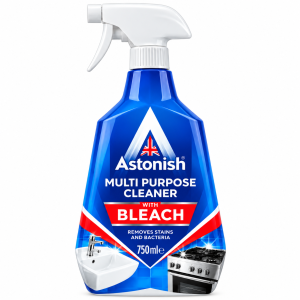

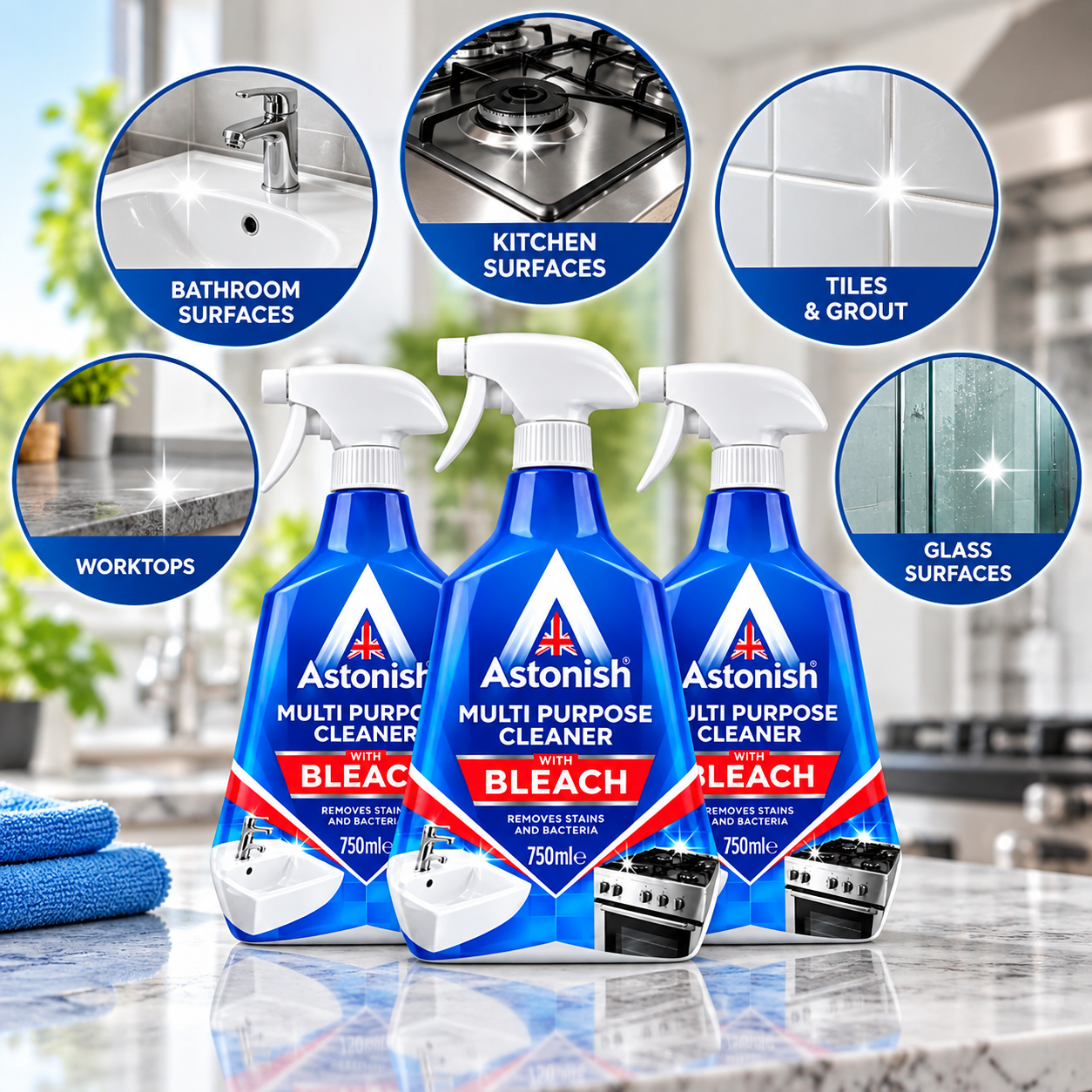
Deep Clean Kitchens And Bathrooms With Astonish Multi-Purpose Cleaner With Bleach
Deep Clean Kitchens And Bathrooms With Astonish Multi-Purpose Cleaner With Bleach
A quick wipe isn’t always enough. Like when you’re dealing with brown tea rings around the sink or greasy patches behind the hob.
And don’t get me started on the dark marks in the shower corners.
Whether you’re keeping a family kitchen in order or you’re the one who has to sign off a café’s back-of-house at the end of a twelve-hour shift, some messes are just stubborn. Astonish Multi-Purpose Cleaner With Bleach has been designed for such.
When This Bleach Cleaner Is The Right Tool
If you’ve got a few crumbs on the counter, or are dealing with a dusty shelf, leave such to the general cleaners. The regular products handle that just fine. But when you’re running your fingers on the splashback and feel that gross layer of grease that has built up over time, you need something that packs more of a punch. Or when the grout is all fouled up from weeks of gunk accumulating on it.
Such situations call for the Astonish Multi-Purpose Cleaner With Bleach. It’s made for stubborn staining and grime on hard surfaces.
Two ingredients do most of the heavy lifting:
- Sodium hypochlorite, the chlorine bleach: It acts on the coloured stains through oxidation.
- Surfactants: They get in underneath grease and dirt and loosen their grip. It makes wiping them off easier
At home, this 750 ml trigger spray is handy for the occasional deep clean (such as that Saturday morning when you’ve amped yourself up for the chores, or your kitchen needs a reset after a big weekend of cooking).
Commercial settings are different. A café sink sees more washing-up in one lunchtime than a home sink does in a week. A gym changing room stays damp for most of the day. A salon basin collects dye and product residue that nobody in a normal household ever has to think about. The staining builds faster, it’s seen by more people and, in many cases, somebody is inspecting it.
The product works the same way in both places. What changes is the frequency.
When To Choose Something Else
That aluminium trim beside the sink is off-limits. Leave the painted cupboard doors and wooden worktops alone. Same goes for varnished furniture, fabrics and paper.
Natural stone needs a little extra care. Marble, granite and limestone may look indestructible, but their finishes and sealers can react differently to bleach. Check the stone’s care instructions and make sure bleach won’t affect its colour before you go near it with the spray.
Set Up The Job Before You Spray
Let’s say you’re working in the kitchen. That’s tiles behind the sink, a metal tap, a rubber seal along the edge and painted cupboards just below. That’s four different materials squeezed into a space the size of a tea tray, and they won’t all react to bleach the same way.
Ventilate First
Any maintenance action involving cleaning chemicals that get sprayed around needs to be in a space with proper ventilation. In this case, you don’t want to end up breathing in bleach spray. So open up those windows and air out the room. Or use extractors, whichever works for your premises.
Yes, some settings are trickier (basement kitchens, staff toilets without windows or poorly ventilated plant rooms). First find a way to arrange adequate airflow. Where safe, keep the door open and allow the room to air properly before people return.
Clear The Surface
Cups beside the kitchen sink. The sponge that’s been there since yesterday. Toothbrushes, towels and half the contents of the shower shelf. Move it all out of the way first.
While you’re at it, sweep up crumbs, loose food, hair and any other debris. There’s little point spraying cleaner onto a pile of crumbs when the stain is underneath them.
What if you’ve already washed the surface with another cleaning product? Probably some mild detergent, or you ran vinegar across the area. The first thing you should do is rinse the spot. You should never mix the Astonish Multi-Purpose Cleaner with other chemicals. That includes spraying it onto a different agent to ‘speed up the process’.
Acids, hydrogen peroxide, ammonia and ammonium compounds are all incompatible. The last thing you want is the bleach reacting to an acidic cleaner.
If you accidentally mix the two: Leave the area immediately, get into fresh air and keep others away. Do not try to neutralise the mixture with another chemical. That just compounds your problems.
After the area is confirmed safe, you can clean up a small household spill with appropriate protective equipment. The method here depends on which products were mixed and how much.
Know What You’re Spraying
What’s that worktop made from? Could be laminate, timber, or natural stone. Perhaps you’re dealing with a composite that’s been made to look like stone. In bathrooms, a bath might be enamelled, acrylic or something else entirely. Two surfaces can look almost identical and still need completely different cleaners.
If you’re dealing with an unfamiliar finish, check its care instructions. And if bleach is allowed but you’re still unsure how the surface will react, try a little on a hidden spot before cleaning somewhere everyone can see.
Stakes are higher when you’re cleaning somewhere that isn’t yours. A client’s rented flat, a hotel bathroom, a shop that’s just been refitted. You didn’t choose those surfaces and you may have no idea what they are. A ten-second test patch behind a pedestal is a lot cheaper than explaining a bleached stripe to a landlord.
Cloths, Sponges And Gloves
You’ll need a clean damp cloth or sponge to wipe the cleaner away, plus fresh water for rinsing. Have both beside you before you spray anything.
Fold the cloth and turn it as you work. Once a section gets dirty, switch to the clean one. You don’t want to go spreading around the grime. That just increases your workload. You can always rinse out a soiled cloth or grab a fresh one anyway.
For textured surfaces or little grooves where dirt likes to settle, a soft non-scratch sponge helps. Go easy, though. A stubborn stain is annoying enough without adding scratches to the problem.
Kitchen Deep-Clean Routine
No need to empty the cleaning cupboard or coat every surface. Deal with what’s in front of you and keep going. Work round the room. Finish one area before moving on to the next.
Start With Sinks And Draining Areas
This is where all the dirty plates, cold tea, greasy pans pass through. So lots of grime to deal with, from the plug hole to the draining board.
Spray the affected area and give the cleaner a short wait to act on the stain. Rinse thoroughly with fresh water afterwards. That rinse applies to any plastic, rubber or metal you treat with this product.
Move To Compatible Worktop And Splash Areas
Next, the worktops. A faint sauce stain where you prepped dinner, a sticky patch beside the kettle, a drink ring someone conveniently forgot about – Astonish can help with all of these.
Tackle the marked spots individually rather than coating the whole counter. You’ll use less product and keep it away from anything nearby that shouldn’t meet bleach.
Astonish also lists its Multi-Purpose Cleaner With Bleach among the products tested and approved by the Vitreous Enamel Association for use on vitreous enamel. Reassuring if you’ve got an enamelled surface to clean. Just don’t assume the grout, sealant and trim around it share the same tolerance.
Deal With Greasy Zones Around Cooking Areas
Now for the area beside the hob. Tiny splashes start adding up, especially cooking oil spatters travelling all over. Apply the cleaner, give it the recommended contact time and wipe the grime away. If a little residue remains, a second pass with a fresh damp cloth usually sorts it.
Be careful around the cooker itself. The hob, extractor hood, oven front and control panels may have coatings, printed markings or finishes that don’t tolerate bleach. Check the appliance’s care instructions. Don’t assume everything around the cooking area can take the same treatment.
Commercial Kitchens, Cafés And Staff Kitchens
A commercial kitchen has more grease, more spills, more hands and less time.
The structure of the clean doesn’t change. Sinks, then surfaces, then the grease zones, then the fiddly bits. However, you’ll need more frequency with the cleaning. Better a closing-down routine rather than leaving it for a monthly blitz. Stains that get a week to settle into grout or a textured floor tile are far harder to shift than ones that get caught the same night.
Stainless steel is everywhere in commercial kitchens. Some stainless surfaces have coatings or treatments that don’t tolerate bleach. Check with the equipment supplier before you make Astonish Multi-Purpose Cleaner part of the routine.
What of the food safety side? Your hygiene plan almost certainly calls for a two-stage process on food contact surfaces: clean first, then disinfect with a product proven to do that job. Astonish Multi-Purpose Cleaner belongs in the first stage. It gets the visible soil, grease and staining off so that your disinfectant can do its work on a clean surface.
Staff kitchens in offices sit somewhere in the middle. Nobody’s cooking for the public, but twenty people make tea in the same sink. Things get pretty messy. A weekly deep clean with this 750 ml trigger spray will keep your space civilised. Just make sure whoever does it knows which surfaces are compatible, because office kitchens are full of laminate, painted MDF and mystery trim.
Bathroom Deep-Clean Routine
Soap film, body oils, toothpaste, cosmetics and damp staining all collect in close company, often on materials that look alike but behave very differently.
Rather than spraying the whole room, work round the areas that actually need attention.
Work Top To Bottom
It sounds obvious, but plenty of people clean the basin first, then start wiping the tiles above it and send dirty water straight back onto the surface they’ve just finished.
Start with the higher tiled areas, work down towards the bath or shower tray and leave the lowest surfaces until last. Anything loosened on the way down then lands on a surface you haven’t cleaned yet.
Tiles, Bath And Shower Areas
Clutter first goes, as always. That means the shampoo bottles, shower gels and the almost-empty conditioner you keep meaning to replace. Get room to clean comfortably without knocking things over.
Those tiles that are still wet from the morning shower should be quickly wiped. Look over sections that have grime and spray the Astonish cleaner onto them. Work across the shower one section at a time. It’s far easier than spraying every wall at once and losing track of where you started.
Keep each vertical section small enough to control. Bleach spray running down the wall faster than you can wipe is a sure sign you’ve taken on too much at once.
Now look at the bath and shower surround. That shiny white surface might look just like the basin, but don’t assume they’re the same material. The product is approved for vitreous enamel, but acrylic, glass, natural stone, coated metal and composite finishes may each want a different cleaner. Check before you spray.
Basin And Sink Areas
Between brushing teeth, washing faces and getting ready, toothpaste splashes, soap and makeup residue build up fast. There’s almost always a crusty toothpaste mark lurking behind the tap. Pretty hard to feel fresh and clean in such a space. So after the routine clean, whip out the Astonish Multi-Purpose Cleaner to deal with the grime that remains.
Some notes though:
- Move the toothbrushes and toiletries out of the way.
- Keep the spray on the basin rather than the taps, decorative trim or coloured sealant around it.
The advantage of using this Astonish cleaner is that you won’t take up much time. A couple of minutes of attention and this section will be looking much better, with no endless scrubbing.
Grout And Joints
Being porous, all the grime it is exposed to eventually leads to grout getting soiled.
- Soap and shampoo residue: Every shower leaves small amounts behind. Over time, they build up and make grout look dull or discoloured.
- Body oils and dirt: Oils from your skin mix with soap and water, leaving grubby marks between tiles.
- Mould and mildew: Damp joints, especially around shower corners, can develop dark staining when moisture lingers.
- Cleaning product residue: If you don’t rinse properly, leftover cleaner can collect in grout lines and attract more grime.
Astonish Multi-Purpose Cleaner can deal with this, but check the grout type first. There can be different reactions with white, coloured, sealed and older grout. Rule of the thumb is to test out the product on an inconspicuous area. If the result is as expected, go ahead and use the product on the rest of the area.
Textured tiles hold dirt in the same way. After the product has had its contact time, gently work those areas with a soft sponge or a suitable brush. Avoid abrasive pads unless the surface care instructions say they’re fine.
Plastic, Rubber And Metal Fittings
These sections will be catching splashes every time someone showers. Whether it is the rubber seal along the shower screen, plastic bath panel, metal handle and the handful of fitting, none of them are spared. Grab the Astonish cleaner to get rid of the grime where the material is compatible.
Age and day-to-day use factors into the maintenance. Here’s what your shower seals are dealing with for instance:
- Hot and cold temperatures: Think about how often someone jumps into the shower each day. All that heating and cooling makes the seals expand and shrink. Over time, they can lose flexibility and start cracking.
- Constant moisture: Water loves settling around shower seals, especially in the corners. Leave those areas damp for too long and mould gets a lovely place to grow.
- Soap and cleaning products: Everyone has their favourite shower gel or bathroom cleaner. But repeated exposure to certain chemicals can gradually wear down the seals, leaving them brittle, faded or discoloured.
- Aggressive scrubbing: That stubborn black patch might tempt you to grab the roughest brush in the house. Easy there! Scrubbing too hard can wear away the material and shorten its life.
So don’t confuse a stained seal with a damaged one. Astonish Multi-Purpose Cleaner With Bleach is there for you when you have stain issues. But it can’t mend cracked rubber or restore permanently discoloured silicone.
If the seal itself is damaged, it’s time for a replacement.
Shared And Commercial Washrooms
A home bathroom gets used by a handful of people who all know roughly what they’re doing. A pub toilet, gym changing room or office washroom gets used by dozens or hundreds. The stakes are higher in the latter.
That changes three things:
- Stains happen faster: The deep clean needs to be more regular. Plus clients expect the premises to always be in top condition. You can’t be slacking off.
- The room is rarely empty: What do with ventilation/airflow? You’ll need to close it off or pick a quiet window for the cleaning (when there are less clients around). You can also put a sign on the door while bleach is in use.
- The materials are often tougher but more varied: We’re talking washrooms that mix ceramic, stainless steel, powder-coated partitions, laminate vanity tops and the occasional natural stone. Extra care is needed, especially in ensuring only compatible products are used.
For salons and barbers, backwash basins collect hair dye, bleach products of their own and conditioner residue, and they’re used all day long. A nightly spray on compatible basin surfaces, with a thorough rinse of any metal fittings, keeps the staining from setting in. Just keep the product off any coloured sealant and check what the basin shell is made of, because many are acrylic rather than ceramic.
Gyms, swimming pool changing rooms and student halls share one problem: they’re damp from opening to closing. Mould and mildew staining takes hold in tile joints and around shower trays far quicker than it would at home. Daily attention to the shower areas with this cleaner, where the surfaces allow, is a lot less work than a monthly rescue mission.
And if you clean rented property, whether that’s an end-of-tenancy turnaround or a weekly contract, the bathroom is where deposits are won and lost. Tackle the grout, the seals and the basin properly, photograph the result, and know when a seal is beyond cleaning so you can flag it rather than get blamed for it.
Mould And Mildew Stains
Those ugly black marks staring at you whenever you enter the shower can make your skin crawl. There is something unnerving about mould and mildew. And their stains stick out like a sore thumb.
Given all the grime and moisture that bathrooms see, it is not a surprise when the growths occur. However, they need to be dealt with promptly. This can easily get out of control. The Astonish Cleaner will get rid of the stains. However, the underlying cause also needs to be addressed. Is there a leak in the area? Is the bathroom not getting adequate ventilation? Fixing the core problem will keep the mould and mildew from popping up.
If you’re dealing with a workplace bathroom, mould problems are more delicate. Get the maintenance team involved. They can check for leaking pipes, faulty extractors or damaged sealant.
Getting Better Results On Stubborn Marks
When a mark survives the first pass, the instinct is to use more product, leave it longer and scrub harder. That wastes cleaner. And puts the finish at risk.
Before escalating, make sure the basic method was right:
Respect The Dwell Time, Both Ways
Spraying and wiping immediately won’t get the job done. You need to allow a short time for the active agents within the cleaner to actually work on the grime. Fortunately, this just takes around two minutes.
Just don’t get distracted and leave it for half an hour. Longer doesn’t mean cleaner, and product sitting far beyond its contact time is how surfaces get damaged.
Don’t Flood The Surface
It’s a powerful cleaner, yes. What happens when you find a big patch? It can be tempting to spray the product all over to ‘speed things up’. This works against you. First, the dwell time is strict. You can end up leaving the product on sections for too long. Secondly, you end up wasting the product. Simply break down the area into more manageable sections that you can work on.
Also, no need to soak half the bathroom when you’re just targeting one grubby tile. Focus on the area that is stained. It gives you more value for your money in the long run.
Know When To Stop
There are situations where more product or scrubbing simply won’t change things. Like when you’re dealing with permanent discolouration or the finish has been damaged.
Once the loose soil and residue are gone, repeated applications do little except increase the risk to the finish. At that point, stop and work out what the mark actually is.
Limescale wants a descaler (never used in the same session as bleach, remember). Scratched acrylic wants a polish. A discoloured seal wants replacing. Not every problem is a cleaning problem.
Common Mistakes
- Mixing it with something else. Use one product at a time, with a water rinse in between.
- Spraying before you’ve checked the finish. The stone-look worktop that’s actually composite. The metal strip that’s actually aluminium. The matching white basin and bath panel that are two completely different materials. Know what you’re spraying.
- Getting the contact time wrong. Too short and the stain stays. Far too long and the surface pays for it.
- Forgetting the rinse on plastic, rubber and metal. You don’t need to pour water everywhere. A fresh cloth wrung out in clean water and wiped thoroughly over the treated area does the job, even in an awkward corner.
- Spraying at face height or in a sealed room. Ventilate, point the nozzle away from yourself and keep the bottle close to the surface.
- Treating it as a fabric stain remover. Coffee on a white shirt? Don’t risk it. This cleaner is for hard surfaces, not clothes, curtains or sofas. Bleach can strip colour, and even white fabrics may have fibres or finishes that react badly. Use a laundry stain remover that suits the material and check the care label first.
Storage, Spills And First Aid
Every chemical product you add to your cleaning arsenal has rules when it comes to everyday care and handling. Same case here. Being that the multi-purpose cleaner contains bleach, extra caution is needed.
Storage
Astonish Multi-Purpose Cleaner comes in a well-labelled bottle. So there’s no reason to go pouring it into some random container and having household members mix things up. Retain it in its original bottle, to be disposed of after use. Keep the bottle standing upright, out of the reach of children.
As with other products, store it in an area with normal room temperature.
Spills
Accidents happen. You knock the bottle over while rearranging the cupboard, or catch it with your elbow reaching for something else.
Deal with it straight away. Soak up the liquid with kitchen roll or another absorbent material, bin it and wipe the area with a damp cloth.
Then check where the cleaner actually went. Perhaps most of it landed on a suitable tiled floor, but some ran down the painted cupboard door beside it. Bleach cleaner left on an unsuitable surface can mark the finish, especially when it sits there far longer than the recommended contact time.
Skin And Eye Contact
Even when you’re careful, there could be a splash. A bit of cleaner on your hand while wiping round the sink, or a spray that lands closer to you than you intended.
If it gets onto your skin, rinse it off with water. Eye contact needs immediate attention: rinse thoroughly with plenty of water for several minutes and get medical advice if irritation or any other symptoms continue.
Astonish Multi-Purpose Cleaner FAQs
Can I use this every day?
You can, on surfaces that suit bleach. But you don’t need to. Your everyday cleaner handles crumbs, dust and light spills perfectly well. Keep Astonish Multi-Purpose Cleaner With Bleach for stubborn dirt and staining, and for the high-traffic commercial areas where staining builds up daily.
Will it get rid of mould?
Astonish Multi-Purpose Cleaner With Bleach removes mould and mildew stains. Note that if the stains are a recurrent problem, the underlying case needs to be identified and fixed.
Can I use it on stainless steel?
That depends on the finish. Some stainless surfaces have coatings or treatments that don’t like bleach, so check the manufacturer’s care instructions first. If it’s compatible, rinse thoroughly afterwards. And whatever you do, keep it off aluminium.
Is it a disinfectant?
No. It’s a cleaner and stain remover. To have a surface disinfected, use a product that’s labelled and tested for that purpose. In a commercial kitchen, treat this spray as your cleaning stage and follow it with your approved disinfectant.
Why does natural stone need extra care?
The likes of marble, granite and limestone surfaces are tough. To increase their durability/add to their aesthetics, finish products are used. These can be water-based or oil-based. These finishes, in turn, have their own chemical make-up. The issue comes in the compatibility of that finish with the Multi-Purpose Cleaner With Bleach. It is always advisable to do a spot test.
Can I use it on clothes or upholstery?
No. It’s designed for hard surfaces, not fabrics. Use a laundry stain remover for clothes and follow the manufacturer’s instructions for sofas and other upholstery.
What if the mark still won’t shift?
You’re probably dealing with permanent discolouration, limescale, a damaged finish or stain that has sunk into a porous material. In each case, a different solution is needed, not adding more of the Multipurpose Cleaner with Bleach onto the spot.
Recommended products
Discover more alternatives and similar items.