
The Faber Porcelain Restoration Cream
Revitalizing Surfaces With The Faber Porcelain Restoration Cream
Porcelain floors come with enhanced strength and durability. The tiles can endure the heavy foot traffic typical of commercial establishments and the modern day busy homes. They do this while retaining their appearance. Attributes like their frost-resistance contribute to their popularity, with the hardwearing nature of the installations also enabling them to resist issues like harsh cleaning agents and heavy loads being placed on them. What’s more, they come in numerous colours and textures, with skilled manufacturers being able to replicate the natural effect of natural stone patterns and wood grain.
The low water absorption rate also makes them less susceptible to staining. However, regardless of all this, it doesn’t make the porcelain surfaces invincible. That constant abuse will gradually lead to issues like scratches forming. After spending so much time and resources polishing or glazing the tiles you don’t want to watch them become dull. The general wear drags down the decor of the premises. You want to bring back the original look and feel, without damaging the underlying structure.
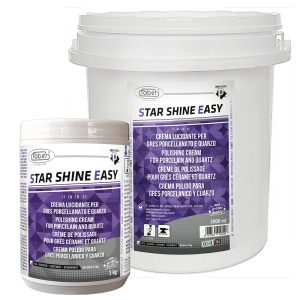
After all, the porcelain tiles cost a pretty penny to have them installed, and you want them to take you for the long haul. There are numerous products out there- which can you trust? Turn to Faber, the brand that has been providing surface care solutions for decades, and has a global market as a result of the quality of their formulations. That way you can rest assured that you are getting a value return for your purchase. When specifically dealing with porcelain, where you want to enhance the aesthetic appeal after it has been worn down due to everyday use, bring in the Faber Porcelain Restoration Cream.
What You Get From The Faber Porcelain Restoration Cream
-
Reverses the defects on your surfaces
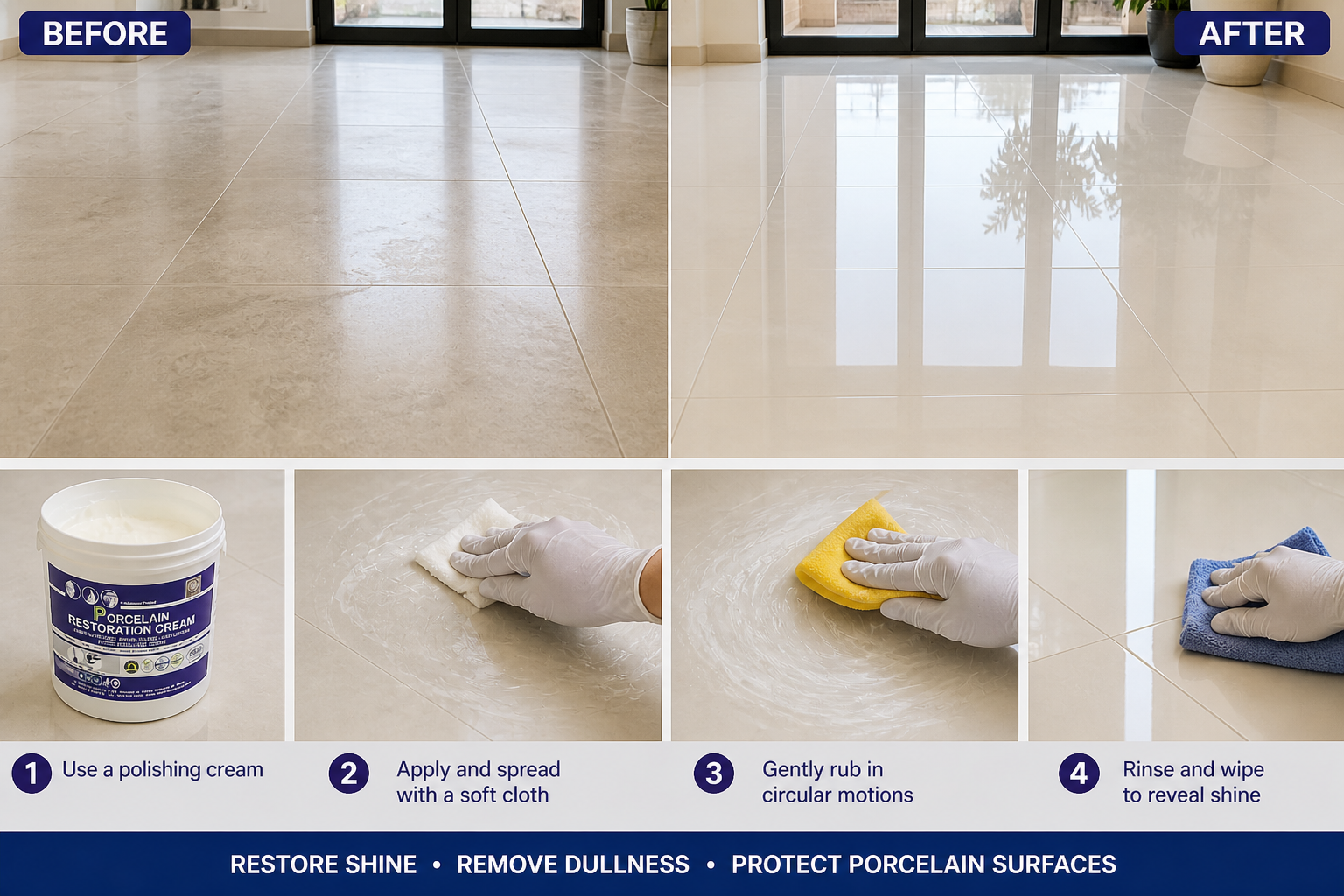
The Faber Porcelain Restoration Cream is true to its name. You get to restore the glamour to the installation, fixing flaws such as slight abrasions and scratches, to resolving that look of general wear, in order to meet your decor needs. The ultra-fine particles in the cream provide the micro-abrasive effect needed to accomplish the task.
This is especially on the polished porcelain tiles, and also the glazed surfaces, where you want to reverse the effects of the polishing process. Whether you’re dealing with a surface that has become a bit dull, one where the finish’s uniformity was degraded, or have a cloudy effect, the Faber Porcelain Restoration Cream will be up to the task.
-
Specially developed for porcelain
While porcelain is highly resistant, scratches are still bound to occur. It can be during the handling and installation, or simply as a result of daily use. The Faber Porcelain Restoration Cream can be applied on the structures without damaging the material itself. This water-based formulation is applicable on both polished and glazed porcelain installations.
-
Wide coverage rate
The Faber Porcelain Restoration Cream has a 20/30m² per litre coverage rate. This means each unit purchased gets to be used on a wide surface area, making it an economical choice for surface care. With an affordable price tag, it further enables you to scale down on the costs incurred when maintaining your building’s surfaces, while still ensuring you get quality results each time.
How To Use The Faber Porcelain Restoration Cream
For this, the recommended equipment is a single disc machine that has a rating of 1.5HP and above. These are the likes of the Warrior unit from Faber, which has been optimized for such tasks, and comes with a 2.2HP capacity. You can also use a manual rotary brush, depending on your specific working conditions.
Before you treat the surface, first give it a thorough clean. Get rid of the dust and gunk that is on its surface, using products like the Faber 30 or Deterfug. Here the formulation used depends on the type of surface you’re working on, and the kind of dirt you’re dealing with. Remember to protect the adjacent sections that are not to be treated. Once ready, proceed with these steps:
- Shake the Faber Porcelain Restoration Cream in its bottle.
- Pour it on to the surface. Here, 2/3 spoonfuls will suffice for an area of 2m².
- Add some water to the cream. Use a 1:1 ratio (i.e. add a spoonful of water for each spoon of product)
- Distribute the mixture onto the rest of the surface. Working with a single disc machine onto which a white pad has been fitted, ensure that you cover the target area evenly. You can set the machine to 150-200 rpm. You should also ensure that you make an equal number of passes for the different sections of the floor.
Note that the mixture should retain the creamy consistency all through the process. If it begins drying up, simply add some more water to it.
- Keep making the passes using the floor polishing unit until you obtain the desired results. To assess your progress, you can make a short pause, and remove the cream from a small area using a mop and observe the finish. Usually 15 to 25 passes are enough for the restoration process, but this can vary depending on the type of floor being worked on.
- After you have obtained the desired results, vacuum away the residue.
- Rinse the surface with lots of clean water. The floor will be ready to use after drying, and can be opened up to foot traffic. The equipment used can be washed with water.
Extra Tips For Using The Faber Porcelain Restoration Cream
- Ensure that the product doesn’t dry. Keep checking on the creamy consistency all through the application, adding water as seen fit.
- The surface being worked on should not be overly heated. The ideal temperature range is between 5 and 40°C.
- It’s advisable to work on surface areas of 2 m² at a time.
- In case you’re working on an installation that has been recently grouted, first allow the grout to cure.
Revitalizing Surfaces With The Faber Porcelain Restoration Cream
Recommended products
Discover more alternatives and similar items.
-300x300.jpeg)
-300x300.jpeg)
_3nd-300x300.jpeg)
0 Comments
Questions or feedback? Join the discussion below.
No comments yet. Be the first to comment.
Replying to