
Marmoleum Floor Cleaning
Marmoleum Floor Cleaning And Marmoleum Floor Care
Marmoleum floors are very popular and can be seen everywhere but are some of the most misunderstood and poorly cared for types of floors. People just can`t wrap their heads around the maintenance and cannot understand why they should seal a brand new floor. Because of this, the marmoleum floors are rarely in good shape or rarely last for as long as they should.
What Are Marmoleum Floors?
Marmoleum flooring is a premium natural floor covering manufactured primarily from renewable and sustainable raw materials. Often regarded as one of the most environmentally friendly flooring solutions available, marmoleum is widely used in schools, healthcare facilities, offices, retail spaces, and residential properties due to its durability, hygiene, and low environmental impact.
Unlike vinyl flooring, which is made from synthetic plastics, marmoleum is produced using natural ingredients. The main raw material is linseed oil, extracted from flax seeds, which acts as the primary binder. This is combined with wood flour obtained from responsibly managed forests and natural limestone powder to create a strong and resilient flooring material. Natural pigments are added to achieve a wide variety of colours and patterns without relying on harmful chemicals.
The mixture is pressed onto a backing made from natural jute, a strong plant fibre that provides additional stability and flexibility. During the manufacturing process, the materials are carefully blended and matured to create a dense, durable surface capable of withstanding heavy foot traffic for many years.
Marmoleum floors offer numerous benefits. They are naturally anti bacterial, anti static, and easy to clean, making them ideal for environments where hygiene is essential. The surface is highly resistant to wear, scratches, and indentation, while also maintaining its appearance over time. Because it is manufactured from natural materials, marmoleum is biodegradable and has a significantly lower carbon footprint than many alternative flooring products.
Available in sheets, tiles, and planks, marmoleum can replicate a wide range of design styles, from traditional marbled effects to contemporary patterns. Its combination of sustainability, durability, comfort underfoot, and attractive appearance has made marmoleum one of the most popular choices for environmentally conscious flooring projects throughout the world.
Sealing
The marmoleum floors are factory sealed but the sealer that is already on it cannot take the kind of traffic that those floors are usually exposed to. Most of the marmoleum floors are found in schools, health care centres, gyms, offices, public buildings, etc. The kind of places where thousands of people use the same areas daily.
The tiny coat of sealer that is on it is likely to give up pretty fast while exposed to such a high level of traffic. To make sure that the floor stays in good shape and the glazing of the floor does not get damaged, we recommend all marmoleum floor owners to seal the surface with a few coats of floor polish and then maintain it with a proper maintainer.
-
Polishing I The word polishing often causes panic. People think that polishing a marmoleum floor is a huge and pointless job that will cost a fortune and it will only make the floor glossier. That is totally wrong. Within the polishing process, the flooring contractor will deep clean the floor and will overcoat the floor with 2-3 coats of water based acrylic floor polish. These coats of floor polish will overglaze the floor surface and will create a protective barrier between the traffic and the floor.
-
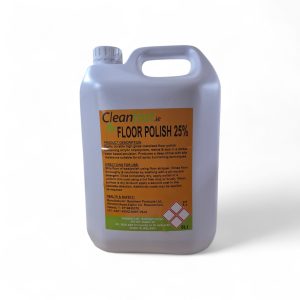
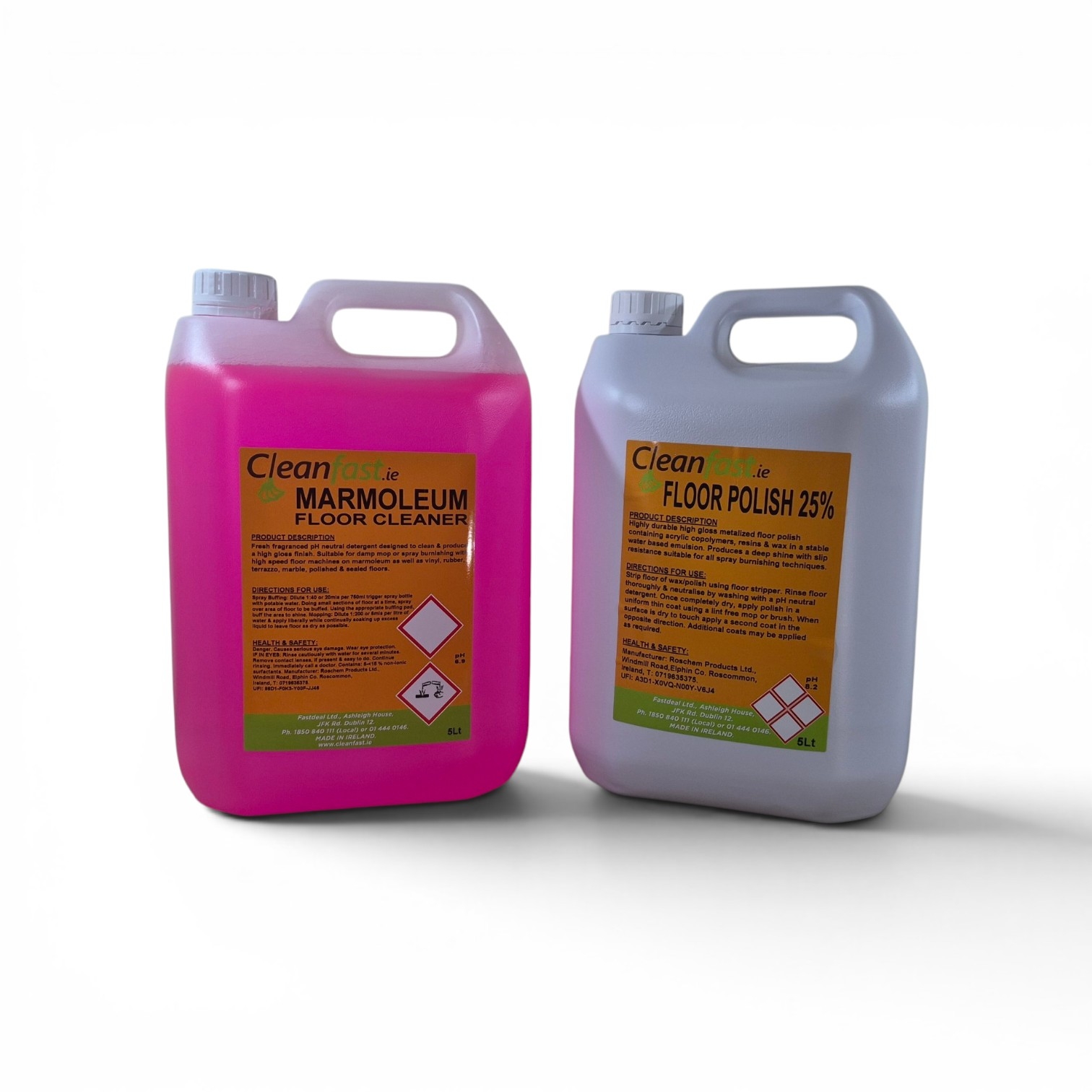
If someone drags a piece of furniture, spills a drink or drops something on the floor, the sealer will get damaged but not the floor. If the sealer is not there to protect, then the glazing of the floor will get damaged and the floor will require replacement or localised patch replacement. There are different types of water based floor polishes but our company highly recommends the incredible Cleanfast Floor Polish 25% Acrylic Floor Polish.
-
Maintenance I After the surface is polished with a few coats of floor polish and looks incredible, the maintenance process should start. There is no point having a beautiful floor for a short period of time when with little effort and a bit of care, the floor can stay like that for years. The most essential thing is to use the proper floor cleaning products and the proper floor maintainers.
-
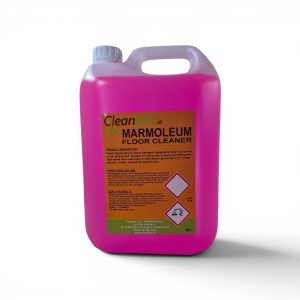
This is a major issue within the marmoleum floor cleaning industry. The use of high PH floor cleaners or acidic floor cleaners should be prohibited. The use of bleach based cleaning products should be 100% avoided. Just order the amazing Cleanfast Marmoleum Floor Cleaner and wash all your marmoleum floors on a daily basis with a top quality product that will safely remove the dirt and repair imperfections. This particular product is highly concentrated and PH neutral.
-
Buffing I The buffing of the marmoleum floors is one of the most ignored and one of the most essential parts. These floors should be buffed regularly. Within the buffing operation, all the small scratches and rough patches are being leveled up and the imperfections on the sealer will be flattened up. The white floor pads and the red pads are the types of floor pads suitable for marmoleum floor cleaning and marmoleum floor polishing projects. The floor buffer should have a speed of at least 400 RPMs to provide good results.
Issues Created By Poor Maintenance
The main reasons for damage on marmoleum floors is poor maintenance and the use of unsuitable cleaning products combined with the fact that the floors are mostly left unsealed. The basic rule for marmoleum floor cleaning is to use PH neutral floor cleaners and maintainers.
Cleaners
If the marmoleum floor is being cleaned daily or very often, there is no need to use a very strong cleaning product to clean it because the dirt does not get a chance to build up. A low PH floor cleaner like Cleanfast Marmoleum Floor Cleaner will do the job nicely and it will prevent damage to the surface. The issue is the fact that most places where the marmoleum floors are fitted are usually state owned or managed and the cleaning routine is done by a third party.
While a strong floor cleaner might work nicely, it will create porosity on the floor glazing and it will cause discoloration of the finish over time. The bleach based products or the products that contain traces of bleach or sodium, are the most dangerous ones because they bleach the finish over a pretty short period of time.
While the use of floor maintainers and low PH floor cleaners are highly recommended, these products will only work if the floors are washed on a daily basis or if the floor is still intact and the top glazing is not damaged. Some of our customers find out about the maintainers after they have used the floors for years and the floors are seriously damaged and burned with all kinds of chemicals.
When that happens, the maintainers will not work any longer. But if the floor owner starts with the proper routine from the start, then the maintainers will work like a treat.
Tools Used
A semi wet floor mop or a flat mop head is the most cost effective way of washing the floors. Some schools, pubs, restaurants, sport rooms, etc, use large kentucky mops which soak the marmoleum floors and leave small puddles on the floors. These puddles will dry up patchy and will transform your beloved marmoleum floor into a terrible looking floor.
The ideal tool for cleaning marmoleum floors is a flat mopping system with a good quality flat mop head that contains some scourer for scrubbing and agitating the dirt (Concept Microfiber EMR 80 Pad)
-
Using a large V sweeper or a vacuum, remove all the visible residue, fine dust and large debris from the floor surface.
-
Dilute the cleaning product into a bucket to have enough to cover the entire floor and then soak the flat mopping system into it and start washing the floor. The flat mop will break down all kinds of superficial dirt and it will transfer the residue from the floor into the flat mop head.
-
Open all the windows to ventilate and speed up the drying process
Burnishing
As we have mentioned above, the sealing or polishing of marmoleum floors is essential. All that daily traffic should happen on the sealer and not on the floor itself. Over a period of time, the sealer will get scratched, damaged, burned, etc, but you have nothing to worry about. It is the normal process. Once every second year or so, the old coat of floor polish has to be removed and a new coat of floor polish applied.
During the day from all that on and off traffic, the protective layer of polish is likely to get scratched or damaged. That is not a problem. After the floor is cleaned with a maintainer, the floor has to be burnished with a red, tan or white pad. The floor buffer and the pads will spin at high speed (400 RPM to 900 RPM), it will melt the polish and it will flatten up the imperfections on the sealer. More buffing done, longer the life expectancy of the floor sealer.
The Maintainer
The marmoleum maintainers are low PH floor cleaners that contain a low level of sealer. As the floor is getting washed, the maintainer will fill up all the small cracks and dull patches, it will dry up the same way a wall filler dries and then when the floor gets burnished with a floor pad, the excess sealer is removed and only the part that has filled the cracks is left on the floor. Basically, after every wash, the maintainer will fill up and repair the imperfections and the micro scratches that are likely to happen from all that daily traffic.
A major mistake most commercial marmoleum floor owners make, is the fact that they don`t burnish the floor after it was washed. By not burnishing the floor, it means that the surface is covered with another layer of sealer on a daily basis and the floor is getting overglazed. Dirt and dirty water gets trapped between the layers of maintainer and the floor starts getting duller and more discoloured on a daily basis.
The marmoleum floors have to be buffed. That is not an option but a must do job.
Damaged Marmoleum Floors
We are being contacted by many schools, pubs, restaurants and other types of commercial marmoleum floors owners to ask us to have a look at their floors. When that happens, it is already too late. From this point on it is a matter of saving the floor instead of protecting it.
Too Many Layers Of Maintainer I This is the simplest issue to resolve. If the floor owners have washed their floors on a regular basis and they have ignored the burnishing part, the floor is likely covered in sealer and it requires a good stripping operation to bring it back to its original colour.
High Porosity I This issue appears when high PH floor cleaners, acidic floor cleaners or bleach based floor cleaners are used on the floor. The glazing of the floor cracks and the surface feels rough like sanding paper. This issue can also appear when the floor is burnished with the wrong pads. This issue can be easily sorted by stripping the surface, priming the surface with a few coats of floor primer, sealing it with a few coats of sealer and then burnishing with red pads.
Patch Finish Or Discolorations I In 99% of the cases, the discoloration happens when the marmoleum floors are washed with a bleach based product. The surface is basically bleached. Uneven wear can also appear in high traffic areas. The discolorations are hard to remove because the plastic is damaged for good. It can only be made better looking. Usually a quick deep clean and two coats of sealer sort out the issue to a certain level.
Solutions
There is no one single solution to all problems. But if you own marmoleum floors and if you are planning to have it for as long as possible, you should contact us in good time. We are happy to drop by and assess the condition of your floors for free.
Recommended products
Discover more alternatives and similar items.