
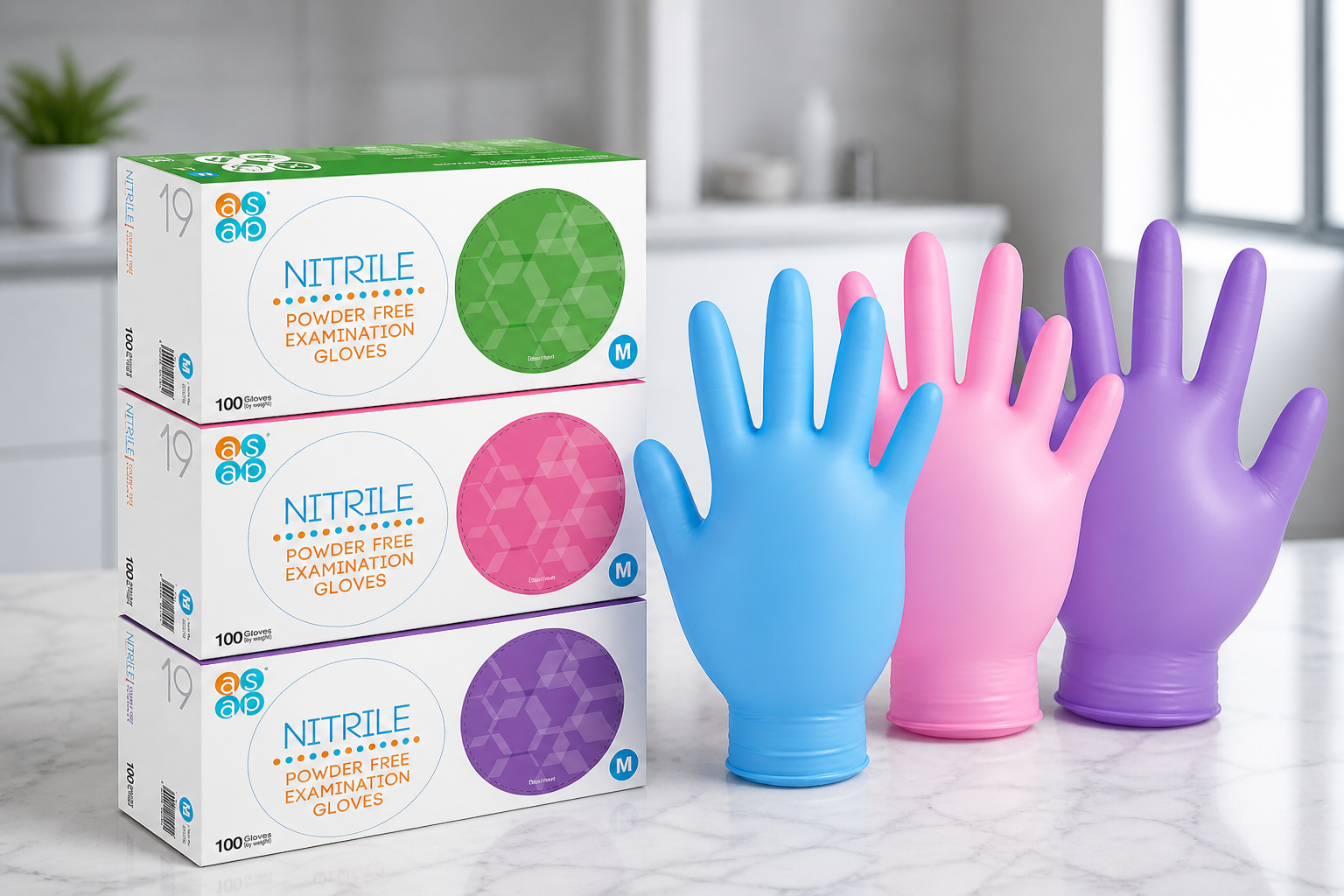
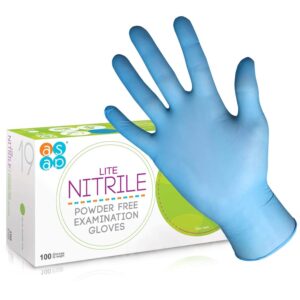
The ASAP Lite Nitrile Gloves
Patient Examination And Care With The ASAP Lite Nitrile Gloves
Examination gloves are required to meet a stringent criterion for optimal protection. In fact, this is what mainly sets them apart from the industrial-grade gloves. The testing they undergo is more rigorous. Take the AQL limit for instance. It looks at how many gloves within a batch can fail the testing. Low AQL is required for the exam grade gloves, to ensure that the products being released are of ideal quality, to provide a barrier of profession against the risks that will be encountered. This is because they are used in environments where the risk of contaminants and infection is high, plus exposure to chemicals that can damage the skin.
The safety of the wearer- the health professional in this case, and the patient being attended to, are key. The AQL is a percentage, and typically the exam gloves should have an AQL rating of 1.5 and below. This would mean that only 1.5 gloves out of 100 can fail the test. If any more fail, the entire batch does not meet the standard, hence will not be permitted for medical use.
The testing for the gloves is carried out through methods such as the pinhole leak test, which is used to assess the barrier integrity of the unit. This is because even a minuscule breach in the glove will be enough to expose the wearer to pathogens. For the pinhole test, the gloves are filled with water, closed at the cuff, and then hung upside down. If there are no leaks that occur during the test period, then the gloves will be deemed acceptable.
The examination grade gloves are also used in other industries where biological hazards are a concern- the likes of caregiving homes, the beauty industry, plus for those offering tattoo services. Here, the workers can come into direct contact with the blood of the individuals they are serving, hence the need to protect them from infections caused by the blood-borne pathogens. The examination gloves come in different materials.
Nitrile gloves are increasingly becoming popular for these situations. This polymer, developed from different compounds, resulting in the formation of a base-like rubber, has gained prominence within different niches, from the medical industry and tattoo artists to those in research and development laboratories. These are the likes of the ASAP Lite Nitrile Gloves that is on focus here. Before we delve into it, here is a comprehensive guide on what to look for when selecting the type of glove that you require.
Guide For Purchasing The Right Gloves For Your Needs
For the selection of the appropriate pair of gloves that is suitable for your working situation, different questions come to mind, including:
-
What kind of hazards will you be working with?
This looks at the kind of exposure that will be encountered during the working conditions, plus the nature of the hazard itself. It includes aspects such as the types of chemical being handled, physical hazards like when you’re dealing with sharp and piercing objects, the pH and toxicity of reagents and solutions being dealt with, temperatures involved -especially if there will be extreme conditions, and also biological hazards that come with the potential of causing an infection.
-
Will there be incidental or prolonged contact with the hazardous substances?
The incidental contact is when there is little or no direct contact with the material. Here, you simply want to protect yourself from accidental spills and splashes, overspray from dispensing devices, and those cases where infectious agents are being handled, where barrier protection is needed for that short period when you will be in contact with them. it also takes into account those cases where you want to protect the materials/samples being handled from getting contaminated.
With incidental contact, disposable gloves are appropriate. Nitrile gloves are preferred here. When working with disposable gloves, you won’t need to wash or reuse them. They are removed and replaced as soon as they are used. Remember to take off the gloves before you touch common surfaces like phones, lift buttons or doorknobs.
For extended contact, this looks at cases like when the hands are to be submerged into a chemical or other substance that is hazardous, cases when you’re dealing with materials that are highly contaminated, plus situations where physical protection is needed from exposure to the temperature extremes.
For extended contact, one turns to reusable gloves. Here, ensure that you have checked for rips or punctures on the structure of gloves before and after using them, plus assessing them for signs of degradation- which include changes in texture and colour. The gloves should be replaced whenever the signs of degradation begin manifesting.
When it comes to disposing of the used gloves, this should be carried out based on whether or not they were being used to handle contaminated material or hazardous substances. If there is no contamination, they can be tossed into the bin that handles regular lab waste. For those cases where there was chemical contamination or you were handling hazardous materials, these will require their specialised disposal systems, to ensure that they don’t get mixed up with the general waste.
The disposable nitrile gloves are ideal for examination purposes, preventing contamination and offering protection from the hazardous material being handled. You want to ensure that you get a high-quality unit that you can trust to redeliver on its mandate. That’s what you get when you turn to the ASAP Lite Nitrile Gloves. Here is an analysis of what this product provides:
What Makes The ASAP Lite Nitrile Gloves Stand Out
-
Sets a contoured fit
The stretchable capacity of the ASAP Lite Nitrile Gloves enables each unit to adapt to the contours of the hand, fitting seamlessly onto it like a second skin. The material itself is heat activated, where the body heat warms it up, activating the monomers that are within the material and making it smoothly take up the shape of the hand. The fit that is obtained is both secure and waterproof.
This form-fitting nature of the ASAP Lite Nitrile Gloves makes it easy to handle the different sets of equipment while carrying out the tasks, simultaneously enhancing flexibility without compromising on the precision of the wearer’s movements. This is especially vital for medical professionals, where one can’t afford to make accidents. The dexterity and tactile sensitivity that the ASAP Lite Nitrile Gloves provide also comes in handy for pet groomers and the veterinary personnel.
-
Puncture resistance
Soft yet strong, The ASAP Lite Nitrile Gloves enhances your safety as you go about your duties. When dealing with needles, you want to protect yourself from getting pricked. From doctors to tattoo artists, the strong puncture resistance of the ASAP Lite Nitrile Gloves is a welcome bonus. Incidences of the patient’s or customers’ blood on the needles being used getting into your system by getting pricked are avoided. They are ergonomic to use, while still offering the desired levels of protection.
They are highly resistant against ripping, tearing and punctures. You also won’t have to worry about tiny and indistinguishable holes within the material, thus taking away the chances of contamination. What’s more, nitrile naturally resists electric charges. This means that static doesn’t develop while carrying out your operations- so cases of pathogens being picked up from surfaces are avoided. This makes it a top choice for environments where risk management for personal safety is a highly sensitive issue.
The chemical resistance that is provided by the ASAP Lite Nitrile Gloves keeps the skin safe from acids, oils, and the wide range of ingredients that come with the reagents used in health care centres and labs.
-
Low friction resistance
You don’t want to keep struggling each time you have to wear a pair of gloves. In healthcare facilities and nursing homes where the rate of changing gloves is high, it will be more of a nuisance. You won’t have to worry about that with the ASAP Lite Nitrile Gloves. These units have a low coefficient of friction, making them easy to slip on or off. This is attributed to the finish that is applied onto the material when the gloves are being manufactured.
-
Dependable grip
The textured fingertips of the ASAP Lite Nitrile Gloves enable you to have a firm grip on the equipment that you’re handling. This is key to prevent slips and accidents, items being dropped and ensuring that you have enhanced precision when examining the patient or handling samples.
-
No latex problems
Natural rubber latex is infamous for causing asthma and dermatitis. Used in medical gloves, elasticised bandages and dressings, it has resulted in a wide range of effects. Symptoms of latex allergies range from the itchy skin and rash that can develop immediately, sneezing and coughing, a runny nose, chest tightness, shortness of breath, all through to anaphylactic shocks. The most common reaction caused by usage of latex gloves is the scaling, drying and cracking of the skin. Blistering and crusting may also occur, where it appears like a poison ivy rash.
The reactions are due to the latex proteins in the natural rubber productions. With the health workers being sensitised to latex, further exposure may trigger reactions, even when the exposure is to low levels of latex. The effects are so common that the European Standard IS EN 455-3:2006 actually stipulates that any products containing natural rubber latex should not include any term in its product label that suggests aspects like low protein, low allergenicity or hypoallergenicity. In fact, since 2008, the IS EN ISO 15223-1:2012 requires any product that comes with the rubber latex to indicate it in the device or its packaging, in order to warn those using it.
The latex reactions are worsened by the powder in the gloves. The proteins that trigger the allergies bind to the powder, which then serves as a carrier for the proteins. When the powdered gloves are donned, more of the natural rubber latex products end up penetrating the skin. What’s more, when these powdered gloves are removed and the particles get airborne, and once inhaled they reach the body membranes.
Speaking of powder, it drains moisture from the skin. This results in that dry and cracked sensation. What’s more, it tends to abrade the epithelium and can even lead to an increased pH level of the skin. This increases one’s susceptibility to inflammation and eczema. When the natural skin’s protection layer is affected, it makes it easier for toxins, pathogens and more allergens to penetrate it, worsening the situation.
The hands directly donning the gloves are at a greater risk. The powder itself is an irritant. When pulling the powdered gloves out from their dispensing box, or when putting them on or off, a small whiff of molecules gets dispersed into the air, contributing to the reactions. This exposes persons on the premises to the chemicals that are within the powder. These scenarios are avoided when using the ASAP Lite Nitrile Gloves.
-
The powder-free alternative
Powder in gloves does more than just increase allergic reactions when the particles get airborne. It’s also a nuisance, making the job being carried out messy. Previously powders were used as dry lubricants, composed of substances like cornstarch. The goal here was to make donning the glove easier, and also to prevent the gloves from getting stuck together during their manufacture. The powder can also contain residue accelerators and elements like zinc, sulphur and antioxidants.
However, the residue left behind by the powder can get on your nerves. They contaminate the medical equipment- especially with the airborne powder particles. This affects high-tech instruments like surgical microscopes, endoscope cameras, to the monitors, impairing their functioning due to the powder deposits. This also results in surgical complications- especially when powder in the gloves gets stuck in the body tissues during surgery. What’s more, the powder particles can result in contamination of lab samples, thus leading to incorrect test results. No one also likes powder getting onto their clothes. These aspects are done away with when using nitrile gloves.
The polymer coating that is on the gloves is in place of the powder used in the conventional latex gloves, that way they can be worn and removed with ease, without the frustrations that come with the latter. These kinds of messes are avoided when you incorporate the ASAP Lite Nitrile Gloves into your healthcare processes.
Patient Examination And Care With The ASAP Lite Nitrile Gloves
Recommended products
Discover more alternatives and similar items.
-300x300.jpg)
0 Comments
Questions or feedback? Join the discussion below.
No comments yet. Be the first to comment.
Replying to