
Robert Scott T-Spray Bottle and Trigger
Robert Scott T-Spray Bottle and Trigger for Cleaning at Home and at Work
What would cleaning be without spray bottles? They are so convenient and quick to use.
Got some jam jars back in the fridge and a sticky thumbprint on the fridge handle? Spray a little suitable cleaner onto your cloth and you can wipe both as you pass. For grime on the table or dried juice on a high-chair tray, get a solution for food-contact surfaces, mist some onto the area, and clear it away.
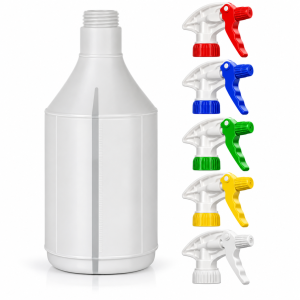
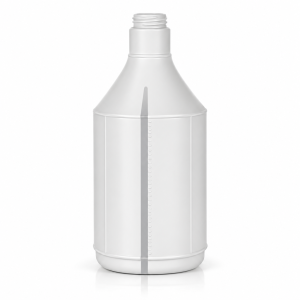
Greasy splashes behind the hob, those toothpaste specks on bathroom mirrors, that soapy ring around the basin – the system works across the board. Even out on the patio, plain water in a spray bottle plus a soft cloth are usually all you need. But all this hinges on you getting the equipment right. With the Robert Scott T-Spray Bottle and Trigger, you get 600ml of capacity in a durable unit that will make cleaning a breeze.
Benefits of the Robert Scott T-Spray Bottle and Trigger
A Grip That Fits the Way You Clean
Let’s first look at the basic action when picking up the spray bottle. Your fingers settle around the neck, with one or two ready on the trigger. The Robert Scott bottle comes with a shaped grip for that hold. Why all the fuss on grip? Well, you won’t mind much when just working on a table or two. But when you have a whole row of dining chairs to work on you will want something that is easy on your hand.
One hand turns each chair towards you. The other can pick up the bottle, spray and put it down again without much fiddling. This unit makes it easy for both minor and extensive cleaning tasks. The empty bottle and trigger weigh 80 g. How much more you carry is up to you. If you’re popping upstairs to do the bathroom, a part fill keeps the load light. Got a hall full of folding chairs to wipe down after a party? You’ve got room for 600 ml.
Put the Cleaner Exactly Where You Need It
What’s behind the popularity of trigger spray cleaning? Targeted action. Say you’ve spotted a coffee drip halfway down a white cupboard door. It’s already made one long brown trail. Pour cleaner onto the door and you’ll have a second trail to chase, this time all the way to the plinth. With a trigger bottle, you have a much tidier option.
Now all that you need to do is take your cloth, dampen it with a squeeze, and wipe. The adjustable nozzle comes in handy on wider surfaces. Like when you want a mist to spread the cleaner across the top of a patio table. Or go for a more focused spray suits the corner of a cloth when you’re working around something trickier like a drawer pull. That way the rest of the cloth remains dry for the finish. This mechanism also makes it great for working on chrome surfaces.
Find Your Bottle in a Shared Cupboard
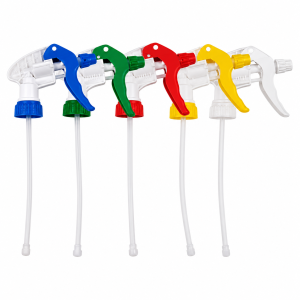
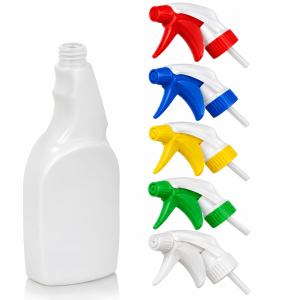
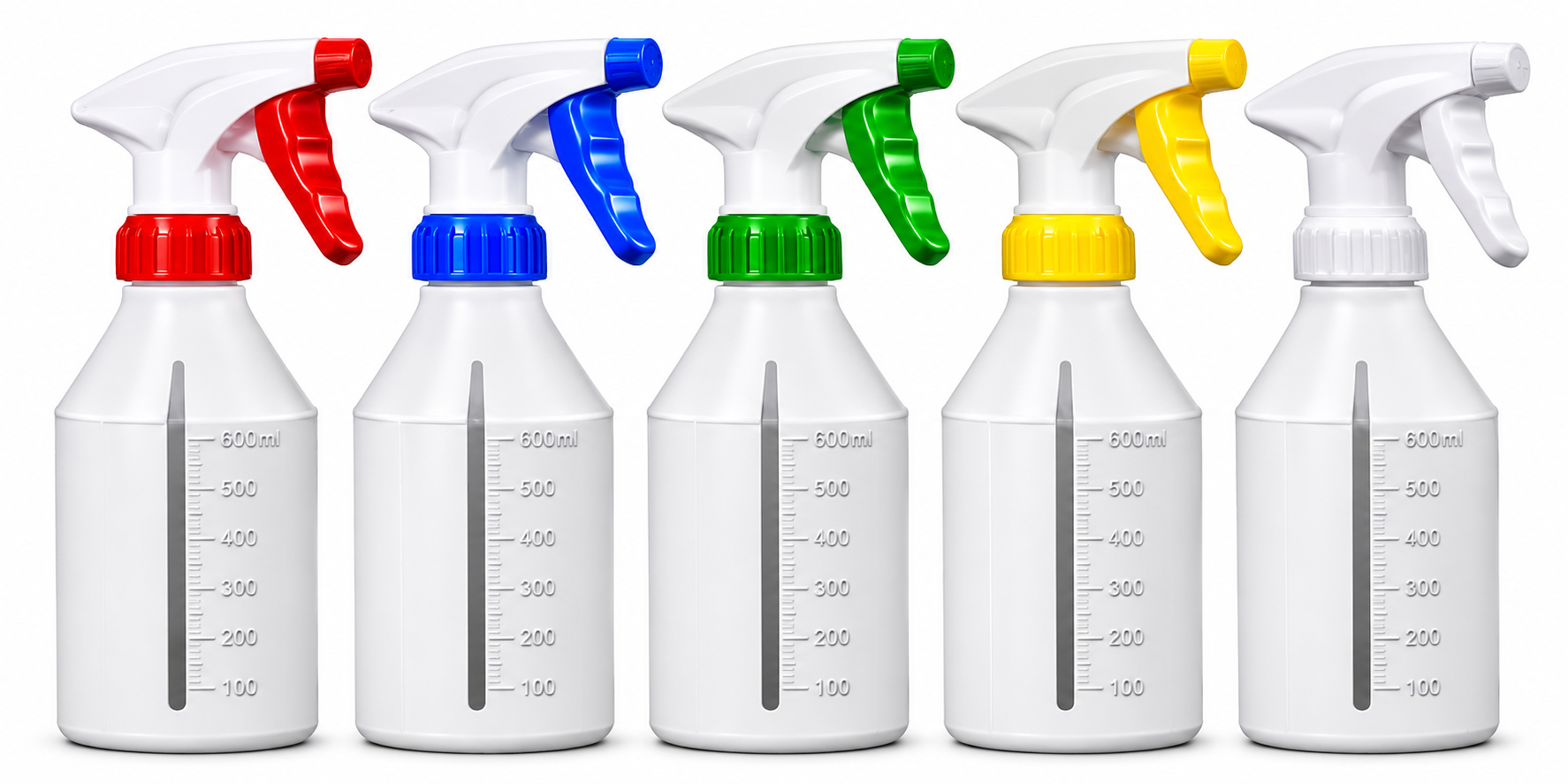
Someone has tidied the cleaning cupboard. Lovely of them. Now where’s the glass cleaner? If you share supplies at work, a coloured trigger gives you something easy to spot, even when the label faces the wall. The spray head comes in blue, green, red, yellow or white, so you can pick the colour that fits the system your team already uses. Colour helps with the handover, too. Try telling a new colleague to fetch “the clear bottle on the shelf” when there are six of them. Being able to add “green trigger, next to the cloths” narrows things down considerably. They can turn the bottle round, check the product name on the label and get on with the job.
Get More Use From the Plastic You Buy
If you already buy a suitable cleaner in refill packs, you can keep the same labelled bottle in service each time. There’s a benefit before that first refill, too. Robert Scott makes the bottle body in the UK entirely from recycled plastic bottles. The trigger uses new plastic, which puts the recycled content of the complete bottle and head at 55%.
Add your Unique Touch
For larger orders, you can screen-print your own design directly onto the bottle in up to four colours. The print stays put, so there’s no loose edge to catch when you wipe the bottle down. Of course, what you’re thinking: marketing. Go ahead and include a product name, instructions or your company logo. Printed orders start at 600 bottles (spread the word about your brand if you’re supplying multiple sites). A cleaner covering a different building can pick up a familiar bottle and find the instructions in the usual place. If you only need a handful for home or a small premises, the blank version gives you room for your own product labels.
How the Spray Bottle Trigger Works
The first time you squeeze the trigger on a new spray bottle, you might get a puff of air. Give it a few full squeezes (let the lever spring back each time). That’s standard with spray bottles. Pump needs to draw up liquid before squirting it out the nozzle. It’s usually called priming. When you squeeze the lever, it moves a small piston. That piston pushes the contents of the pump chamber towards the nozzle. The rest is some physics about air pressure. Let go, a spring returns the piston to its starting position.
As the chamber expands, it draws another helping of liquid up the tube. One-way valves keep everything travelling in the right direction. Once the pump is primed, each squeeze delivers the liquid drawn in on the previous release. Control the spray pattern by turning the tip of the nozzle. Give this a shot over your sink with plain water. Squeeze once, turn the tip a little and squeeze again. See how the wet part shapes up. A broad mist spreads droplets over a wider area. A narrow stream lands in a smaller spot. Change this setting depending on how much liquid you want each time.
Cover a Broad, Flat Surface
For a washable outdoor table, get rid of the crumbs and leaves first. Aim the nozzle down at the far half of the tabletop and use a broad spray. Work back towards yourself (in short passes). You can see which parts are damp, and your sleeve stays out of the patch you’ve just sprayed. If droplets are landing on the chairs, bring the nozzle closer.
Catch Drips on Upright Surfaces
A splash on a glazed wall tile calls for a different angle. Aim straight at the mark and keep your cloth just below it to catch the first run. On a larger tiled area, work in sections you can comfortably reach. Once the liquid starts forming little rivers, ease off the trigger. If your cleaner needs time to work, follow the label before wiping.
Get Into Grooves and Around Fittings
Here we’re talking of areas like that narrow channel around a sliding shower door. If you go with a broad mist, you will end up wetting the glass on both side. Little will get to the groove. Instead, turn the nozzle to get a stream. Then bring it close and aim for a short stretch of the channel. With your small brush on the other hand, scrub that spot and wipe away the grime with a cloth. For raised fittings like a tap handle, spray into the cloth then wrap it around the base. Use your fingers to guide it behind the fitting.
Reach Above Shoulder Height
When you’re working on sections like the top of your door frame, don’t go overextending yourself. Simply keep the bottle down around waist height and spray your cloth there. Reach up and wipe along the ledge. That way you collect the dust in the fold while keeping falling droplets out of your face. Open the cloth before the next pass and find a clean patch.
How Colour Coding Helps Keep Cleaning Jobs Separate
If someone handed you a clean-looking cloth, could you tell whether they’d just used it on the staffroom sink or the one beside the toilets? The thought of mixing things up can make your stomach churn. Colour coding fixes this. Basically you assign a specific colour to each areas, and match the cleaning kits to it. That way if your workplace has decided to go with red for the toilets and green for the kitchen, a red cloth beside the draining board is easy to spot before anyone uses it to wipe up the tea rings. Keep the cloths, mop heads and buckets for each area together (including when you pack the trolley).
A used washroom cloth tucked among fresh kitchen cloths can still transfer dirt and germs. Give used cloths their own place for laundering, and show anyone covering a shift where everything goes. The Robert Scott T-Spray fits snug into this routine. It comes with a red, blue, green, yellow or white trigger, so you can choose the colours your team already uses.
If you have two cleaning areas, two colours may be plenty. There’s no prize for finding a job for all five. Use the trigger colour to see where the bottle belongs and the label to check what’s inside. Fit the supplier’s working-bottle label where you can read it without covering the measuring marks. If the label becomes unreadable, set the bottle aside and follow your workplace procedure. Even if everyone calls it “the green one”, they’ll be on the same page.
Replacing the Robert Scott Trigger Spray Head
Nowadays, we are all watching every coin. That includes in maintenance programs. When you find yourself having to push the lever forwards with your thumb after every squeeze, then the trigger head may be ready for retirement. A chipped nozzle too. Look at its edge. If you can see a nick and the spray shoots off to the same side every time, it needs replacing. However, you don’t have to buy a whole other bottle. The Robert Scott Trigger Spray Head is sold individually and comes with its own suction tube and adjustable nozzle.
The head weighs 40 g, and its shock-resistant plastic can take the odd knock in a cleaning caddy. If the bottle and neck are sound, you can keep the bottle you’ve already labelled and replace just the head. Choose a head that matches your bottle (continuing with the colour coding). On the clean, empty bottle, feed the tube through the opening and sit the collar squarely on the neck. Turn it by hand.
If it catches after half a turn, back it off and start again. A collar that sits higher on one side has gone on crooked. Finally, check where the tube ends. It should sit close to the base with enough room for liquid to enter. A short tube can work beautifully on the first refill, then leave you with cleaner sloshing about just out of reach.
Frequently Asked Questions
Can You Put a Gel Cleaner in the T-Spray?
No. Use a liquid cleaner that’s suitable for the bottle and labelled for spraying. Try it with a thick toilet gel and you’ll clog the pump. For the gel, keep it in its original bottle and use the spout to apply it.
Can You Carry It in a Bag Between Cleaning Jobs?
Yes, if the bag has a compartment that holds the bottle upright and is suitable for the cleaner you’re carrying. Close the nozzle before you set off. If the bottle can roll onto its side, use a caddy instead. A brush handle pressing against the trigger could leave you unpacking a bag full of damp cloths. At home, store the bottle out of children’s reach.
Can You Use It With Solvents or Strong Chemicals?
Only if the manufacturer of the chemical confirms that it can be used with a trigger spray bottle. The liquid passes through the tube, pump and nozzle, so each part needs to be compatible. If the cleaner comes with instructions to use a particular applicator, stick with that one.
Robert Scott T-Spray Bottle and Trigger for Cleaning at Home and at Work
Recommended products
Discover more alternatives and similar items.