
Robert Scott Trigger Spray Head
Robert Scott Trigger Spray Head for Everyday Cleaning
Spraying and wiping has to be one of the easiest ways to clean surfaces. You get to work with a wide range of solutions, and quickly clear the grime that is on your walls, countertops and floors. Even your electronics can be worked on. The mist action allows you to control just enough of the product onto the target surface. No risk of soaking it wet. Your spray bottle in one hand, cleaning cloth in another, maintenance is a breeze. That doesn’t mean that the equipment is invincible.
Cloths get worn out. And the spray head on your bottle can get damaged. Unfortunately, most realise this in the middle of a cleaning job, which is why it is always handy to have a spare readily available. The Robert Scott Trigger Spray is available individually for that very purpose. And it comes complete with a suction tube and an adjustable nozzle.
Does Your Bottle Need a New Head?
There are signs you can watch out for:
- The lever hangs loose
Squeeze the trigger and let go. Does the lever spring back into place, ready for the next squeeze, or do you have to nudge it forwards with your finger each time?
- The spray shoots sideways
Have a look at the edge of the nozzle. If there’s a chip and the spray veers off in the same direction with every pull, you’ve got a good clue about where the trouble starts.
- You find a damp patch in the caddy
How was the last refill? A splash can sit under the collar, trickle down the bottle and leave a convincing little puddle. If you’re checking a dedicated water bottle, dry the head and neck, then stand it upright on a dry cloth by the sink.
- The nozzle keeps dripping
With the water bottle upright, aim into the sink and squeeze. Release the lever and watch the outlet. If fresh beads keep forming there while the bottle stands untouched, the head needs attention.
- Water seeps out around the collar
Check how the collar sits. On a clean, empty bottle, inspect the threads in good light and feel around the rim for a dent. A knock against the tiles can leave a gap on one side. If the collar went on crooked, reseating it may solve the problem.
If the bottle holds a cleaning chemical, follow the product’s handling instructions and your workplace procedure before opening or inspecting it.
Benefits of the Robert Scott Trigger Spray Head
- Quickly spot the bottle you need
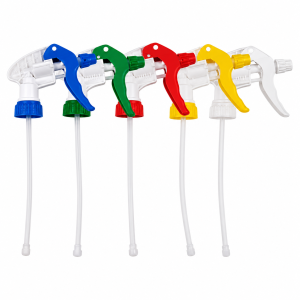
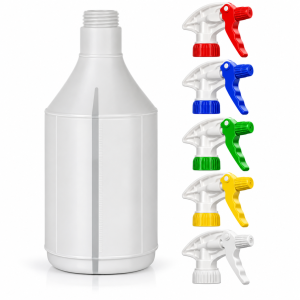
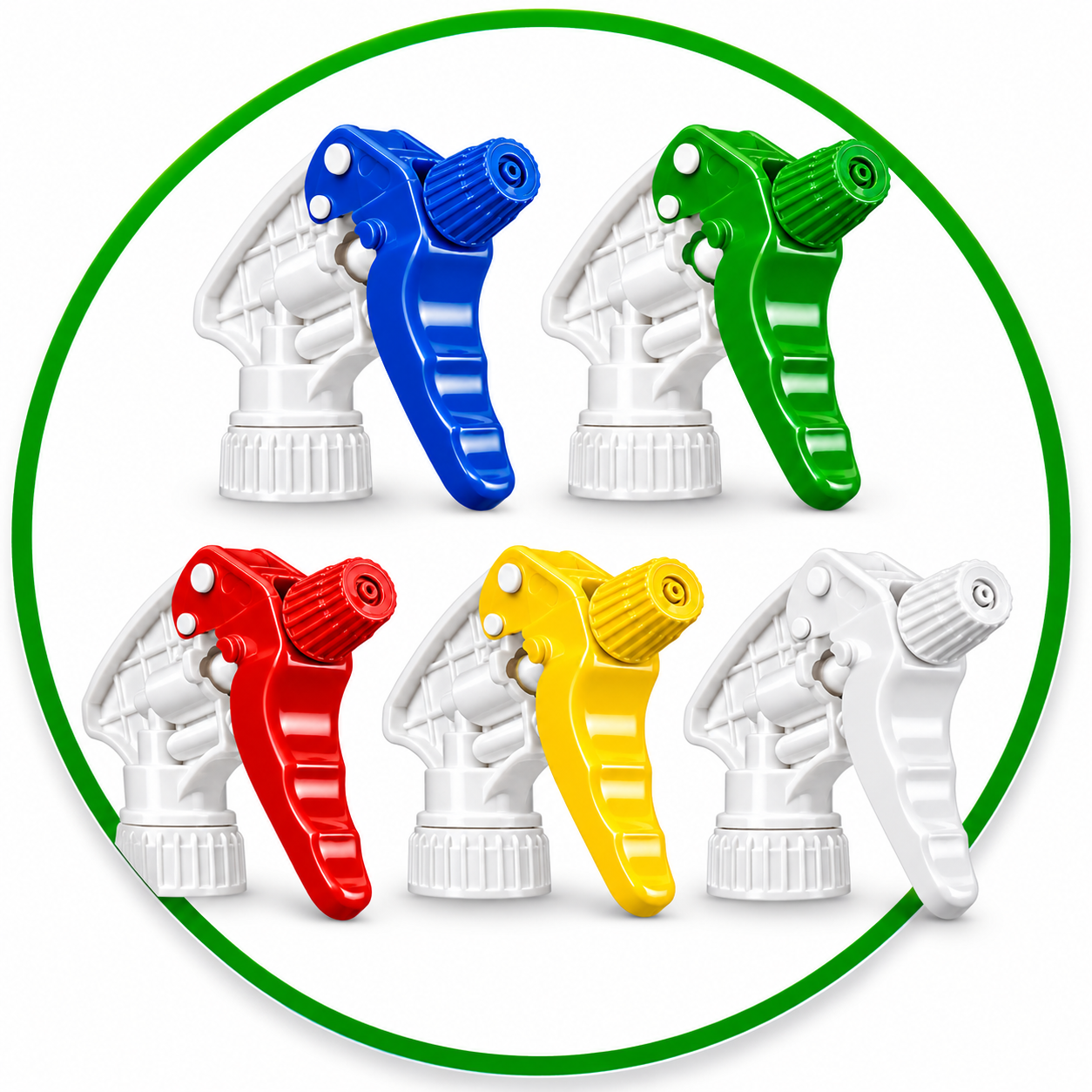
Anything to speed up the cleaning process, right? Colours play a huge role here. Put two clear cleaning solutions side by side and they can look much the same. Give your glass cleaner a blue trigger and your bathroom cleaner a dark red one, and you can tell them apart at a glance.
- Light in your hand
At 40 g, it barely adds any weight to the rest of the cleaning gear. And this is a core consideration given that you will be spraying multiple surfaces. When you’re wiping one table, you may not notice it. Clear a café after the lunch rush, though, and you’ll appreciate a light head with a lever that sits comfortably under your fingers. The shock-resistant plastic also comes in handy when the bottle takes the odd knock on a busy shift.
- You have more control over where the cleaner lands
It’s the whole point of spraying surfaces. The adjustable nozzle lets you choose how much mist you need for the job. If you only want to wet one corner of a cloth, turn it towards a stream. The rest of the cloth stays dry for buffing, and the worktop gets to sit this one out.
- Get just the part you need
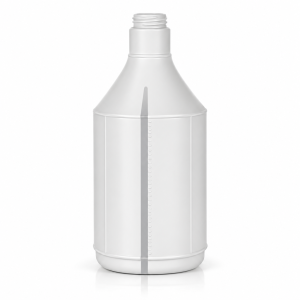
The Trigger Spray Head is designed for the Robert Scott Spray Bottle. If a trigger breaks, you can replace it and carry on using the bottle you’ve already labelled. That’s one less thing to buy, whether you’re stocking a cleaning cupboard at home or ordering spares for the whole team.
Get the Right Fit
If the head gets caught in the first thread, it can feel though it is on properly. That’s until you tilt the bottle to clean behind the kitchen tap and feel something cold running down your wrist. One side sitting a little higher than the other will make work difficult.
Check How the Head Screws On
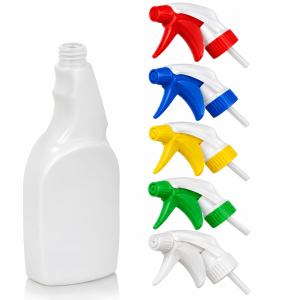
Feed the tube through the opening, sit the head straight on the neck and turn the collar by hand. It should go round smoothly and sit level when it’s snug. If it jams after half a turn, take it off and start again. If it catches in the same spot a second time, check which bottle you’ve got. This Spray Head fits the professional Robert Scott Spray Bottle. With another bottle, look for its compatible bottle.
See How Far the Tube Reaches
A full bottle can hide a short tube for days. You only notice when the level drops and the trigger starts spluttering halfway through wiping the desks. You can hear cleaner sloshing about, yet there you are, tipping the bottle sideways to coax out another spray. If you can see through the bottle, look at where the tube ends once the head is on. It should reach close to the bottom, with room for liquid to enter the open end. A tube that stops halfway down leaves cleaner behind. One that’s too long can bend sharply against the base and make it harder to draw liquid up.
What You Can Put Through the Trigger
Note every liquid gets a pass. Some will jam up the apparatus. And if the product explicitly calls for a different kind of dispenser, follow those instructions. If the directions tell you how much cleaner to add to a mop bucket, stick with the mop. Doing the maths for a smaller bottle won’t turn a floor wash into a spray cleaner.
|
Cleaning job |
What you can use in the spray bottle |
What to keep out |
|
Mirrors and worktops |
Ready-to-use glass or hard-surface cleaner sold as a trigger-bottle refill |
A cleaner that comes in a pack with a child-resistant cap or specialist spout (with no refill instructions) Keep it in its original container and use the dispenser supplied |
|
Everyday cleaning with a concentrate |
Concentrate with directions for trigger spraying Use the stated dilution for that job |
Neat concentrate when the directions call for dilution Also leave out products intended only for mopping or soaking |
|
Polishing furniture |
Liquid furniture polish (check whether the directions say to spray your cloth or apply it straight to the upholstery) |
Thick gels, paste polishes and semi-solid waxes |
|
Disinfecting a hard surface |
Disinfectant approved for trigger spraying on that surface (allow specified contact time) |
Disinfectants intended only for immersion or wiping Never top up leftover disinfectant with a different cleaner |
|
Jobs involving bleach, acids or solvents |
Only if its directions permit spraying |
— |
Works with your Colour Scheme
Colour coding helps you spend less time hunting for the right bottle (and keep washroom tools out of the kitchen). If your workplace already has a colour scheme, stick with it. Otherwise, here’s a structure you can use:
Blue for Glass Cleaner
Makes it easier to pick it out from across reception. Even asking for help when you want to remove those fingerprint marks. “Could you bring me the glass cleaner? Blue top, bottom shelf.” Your colleague knows what to fetch, and you can carry on with the job you were doing.
Dark Red for the Toilet Area
Red is generally for such areas. It comes in handy when you’re packing up after a busy round. Say you’re about to wheel the trolley into the staff kitchen and you spot a red head beside the kitchen cloths. You can put the bottle back where it belongs before anyone reaches for it.
Yellow for Kitchen Surfaces
In a shared staff kitchen, the person wiping up after lunch might only cover that job once a week. The yellow spray head will be aligned with other such equipment in the section.
White for a Specialist Cleaner
White could be your choice for a cleaner you use less often, such as the furniture cleaner for a polished reception desk. Keep that head on its own labelled bottle between jobs. A little liquid can stay inside the pump after use.
Protecting the Lever in Between Jobs
The Robert Scott Trigger Spray Head is affordably priced, and given that it is a replacement unit for the spray bottle, you get to have more lifetime use out of the latter. However, there are measures you can put in place to ensure that each unit lasts for longer. All you wanted was the dustpan. Somehow you’ve picked up the spray bottle too, and now it’s dangling by its trigger. Have a look at the loop in the dustpan handle. It’s just the right size to catch the lever. Stand the bottle upright where you can get your hand around its neck.
Turn the lever away from anything it could catch on, and follow the storage instructions on the cleaner’s label. It’s worth checking the space again after you’ve put the shopping away. That big box of dishwasher tablets can push the bottle closer to the front than you realise. Close the cupboard slowly. If the door touches the trigger, shift the bottle back a little. Save the nudge with your knee for a cupboard that actually needs it.
Give the trigger a bit of elbow room when you pack your caddy. Long-handled tools are usually the ones to watch. A brush can stand upright on the worktop and still lean against the lever once you’re carrying everything upstairs. Before you set off, slip the scraper into a tool pocket. Give the brush a spot where its handle can’t press the lever. If the nozzle has a closed setting, turn it to that position. Then lift the caddy by its handle while it’s still over the worktop. You’ll see what tips sideways and can move it before you head upstairs.
Before you wheel the trolley out, look down at the edge of the tray. Can you see a nozzle sticking out past it? Turn the spray head inwards so it clears the doorframe. Leave a little space by the lever too. Bottles shift as you steer, especially on corners. Already clipped a doorframe? Check the head and the bottle neck for cracks. If the damage is limited to the head, fit a compatible replacement and keep the labelled bottle in use.
Frequently Asked Questions
Can I Spray With the Bottle Upside Down?
You might get a squirt or two, then a splutter. Turn the bottle upside down and liquid runs towards the neck. The end of the suction tube stays near the base (where it starts drawing in air). Annoying when you can see how much cleaner you’ve got left. If you’re trying to clean the lip underneath a stool, simply lip the stool over. It’s easier on your wrist, too. If you can’t move it, keep the bottle upright and spray a little cleaner onto your cloth, provided the product directions allow it.
Can I Use the Spray Head Outside?
Yes. Like when you’re wiping pollen off a washable garden table. Whip out the bottle, and use some plain water and a cloth. A sheltered corner makes the job easier. Give a fine mist even a light breeze and the tea towels on the washing line might get a second rinse. If it’s breezy, dampen the cloth indoors and take it out to the table.
Can I Count Trigger Pulls to Measure Concentrate?
No. If the label calls for a measured dose, “three good squirts” leaves a lot of wiggle room. A quick squeeze can release less than a full pull. If the pump is still drawing liquid up the tube, one of those squirts might be mostly air. Use the measure specified on the label and follow the mixing directions. Once your solution is ready, turn the nozzle to get the spray pattern you want.
Recommended products
Discover more alternatives and similar items.