
Use Graffiti Removers Correctly
How To Use Graffiti Removers Correctly
Many people and many businesses have ended up with unwanted “art” all over their walls, fences, glass and other surfaces. A beautiful facade ends up looking like a contemporary art museum. This kind of public vandalism happens on a daily basis all over the country. The question is, what do you do when it happens to you? After the initial shock, you will need to find a way to remove it and you will find yourself in a world full of questions like, what type of graffiti, or is it graffiti or is it car paint, or is it acrylic or solvent graffiti, or, what surface it is on & so on.
What is graffiti?
Graffiti spray is an aerosol paint designed to release colour in a fine, controlled mist when the nozzle is pressed. The paint is stored inside a pressurised metal can and dries relatively quickly after being applied. Graffiti spray paint is available in a wide selection of colours and finishes, including matt, gloss, metallic and fluorescent options. Different spray nozzles can also produce fine lines, broad coverage or specialised artistic effects.
Graffiti spray should be used only on surfaces where the person has permission to paint. Suitable locations include designated graffiti walls, legal street-art areas, private buildings with the owner’s approval, art studios, workshops and authorised community projects. Professional artists frequently use spray paint to create murals, signs, decorative panels and large-scale artwork. It may be applied to compatible surfaces such as brick, concrete, plaster, metal, wood and prepared boards. The application area should be well ventilated, and users should wear suitable gloves, protective clothing and respiratory protection where required.
In practice, graffiti spray is used for both authorised and unauthorised purposes. It is commonly used by street artists to create decorative murals, lettering, portraits and public artwork. Businesses sometimes commission graffiti-style designs for shutters, interior walls, cafés, gyms, entertainment venues and advertising displays. Spray paint is also used for furniture restoration, crafts, construction marking and general maintenance.
Unfortunately, graffiti spray is sometimes applied illegally to public buildings, bridges, walls, railway property, vehicles, signs and private homes. When paint is applied without the property owner’s permission, it is generally considered vandalism. Unauthorised graffiti can be difficult and expensive to remove, particularly from porous surfaces such as brick, stone and unsealed concrete. For this reason, graffiti spray should always be used responsibly, safely and only with clear permission from the owner of the surface.
What is a graffiti remover?
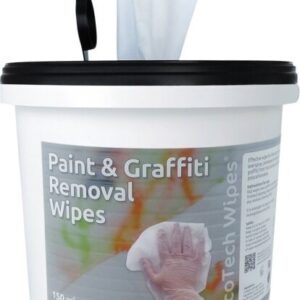
A graffiti remover is a special chemical that dissolves and breaks down the graffiti paint from surfaces. Unfortunately, there are many types of graffiti and there is not one single graffiti remover that works on all of it. A graffiti remover will be able to remove some of the stain, the full stain or none at all. Many graffiti removal companies use a mixture of graffiti removers and powerful hot water pressure washers. Even so, some graffiti vandalism cannot be removed in full.
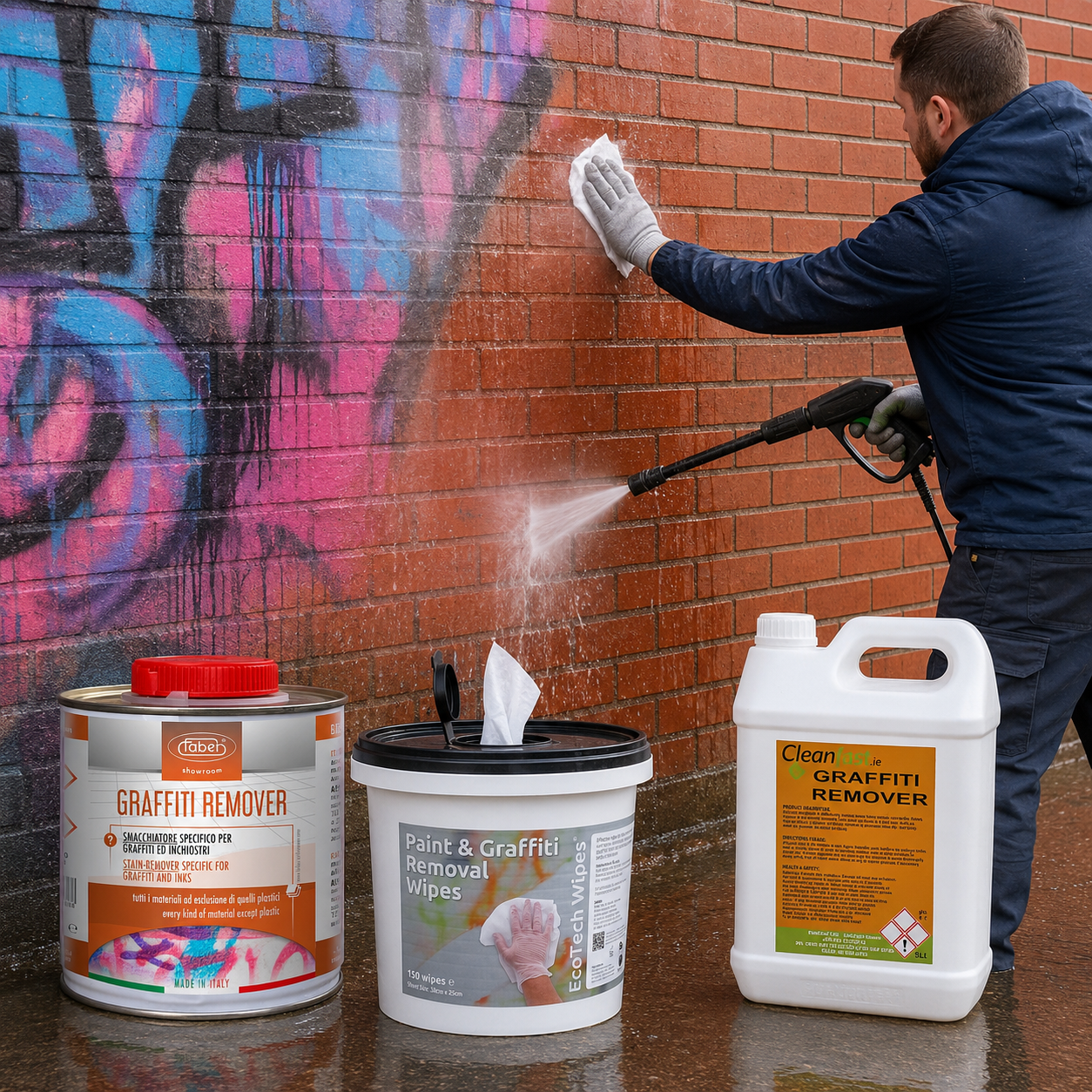
Cleanfast.ie sells two types of professional graffiti removers. One liquid graffiti remover for all kinds of absorbent surfaces and a gel like graffiti remover for vertical natural and artificial stones with little or no absorbency. There are hundreds of graffiti removers out there but many are totally ineffective or too weak to provide decent results.
If it is not graffiti, what can it be?
Coloured spray found on walls, doors, vehicles or public property is not always traditional graffiti paint. Vandals may use many other aerosol products, depending on what is available. These can include automotive spray paint, industrial enamel, line-marking paint, fluorescent survey paint, temporary construction paint, decorative craft spray, primer, lacquer, acrylic paint, metallic spray and coloured protective coatings. Some incidents may also involve hair-colour spray, party spray, fake snow, coloured foam, dye, ink or liquid paint transferred through a pump sprayer.
The type of product used affects how it should be removed. Water-based marking paint may respond to detergent and controlled pressure washing, while solvent-based enamel, automotive paint or lacquer may require a specialist graffiti remover. Porous materials such as brick, sandstone and concrete can absorb pigments deeply, making removal more difficult. Before cleaning, identify the surface and test the chosen product in a discreet area. Aggressive solvents or excessive pressure can cause permanent damage.
Faber Graff Gel For Sensitive Surfaces
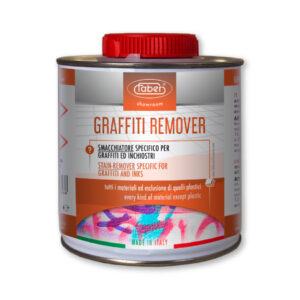
This gel like graffiti remover is highly recommended for treating very sensitive or polished exterior natural stone or artificial stone surfaces. Its gel-like composition will enable the product to attach to the affected area and break it down over a short period of time. The classic graffiti remover is likely to be much wetter and leak down the wall when applied to a vertical surface. Depending on the type of graffiti, how long ago it was applied and the surface it was applied on, you might be able to fully remove the stain with the amazing Faber Graff Gel, or you will also need to power wash the surface to be able to achieve noticeable results.
Cleanfast Graffiti Remover
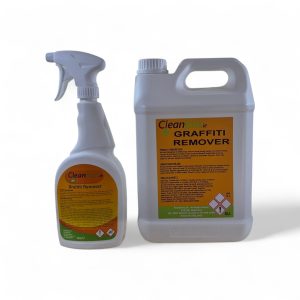
This spectacular graffiti remover is 100% Irish made and Irish weather suitable. A solvent based and highly effective graffiti remover that can be used on all kinds of exterior render, block walls, concrete walls, bridges, patios, glass and glazed steel facades. The new formula Cleanfast Graffiti Remover is a ready to use graffiti remover and it does not require any mixing or dilution. While there is not one single graffiti remover that works on all graffiti vandalism, the new Cleanfast Graffiti Remover is by far one of the most effective graffiti removers available in Ireland. It fully emulsifies the graffiti and it helps exfoliate from pretty much any type of surface.
How To Use Graffiti Removers
More porosity on the base surface, harder it is to remove the graffiti stain in full. When the pores of the surface are widely open, the graffiti spray manages to penetrate very deep inside the pores and makes the job much harder. To increase your chances of success, you should follow the following recommendations:
- Use a wire brush to slightly scratch the surface of the graffiti glazing so the graffiti remover could penetrate deeper and faster (if dealing with very sensitive surfaces, work slow and be careful not to scratch the base surface).
- Apply a thick coat of the graffiti remover with a good quality brush and keep applying it for 30 minutes to break down as much of the graffiti as possible.
- Use a good scrubbing brush or a scrubbing pad in conjunction with a good degreaser to scrub the surface and get rid of the graffiti for good.
- If a pressure washer is available, use a pressure washer to remove whatever residue is left on the surface. Using a power washer with high pressure can permanently damage surfaces, so make sure to stay 30-50 cm away from the surface to avoid damaging it.
Success rate
Most companies that are dealing with graffiti removing projects are likely to carry around 10-20 types of graffiti removers inside their vans. Because there is such a wide range of graffiti sprays out there, made from such a wide range of totally different materials, there is no one solution for all. Even the best graffiti removing contractor cannot guarantee you 100% results. The success rate within the graffiti removing industry is calculated in how much of the graffiti was extracted from the surface. Some graffiti is permanent. Some will wear off over a long period of time. So it can be nearly fully removed. Others can be removed in full.
How to protect your surfaces from graffiti vandals
Business owners and residential customers can reduce the risk of graffiti by combining surface protection, access control and effective surveillance. One of the most practical solutions is to seal exposed walls with a specialist graffiti stain protector. These protective coatings create a barrier that prevents spray paint, permanent marker and coloured dyes from penetrating deeply into porous materials such as brick, concrete, stone and render. If vandalism occurs, the graffiti can usually be removed more quickly, with less aggressive cleaning and a lower risk of damaging the original surface.
Property owners should also make vulnerable areas more difficult to access. Gates, secure fencing, anti-climb measures and locked side passages can discourage vandals from approaching walls, shutters and service areas. Good outdoor lighting, trimmed vegetation and the removal of hidden corners can make the property more visible and less attractive to anyone attempting to work unnoticed.
Installing security cameras is another effective deterrent. Cameras should cover entrances, boundary walls, loading areas, car parks and other locations that are difficult to observe. Clear signs indicating that CCTV is in operation may discourage potential vandals before damage occurs. Any camera system should be installed and operated in accordance with applicable privacy and data-protection requirements.
Graffiti should be removed promptly because neglected markings may attract further vandalism. Combining a suitable graffiti-resistant coating with controlled access, lighting, cameras and regular inspections offers businesses and homeowners the strongest long-term protection.
Is graffiti removal expensive?
Yes. A tiny graffiti picture done on your house facade can take 5-10L of graffiti remover and many hours of pressure washing, drying, more treatments, more pressure washing and then more drying. In some cases, 2-3 lads have to work a full day. 5L of graffiti remover can cost 80 to 150 euro depending on type, consistency and brand. In some cases you might be covered by the house insurance so it is well worth checking with the insurer.
Recommended products
Discover more alternatives and similar items.