

How to Apply Junckers MT500 Floor Lacquer
Find Out About How to Apply Junckers MT500 Floor Lacquer to a Wooden Floor
A floor lacquer can only perform as well as the surface underneath it. If dust, grease, old polish or a weak previous coating is left behind, the problem often appears later as poor adhesion, patchy finish or peeling. That is why applying Junckers MT500 Floor Lacquer starts long before you open the container.
The route you take depends on the floor you have today. Bare or freshly machine-sanded timber needs a primer and two lacquer coats. A sound previously sealed floor can often be refreshed with one coat after careful cleaning, sanding and a successful adhesion test. A floor that has been treated with wax or polish needs a more complete reset.
This guide takes you through those three situations separately from the very first step, so you can prepare the floor correctly, organise the job around realistic drying times and avoid mixing instructions that belong to different starting conditions.
Start by Identifying the Floor Condition
Bare wood should look and feel like clean timber, not an old finish that has simply been dulled. You should not see glossy patches, waxy areas or surviving lacquer around edges. The surface should also be dry and free from dirt.
If the floor has just been machine sanded, check the whole room carefully. Edges and doorways are easy places to miss. Once the previous coating is genuinely removed, the floor is ready for the full primer and lacquer system.
Previously Sealed Wood
A previously sealed floor is different. If the lacquer is intact and only dull or lightly worn, you may not need to remove everything. The old finish can become the base for a maintenance coat, but only after compatibility and adhesion have been checked.
Look for exposed timber, flaking and areas where the coating has disappeared. If wear has reached bare wood, a simple recoat is no longer the same job. Treating an intact sealed surface and a worn-through finish as identical shortcuts the preparation Junckers MT500 Floor Lacquer needs.
Wax or Polish Treated Wood
Wax and polish can leave residues that lacquer will not reliably bond to. A floor may look clean after washing while still carrying a thin layer beneath a new coating.
If you know the floor has been waxed or polished, do not treat it as an ordinary sealed surface. The correct route is to sand back to bare wood, remove the contaminated finish and rebuild the system. That preparation removes a hidden variable before you correctly apply the new lacquer.
Prepare the Room and the Substrate
Preparation is not a quick tidy before the real work begins. It is part of the coating system. Dust, grease, wax, polish and soap residue can all sit between the wood or old lacquer and the new finish, so remove them rather than expecting lacquer to bridge over them.
Correct obvious surface irregularities, then vacuum thoroughly. Pay attention to edges, corners and thresholds where sanding dust collects. After vacuuming, wipe the floor with a cloth well wrung in clean water. “Well wrung” matters because you want to collect residue without soaking the timber.
Before moving on, the surface should be clean and dry. If you can still feel dust or see greasy marks, the floor is not ready for coating.
Prepare the Product and Tools
Have everything ready before coating starts. Junckers MT500 Floor Lacquer should be shaken or stirred well before use. Suitable tools are a brush, roller, or air or airless spray equipment. Do not dilute the product, and do not pour it directly onto the floor.
For most home projects, organise the roller, edge brush, tray, extension pole and dust-free footwear beforehand. You do not want to stop halfway across a room to hunt for equipment.
Keep tools clean throughout the work. Dried particles, old coating or loose fibres can be transferred straight into fresh lacquer and remain visible after it dries.
Work Within the Temperature Conditions
The floor itself should be between 15 and 25°C during application. That range is easy to overlook because the room can feel comfortable while the timber surface is cooler, particularly near doors or in a property that has only recently been heated.
Get conditions stable before opening the container. Avoid sudden draughts across the wet surface, but keep appropriate ventilation. Plan your route through the room. Start furthest from the exit and work towards the door so you never have to cross wet lacquer to get out safely.
Organisation is key in a kitchen or hallway where access affects the rest of the house. Move furniture, tools and anything you may need before you begin. Once the coating is down, improvising usually means footprints, dust or interruptions you could have avoided.
How to Apply Junckers MT500 Floor Lacquer | Build the Correct System on Bare Wood
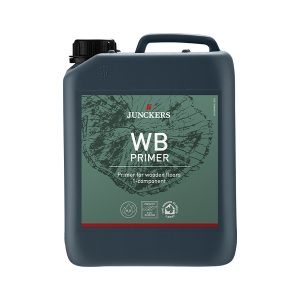
Bare or machine-sanded wood needs a primer before Junckers MT500 Floor Lacquer. The usual water-based route is Junckers WB Primer. Its role is not simply to add another coat. It helps create a consistent base and reduces the risk of side-bonding between individual floorboards.
Some timbers need a different approach. Go for SB Primer where a water-based primer may have adhesion difficulties, including tropical and oily woods. It is also recommended for dark patterned floors where an even appearance can be harder to achieve. Sugar extraction on maple and tannic acid on oak are situations where SB Primer can help.
Choose the primer for the timber and floor condition. If you are unsure what wood species you have, identify it before coating. A primer decision at this stage is easier to manage than a bonding or appearance problem after the topcoats are down.
How to Apply Junckers MT500 Floor Lacquer | Sand and Remove Dust Between Stages
Once the primer has dried, sand it with grit 150–180 along the fibres of the wood. The purpose is to refine the surface and give the next layer a suitable key, not to grind through the primer you have just applied.
Work evenly and watch edges, where aggressive sanding can remove more material than intended. Then vacuum the entire floor thoroughly. Fine dust left behind can become trapped in the lacquer and change both feel and appearance.
Finish with a cloth well wrung in clean water to collect remaining dust. Let the surface dry before coating. A few extra minutes spent removing residue is easier than finding rough particles sealed into the finished floor once the final coat has dried.
How to Apply Junckers MT500 Floor Lacquer | Apply the Two MT500 Top Coats
After priming, sanding and dust removal, apply the first coat of Junckers MT500 Floor Lacquer evenly across the prepared floor. Keep a wet edge as you work and avoid repeatedly going back over areas that have started to settle. The aim is a consistent film rather than trying to make one section look “extra protected” with a heavier application.
Leave the first coat to dry overnight before the final coat. For the best adhesion, sand with grit 150–180 before that last application. If more than 24 hours passes before you apply the final coat, that intermediate sanding is not optional. It must be carried out.
After sanding, vacuum carefully and remove the remaining fine dust before applying the final coat. Take the two topcoats as separate stages, each needing a clean surface underneath. Rushing the second coat because the room needs to be back in use can undo careful preparation. Plan the job so the drying window fits your household or work schedule rather than forcing the coating to fit an unrealistic deadline or a contractor’s timetable.
How to Apply Junckers MT500 Floor Lacquer | Refresh a Previously Sealed Floor
A previously sealed floor begins with cleaning, not sanding. You can use Neutralizer before a maintenance coat because ordinary floor care can leave grease, oil and soap residues behind. Those residues may be difficult to see, yet they can interfere with adhesion and clog an abrasive pad.
Work with Neutralizer according to its instructions, keeping water use controlled and removing spills promptly. The goal is to leave the existing lacquer genuinely clean rather than simply looking clean from standing height.
This is especially in kitchens and hallways where years of cleaning may have created a film you no longer notice. Starting with a residue-free surface gives the sanding stage something consistent to work on and removes one hidden cause of a failed recoat.
Run the Trial Application
Do not commit the room to a new coating until you know the existing finish will accept it. Carry out a trial run on previously sealed floors. Lacquer a couple of test spots, applying two coats four hours apart. Then leave the spots for 24 hours.
After that period, check adhesion by scraping the test area with the edge of a coin. You are looking for a finish that remains bonded rather than lifting or peeling under scraping. Also judge the appearance. Good adhesion is not enough if the test patch dries unevenly or reacts badly with the existing surface.
If adhesion and appearance are acceptable, you can proceed with the floor. If the test fails, stop. The next step is the wax or polish route, which means removing the system rather than hoping a full-room application will behave differently.
How to Apply Junckers MT500 Floor Lacquer | Apply the Maintenance Coat
Once the trial confirms that the existing finish is sound and compatible, prepare the floor. Sand thoroughly with grit 150–180 so the new coat has a keyed surface. Do not treat sanding as a token pass in the middle of the room. Work consistently into edges and routes that receive the most wear.
Vacuum all sanding dust, then wipe the surface with a cloth well wrung in clean water. Allow it to dry before coating.
Apply one coat of Junckers MT500 Floor Lacquer and leave it to dry. This is different from the bare-wood system, which uses primer and two topcoats. A maintenance coat works because the intact previous lacquer remains part of the build-up. If areas have worn through to bare timber, you no longer have that foundation and should reassess the scope rather than patching over the difference.
How to Apply Junckers MT500 Floor Lacquer | Wax or Polish Requires a Full Reset
A simple recoat is not enough here.
Wax and polish are designed to leave something on the surface. That is what makes them a problem under lacquer. Even after cleaning, residue can remain in pores, joints and worn areas, creating a weak boundary between the floor and new coating.
Sanding lightly and applying Junckers MT500 Floor Lacquer over that uncertainty is a gamble with adhesion. An area might look fine at first, only to lift when the floor returns to use.
The reliable response is to remove the contaminated coating. That turns the project into a bare-wood treatment where every layer is built on a known surface.
How to Apply Junckers MT500 Floor Lacquer | Use the Full Sanding Sequence
Start the reset with grit 24–36 to strip away the old coats and contamination. This is the aggressive stage, where you’re going for removal rather than a finished surface. Work methodically enough that isolated islands of old finish are not left behind.
Next, move to grit 60–80. This stage removes the coarse abrasion marks created by the first sanding pass and begins refining the timber. Skipping directly from a very coarse grit to a fine one can leave deep scratches that become obvious once the floor is sealed.
Finish with grit 120–150 to create a smooth, even surface ready for the bare-wood system. Vacuum thoroughly afterwards, including edges and gaps where sanding dust can collect.
At that point, you have returned the floor to bare wood. Continue with the appropriate Junckers primer followed by the MT500 system for untreated or machine-sanded timber.
How to Apply Junckers MT500 Floor Lacquer | Use the Drying Windows to Plan the Job
At 20°C and 50% relative humidity, there’s an approximate sanding or overcoating time of four hours for MT500. Treat that figure as a planning guide under stated conditions, not a strict limit for all situations.
A colder floor, different humidity or limited air movement can change how the coating behaves. Check that the previous layer is dry before sanding or recoating.
This factors in when you are trying to finish a room between family routines or office hours. Build spare time into the schedule. Waiting for the coating is inconvenient. Trapping a problem between layers is more inconvenient.
How to Apply Junckers MT500 Floor Lacquer | Do Not Stack Too Many Coats Into One Day
Use no more than two coats of MT500 in one day. That limit should shape your schedule before work begins, especially when other plans depend on access.
Remember the 24-hour rule. If more than 24 hours passes before the final coat, sand with grit 150–180 before continuing. Do not compensate for a missed window by rushing or applying a heavier coat. A timetable respects drying and preparation, even when the room stays out of service longer than you hoped.
How to Apply Junckers MT500 Floor Lacquer | Reopen the Floor in Stages
Junckers MT500 Floor Lacquer is ready for light traffic after approximately eight hours at 20°C and 50% relative humidity, but it does not reach full cure until 72 hours.
Light traffic means controlled access. It is not the moment to drag a dining table back into position, roll an office chair across the room or let a household treat the floor as normal. Give the lacquer its curing period before demanding use.
Plan around that from the start. In a home, arrange another route through the house and keep pets away from the coated area. In an office, move work elsewhere if possible. A floor that feels dry underfoot can still be developing the hardness needed for service.
How to Apply Junckers MT500 Floor Lacquer | Work Safely and Clean Up Properly
Use ventilation and precautions whatever application method you choose. Keep food, drinks and smoking away from the work area, avoid contact with the coating and wash hands after use.
Spray application needs extra controls because it can create airborne material. Work with an AP2 combination filter for respiratory protection during spraying, protective clothing with a hood and safety glasses with side shields. Nitrile gloves with a thickness of 0.4 mm are recommended for hand protection.
If you are not equipped to spray safely, use another application method or bring in a professional rather than improvising respiratory protection.
Clean brushes and rollers with soap and water immediately after use. If you have unopened Junckers MT500 Floor Lacquer left for another job, store it above 5°C. The product has a shelf life of one year when stored at 20°C. Keep the container protected from freezing conditions during storage.
How to Apply Junckers MT500 Floor Lacquer
Recommended products
Discover more alternatives and similar items.