
The Environmentally Friendly Way To Manage Waste
Here Is The Environmentally Friendly Way To Manage Waste
Plastic is a global problem. From the production process that results in tonnes of greenhouse gas emissions, to the waste that winds up in landfills and oceans- they are a menace that damages the environment. The birds and other animals scrounging around landfills looking for quick snacks mistake those shredded plastic bags as food and the material winds up in their stomachs. Out in the ocean, the sea turtles find it difficult to differentiate between jellyfish and the plastic bags, and end up consuming them.
For instance, plastic has been found in the stomachs of one in three leatherback sea turtles in a study conducted on 370 autopsies. Fish themselves take in thousands of tonnes of plastic material every year, bringing it into the food chain with the large fish and marine predators- plus the fish that is consumed by humans. Over 80% of the plastic that is in the oceans comes from land, and there are at least 265 different species that have been affected by plastic pollution in the oceans, according to WorldWatch.
Back in the landfills, the plastic bags take centuries to degrade. What’s more, they don’t fully break down, but rather become microplastics- complete with their flame retardants, antimicrobials and substances like plasticizers. These chemicals get released into the environment. Once they get into the food chains, they cause a wide range of effects, such as disruptions to the endocrine system of both animals and humans.
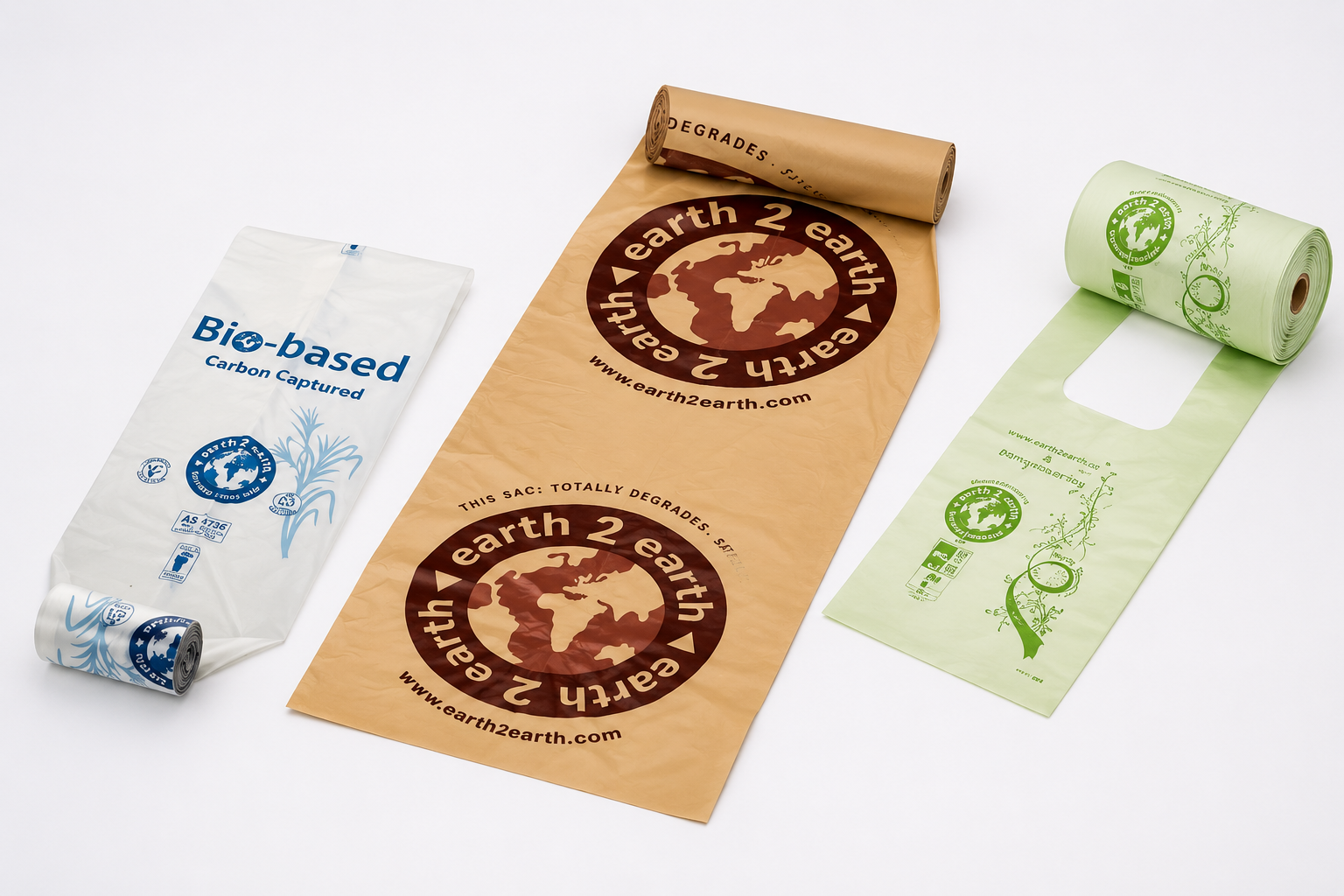
There has been a consistent push to cut back on plastic usage in the different aspects of life, from packaging choices, all through to waste disposal. With regards to the latter, processes like composting offer an eco-friendly alternative for getting rid of the organic waste. Units like the Earth2Earth Compostable Sacks 600 mm x 700 mm – Clear have been developed for this, in both residential and commercial establishments.
How The Earth2Earth Compostable Sacks 600 mm x 700 mm – Clear Help
These units are developed for handling organic waste, such as leftover food and kitchen scraps. The waste can then be taken to sites like industrial composting facilities, where the optimal conditions of heat, oxygen levels and moisture are controlled, for efficient composting.
The by-products of the process are water, carbon (IV) oxide and new cell biomass. These are safe for the environment, as opposed to the methane that would have been produced had the material been taken to landfills- where the decomposition would be anaerobic due to the limited supply of oxygen when the matter is buried under tonnes of waste. As such, incorporating the Earth2Earth Compostable Sacks 600 mm x 700 mm – Clear into your waste management program allows you to contribute positively to the environment.
The soil also gets a boost. This is because the biomass that is formed during the composting process can be reintegrated back into the soil, bringing to it nutrients, and improving the soil health. From the water retention capacity, preventing erosion, promoting organisms like earthworms and nitrogen-fixing bacteria, to encouraging healthy root growth- the compost is an asset to the agricultural sector.
It even reduces the overreliance on artificial fertiliser- whose production from fossil-fuel-based sources actually increases the carbon footprint. This has seen the increased demand by consumers for organically grown foods- plus the health benefits that result from avoiding the toxic chemicals that would have otherwise been used. With the Earth2Earth Compostable Sacks 600 mm x 700 mm – Clear, you get to encourage this eco-friendly approach to farming.
Proven to work
When selecting a compostable sack for your waste management needs, there is one key consideration to be made: is it certified to be compostable? Here, proof of the certification is needed, to ensure that the product has been tested and found to have met internationally recognized certification standards, and that the testing has been undertaken by accredited and approved laboratories.
These are the likes of the DIN CERTCO organisation that issues the compostable certificates to products meeting the European standard EN 13432. There’s also the TÜV-Austria OK-compost certificate, issued by the Austrian TÜV (Vincotte, as it was previously known), and is also based on the EN 13432. This one has 2 versions, the “industrial” certificate which looks at the composability of the product in an industrial composting facility, and the “home” version that means that the sack can be composted in the everyday backyard compost.
The Environmentally Friendly Way To Manage Waste
Recommended products
Discover more alternatives and similar items.
-300x300.png)
0 Comments
Questions or feedback? Join the discussion below.
No comments yet. Be the first to comment.
Replying to